

 Students participate during an English class at Willard Middle School in August 2022. Credit: Ximena Natera, Berkeleyside/CatchLight
Amid a national reckoning of how to best prepare students for a tech-centric future while protecting them from the dangers of excessive screentime and harmful online content, Berkeley elementary and middle schools will soon ban YouTube on all school-issued Chromebooks.
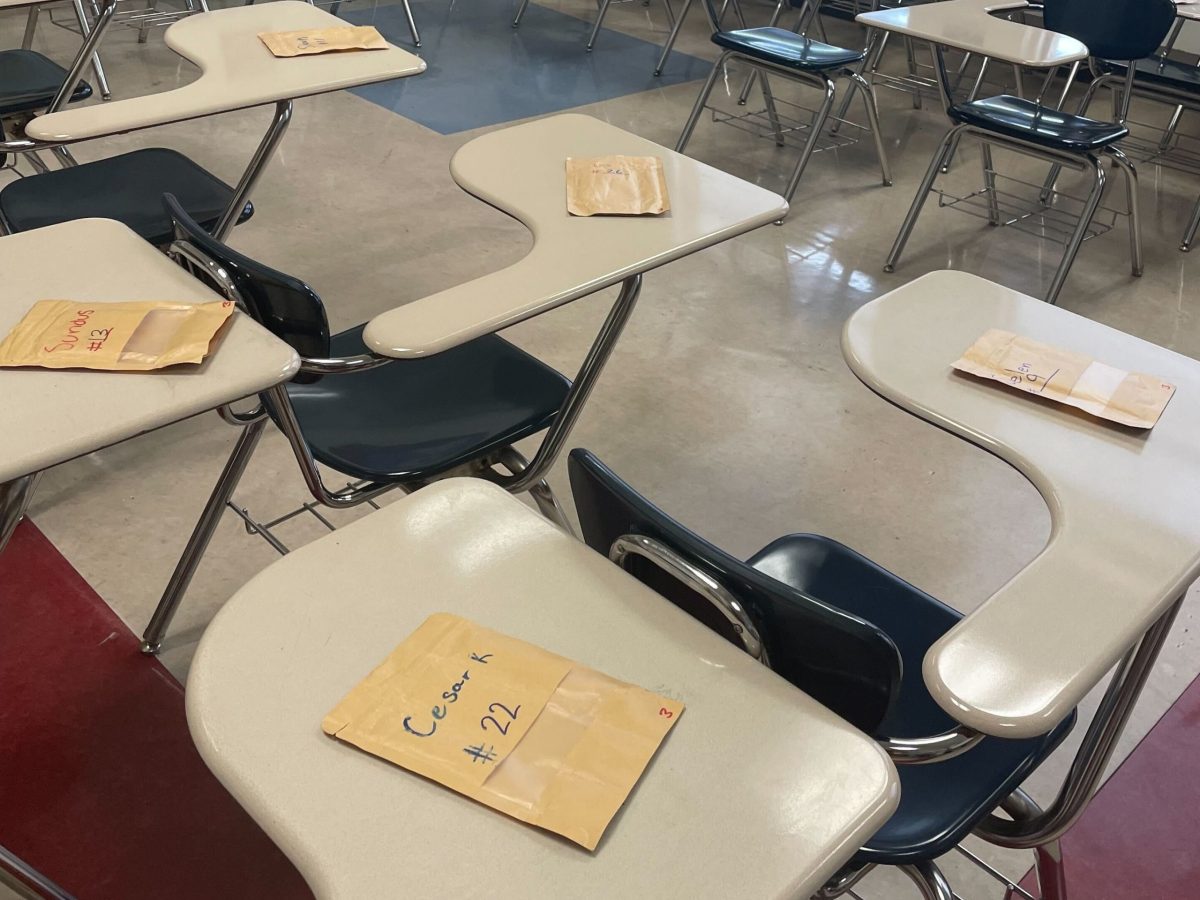
The decision, which came in a surprise announcement by Berkeley Unified Superintendent Enikia Ford Morthel during last week’s school board meeting, comes nearly a year after the school district tightened requirements on cellphones last fall — mandating that all students put away phones during the school day. (High schoolers can still use them between classes.)
But many parents say the changes don’t go far enough and that BUSD still lags behind other districts in restricting screen time, barring phones and blocking AI use.
“iPhones are designed to be slot machines in your pocket and expecting an adolescent with an undeveloped frontal lobe, which is developmentally normal, to self-regulate is outrageous,” said Allison Bond, whose two children attend Washington Elementary and a leader of Berkeley Unplugged, a group of local parents who have coalesced over the past year around shared concerns about the impact of screens on kids. “It’s like putting out a cookie jar in front of a kid and then saying we will cut off your hand if you take one.”
This spring, Berkeley Unplugged launched a petition, already signed by more than 700 parents, demanding a ban on cell phones at all grade levels, restrictions on YouTube, and the ending of the district’s “reliance” on Chromebooks for classwork and homework along with stronger content controls.
“Right now we feel that Berkeley is very behind because they’re essentially asking kids in grades K-8 to self-manage their device use by keeping it in their backpacks and not touching it,” said Reichi Lee, a leader in Berkeley Unplugged and a two-time school board candidate. “That’s not how kids’ brains work. The burden should not be put on them to resist devices designed to capture their attention.”
The Oakland school district began this school year with a total ban on cell phones for all grade levels, while New York City recently announced a cap on screen time of under one hour a day for middle schoolers and banned AI until students reached high school.
In an interview with Berkeleyside, Superintendent Ford Morthel cautioned that what works for some districts may not necessarily work for Berkeley Unified.
“We want to make evidence-based decisions and really think about the context and the data from our community and our schools and what our students are doing,” Ford Morthel said. “We don’t want to go straight to a tier three intervention when maybe a tier one intervention would have been sufficient.”
Research has linked excessive screen time to negative impacts on children’s mental health, cognitive development, attention spans and academic performance.
One study, published in 2021, highlighted racial differences among children’s screen use, with Black kids spending more time than their white and Asian peers on devices. That’s important when looked at in the context of the persistent achievement gap in the district, Lee said.
“Technology is the No. 1 equity issue of our times because depending on how and when tech is used, it can open up young people’s worlds, or widen academic gaps with the greatest consequences for students who are already struggling,” she said.
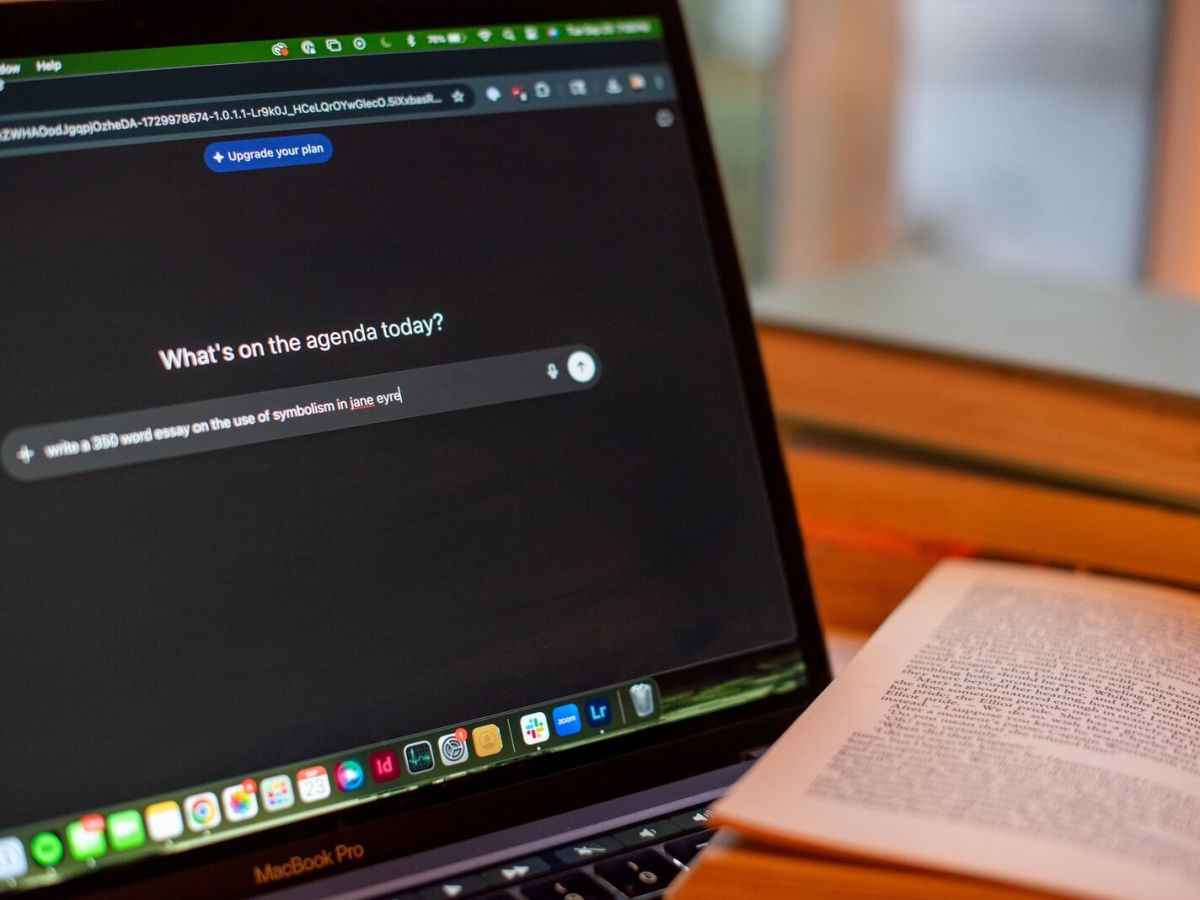
Berkeley Unplugged is also pushing the district to pass a moratorium on artificial intelligence, blocking sites like ChatGPT and Claude on all school computers. Currently, Chromebooks give students access to Claude and ChatGPT. (Berkeley Unified’s artificial intelligence working group, formed last fall, has yet to provide any updates from its meetings.)
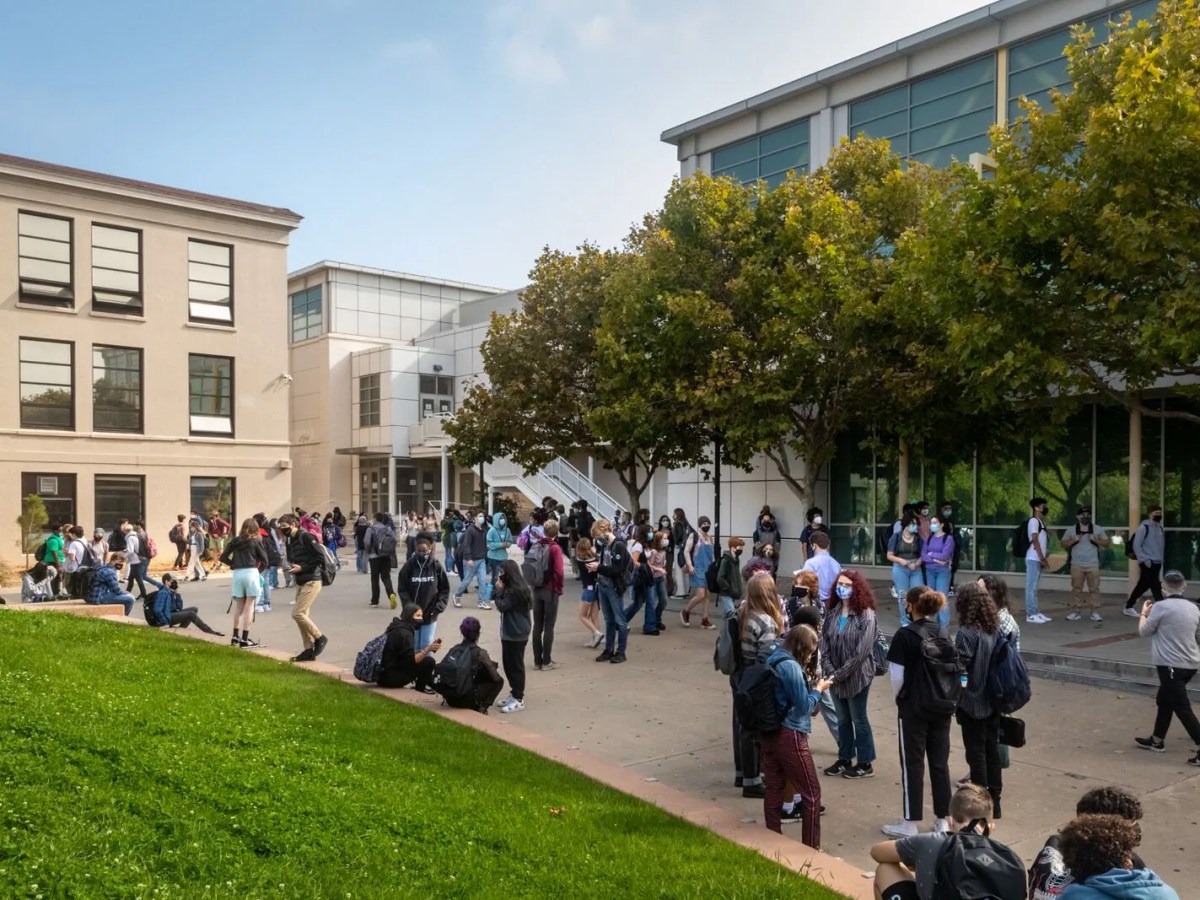
Berkeley High students told Berkeleyside they appreciated being able to use their phones at recess, and said that many teachers haven’t enforced the phone ban, being unwilling to “police” students’ online habits. (California’s Phone-Free School Act, which went into effect July 1, requires districts to restrict or prohibit smartphone use during school hours, and to document enforcement and be able to demonstrate compliance.)
Some students said they needed their phones to perform advanced calculations and turn in assignments.
Sitting outside of Berkeley High last week, Zahaara Aiyub, 15, said she and other students in her chemistry class are allowed by their teacher to use their iPhones to scan in assignments and turn them into Google Classroom. When the bell rings, Aiyub uses her phone to find her friends, buy lunch and communicate with her parents about after-school plans. “It would be difficult to not be able to do all that,” she said. But in her English class, Aiyub said, her teacher often asks students to write essays using pen and paper, adding that she enjoys writing by hand. “With writing, I’m able to think and process better on paper,” she said.
Nearby, 16-year-old Julia Warren-Boyd said that “in a way, it would be easier to not have a phone in school because they’re a distraction.” But, she said, not having one would be hard because Berkeley High’s 3,000-student campus is challenging to navigate without a phone.
Her friend Olivia Monika, also 16, said she would like to see more consistency among teachers in regards to phone use. But to Monika, banning phones altogether is impractical. “They are part of modern life. As much as people don’t want it, our society is set up around them,” she said.
 A YouTube sign is shown near the company’s headquarters in San Bruno, Calif., Wednesday, March 12, 2025. (AP Photo/Jeff Chiu)
Many teachers and parents say the bigger concern is not phones, but websites such as YouTube, where an algorithm can quickly lead students to content that has nothing to do with material being covered in class and questionable ads that are violent or graphic. And they worry that online learning that became ubiquitous during the height of the pandemic has given rise to a default way of learning that is now harming young people.
Berkeley Unplugged points to a recent “mini audit” conducted by some Berkeley parents who logged into their kids’ school-issued laptops — with their permission — to discover that they had spent hundreds of hours in the span of a year on sites that had no educational value, including sports, Minecraft tutorials and sometimes even disturbing videos promoting anorexia and bullying. (None of the parents wanted to speak on the record to protect their children’s privacy.)
The group also says the district’s current technology policy is too vague and seldom enforced, and wants it to conduct a full tech audit to see what students are accessing on their school devices.
BUSD maintains a subscription to the GoGuardian filtering and monitoring system, which filters negative content and logs all student Internet access on district Chromebooks. It also allows teachers to actively monitor student screens on their own computer and restrict access to the specific sites needed for their curriculum. But compliance is mixed, according to parents and students, and many teachers are not keen to monitor the screens, creating plenty of opportunities for abuse.
A teacher’s job is to not only impart information, but also instill a love of learning and curiosity to the younger generations. But some worry about how reliant many students have become on YouTube, Wikipedia and Google, and how easy it is for students to bypass real inquiry and research in an effort to quickly complete the assignment.
“Our library has some amazing research databases and to let kids just go to YouTube is a waste of this resource,” said Hasmig Minassian, a ninth grade ethnic studies teacher at Berkeley High School. “We need to get kids thinking about writing instead of relying on prediction tools like Grammarly. There’s definitely a place for technology and the balance is teacher oversight and clear instructional goals. Tech should not be used as a babysitter.”
Corey Wade, a math and programming teacher at Berkeley High, says websites serve a critical role for his students, many of whom use the Desmos Graphing Calculator, a free, advanced online math tool that plots equations, evaluates functions, and visualizes data in real time. Wade is also a fan of YouTube, calling it a “phenomenal educational tool” and one of the best places online to learn math, data science and listen to lectures from top universities.
Berkeley Unified has a number of students with advanced math skills who use YouTube and other sites to access MIT and other similar curriculum online, Wade said.
“We shouldn’t be limiting students’ ability to do research and learn,” he said. “Sites like YouTube have leveled the playing field so you don’t need to have a subject matter expert living in your home town to acquire the material.”
There will always be students who aren’t interested in learning and those are the ones most likely to become distracted by YouTube or reach for AI to complete their assignments, Wade said. The key is getting students interested in a subject and empowering them with the tools they need to grasp new concepts.
“Kids will also pass notes in class, so what are we going to do, eliminate paper too?” he said.
District will continue to study its tech policy, superintendent says
Under the district’s new guidance on YouTube, K-8 students will not be able to access the site on school-issued computers although teachers will still be able to use it through Google Classroom, eliminating student exposure to ads and unrelated content that has drawn the ire of so many parents. It will also work to make sure all teachers understand and use GoGuardian, further reducing the potential for straying eyeballs during class time. The new policy goes into effect Oct. 1 for elementary schools and Oct. 15 for middle schools.
District staff plan to present new data on how BUSD students are accessing technology at the Oct. 7 school board meeting.
As parents and teachers continue to grapple with how much screen time to allow their children, what sites are educational and which ones are problematic, Wade said parents and caretakers can set an example by being aware of how they interact with technology in their own lives.
“As a society, we are way too reliant and depend too much on technology,” he said. “The kids are following a trail created for them by adults in their life.”
EdSource contributed reporting to this story.
Related stories
November 21, 2025Nov. 21, 2025, 1:47 p.m.
Berkeley Unified is putting new restrictions on cellphones
October 28, 2025Oct. 29, 2025, 5:42 p.m.
How should AI be used in Berkeley schools?
September 25, 2025April 22, 2026, 12:00 p.m.
“*” indicates required fields