
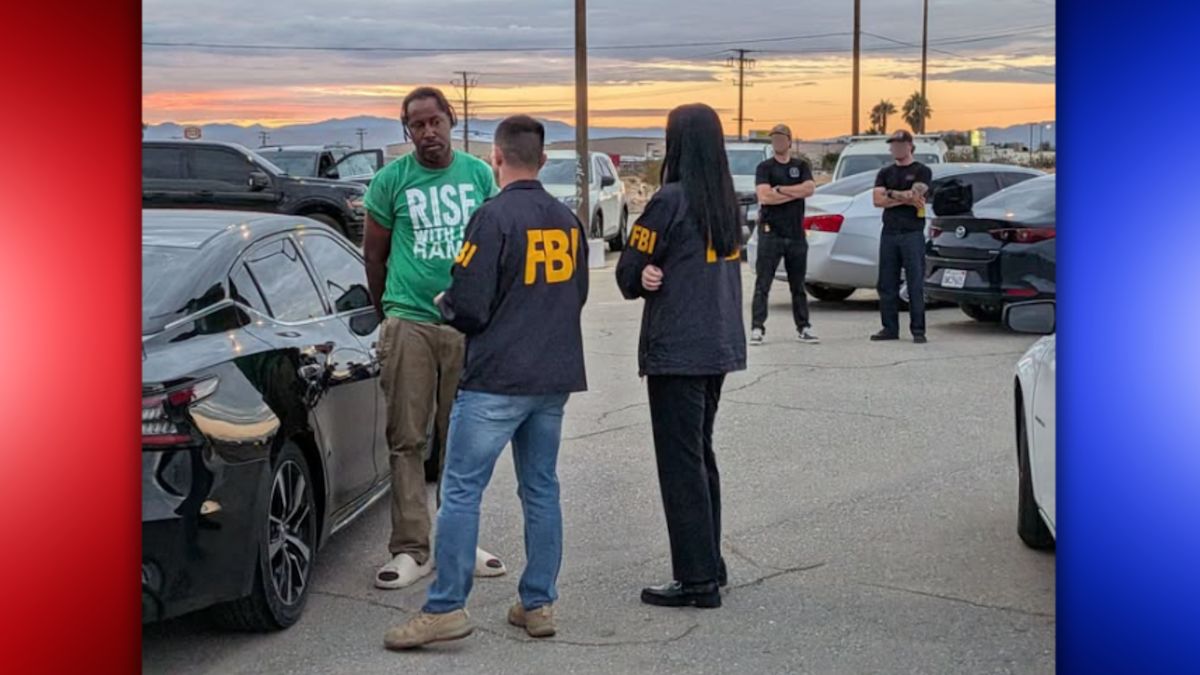
California requires anyone trying to put a proposed law on the statewide ballot to collect hundreds of thousands of voter signatures. Federal prosecutors say James Brass found a shortcut: give real voters’ information to people on Skid Row and pay them to sign those voters’ names.
Brass, 47, also known as “Lord,” of Victorville, was arrested September 10 after a federal grand jury charged him and two petition circulators who worked for him. Courtney Price, 49, of Jacksonville, Florida, and Jateisha Herron, 33, of Boron, California, were also charged. All three face one count of conspiracy to commit identity fraud in furtherance of a state felony. Brass and Price face an additional identity-fraud count.
According to the indictment, the group used a database from February through August 2026 to find registered California voters. Brass and Price took those voters’ identities to Skid Row in downtown Los Angeles, handed the information to petition signers, and paid them to copy it onto ballot petitions and sign the voters’ names.
Brass and Herron then signed declarations under penalty of perjury stating that they had personally watched the named voters sign. They turned the petitions over to several petition coordinators, where the signatures could be counted toward putting an initiative on the ballot.
Worth Something
Getting enough signatures takes a lot of people. A proposed statute needed 546,651 signatures to qualify for California’s 2026 ballot. A constitutional amendment needed 874,641. Organizers had up to 180 days to collect them.
Because campaigns need so many signatures in a short window, they commonly hire petition-management companies that set a price per signature and contract with outside collectors.
Brass managed a team of those collectors and also gathered signatures himself. He knew the petitions moving through the coordinators would result in a petition-management company paying him.
In all, Brass received approximately $41,600 from coordinators working with one such company.
Follow the Money
The payment trail caught readers’ attention almost immediately.
“Who paid him? That’s what’s important,” one person wrote beneath the FBI Los Angeles post. Another wanted to know “who hired him and how was he paid.” Calls to “follow the money” also ran through the comments beneath the U.S. Attorney’s Office post.
Federal prosecutors traced Brass’s payments through petition coordinators working with a petition-management company, which is where the public record currently leaves the money trail.
Each charged count carries a statutory maximum sentence of five years in federal prison upon conviction.
All parties are presumed innocent unless and until proven guilty in a court of law.