
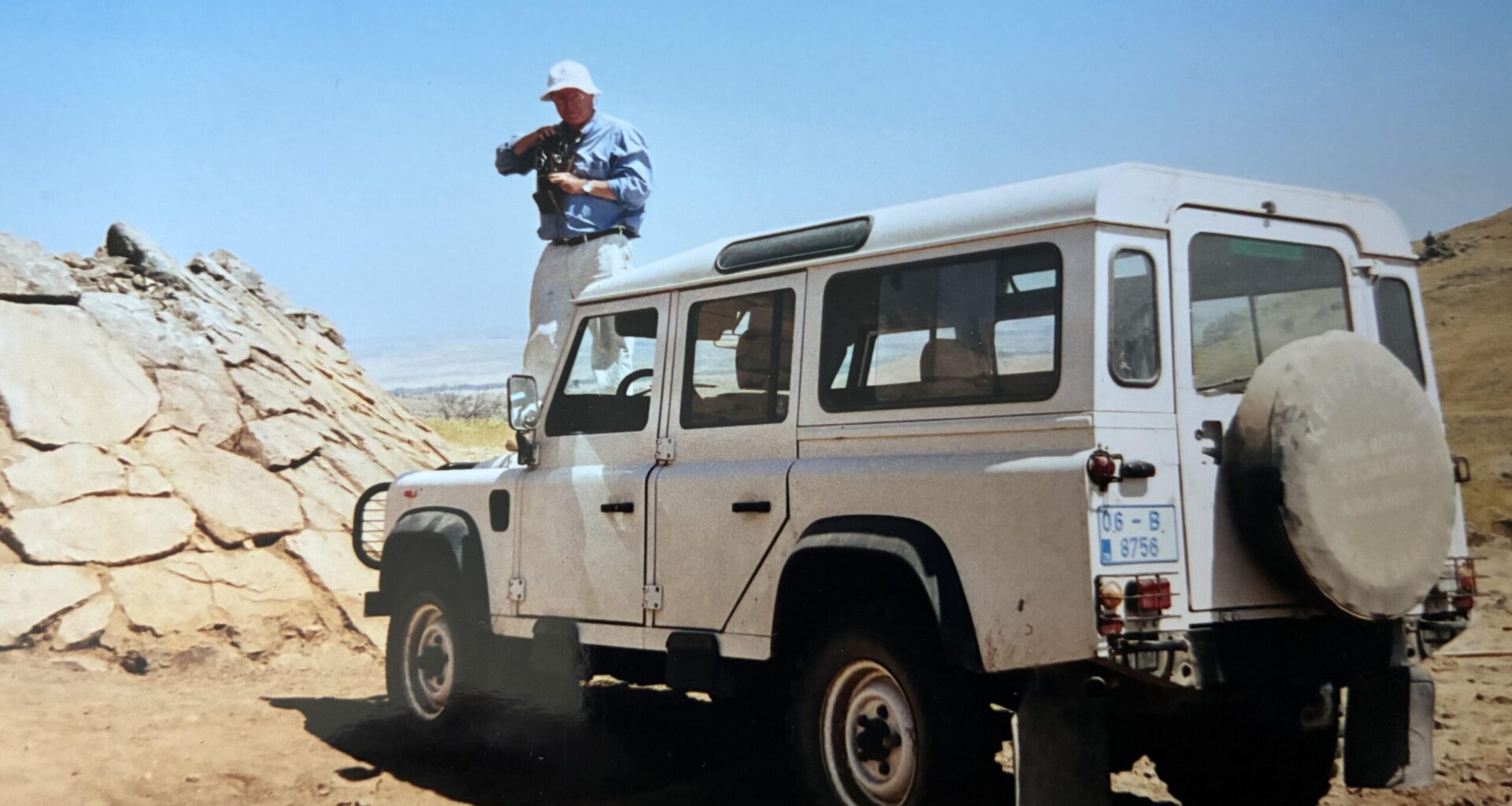
Sabrina Maras, PhD ’09, has just published David Stronach and British Archaeology in the Middle East, a biography of the late Berkeley professor of archaeology, through Bloomsbury UK. Sabrina first met David while working toward her PhD in ancient Near Eastern archaeology at UC Berkeley. She found that the excavation stories with which David peppered his graduate seminars were so riveting that she urged him to write his memoirs. They began to record his recollections in 2014 until his death in June of 2020. After David’s passing, Sabrina helped his family organize his personal papers to help salvage what was important to keep for posterity. For months, she sorted through boxes filled with evidence of over six decades of his life in archaeology. From personal letters written to David by Agatha Christie, to a telegram offering David the position of director of the British Institute of Persian Studies in Tehran, Sabrina quickly realized that there was much more to David’s life story than he had previously revealed. She decided to finish the memoir they had started six years earlier.
By piecing together photographs and documents, Sabrina was able to reconstruct a fuller view of Stronach’s life and work. But she wanted to add stories from the people who had known and worked with him personally in the field. By interviewing many of David’s former colleagues (with whom he had excavated in Iran, Iraq and Turkey), she was able to weave together what became more than a simple biography filled with entertaining stories. David Stronach and British Archaeology in the Middle East became the vehicle in which to document many of David’s real-life experiences with some of the more eccentric characters that peopled the world of British archaeology in the 20th century: Max Mallowan, Agatha Christie, Seton Lloyd, Leonard Woolley and James Mellaart, among others. Beginning with his early life as a child evacuee during World War 2, the biography traces his studies at Cambridge to his early forays into archaeology, describing his exhaustive but instructive walks across Anatolia with James Mellaart collecting sherds, or his excursions into the Baghdad bazaar to help Agatha Christie purchase handmade carpets and jewelry. It delves into his discovery of the Median site of Tepe Nush-e Jan, and how his perseverance and ingenuity in the field informed his scientific research. Perhaps most relevantly, it recounts his two decades directing BIPS (British Institute of Persian Studies)—an institute that brought together archaeologists and intellectuals from the world over to congregate and share ideas—as well as the aftermath of the Iranian Revolution on the world of British archaeology. This retelling of David Stronach’s unique life is one that will engage those that love adventure, archaeology, and unconventional lives.