
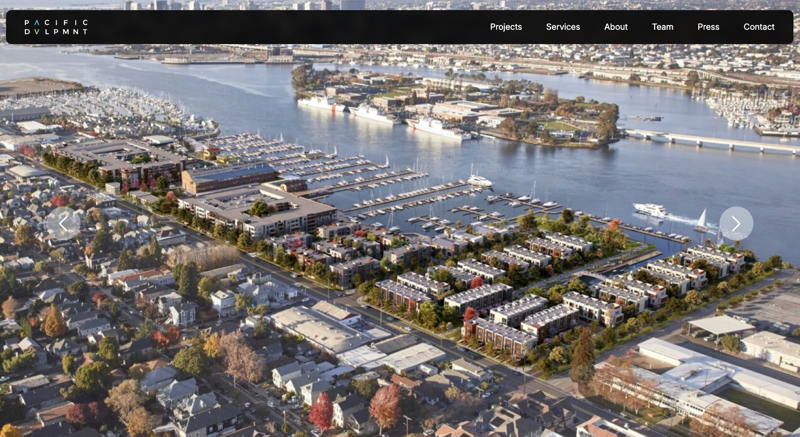
As Sausalito voters consider a ballot measure that could have lasting implications for the city’s historic working waterfront, a recent example just across the Bay offers a cautionary tale. Alameda Marina was once home to a broad collection of boatyards, marine trades and maritime businesses. Its redevelopment came with the promise that housing and maritime commerce could coexist.
Almost a decade later, we went back to see what’s left of the working waterfront.
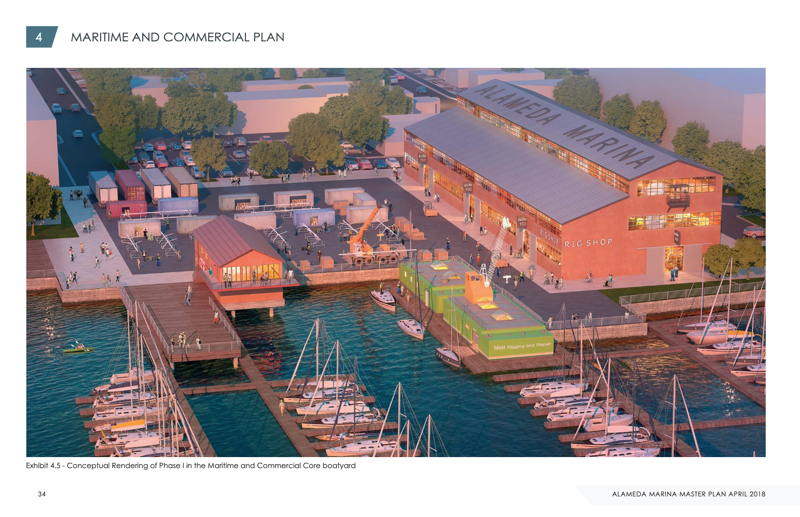 An artist rendering circulated by the City Council featured a commercial maritime area planned for Alameda Marina.
© 2026 Alameda Marina
Though every situation is unique, Alameda Marina was an active commercial maritime property that was home to Svendsen’s Boatyard along with its chandlery, welding shop, workshops and a marine bookstore, Island Yacht Club, yacht brokers, naval architects, sailmakers, riggers, maritime electrical, ocean research consulting firm DOER and marine dry storage.
Somewhat underutilized and in need of capital investment to shore up its crumbling waterfront seawall, Alameda Marina was approved for redevelopment by Pacific Development. The plan drew opposition from Save Alameda’s Working Waterfront, which argued that despite the developer’s promise of a mixed-use development combining housing and maritime commerce, the project would ultimately displace the maritime trades.
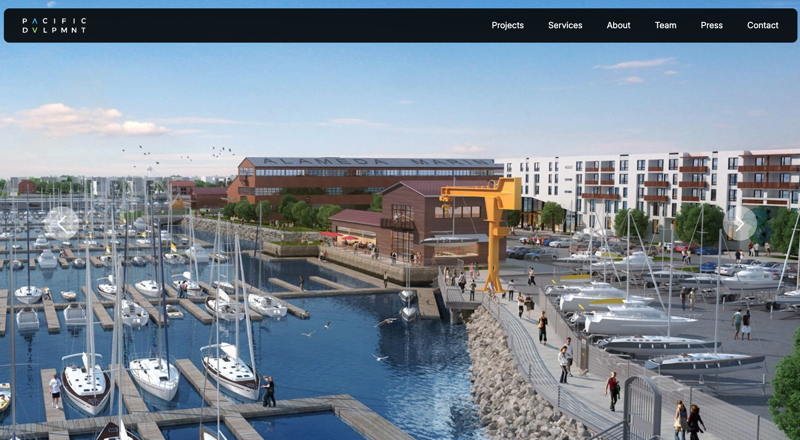 Artist rendering of the proposed dry storage area submitted by the Alameda Marina developers to the Alameda City Council.
© 2026 Alameda Marina
In 2018, the Alameda City Council approved a mixed-use redevelopment with 760 housing units while retaining a maritime-commercial core and working-marina facilities. Eight years later, the development is far from complete, though the large residential project is rapidly growing.
Very few people expect to ever see the commercial maritime facilities shown in the artist renderings.
The photo below is of the dry storage area in the rendering above. Today, the hoist does not work and there are no boats in dry storage. The large yachts shown to the City Council in the developer’s rendering were certainly not going to be served by the hoist in the image.
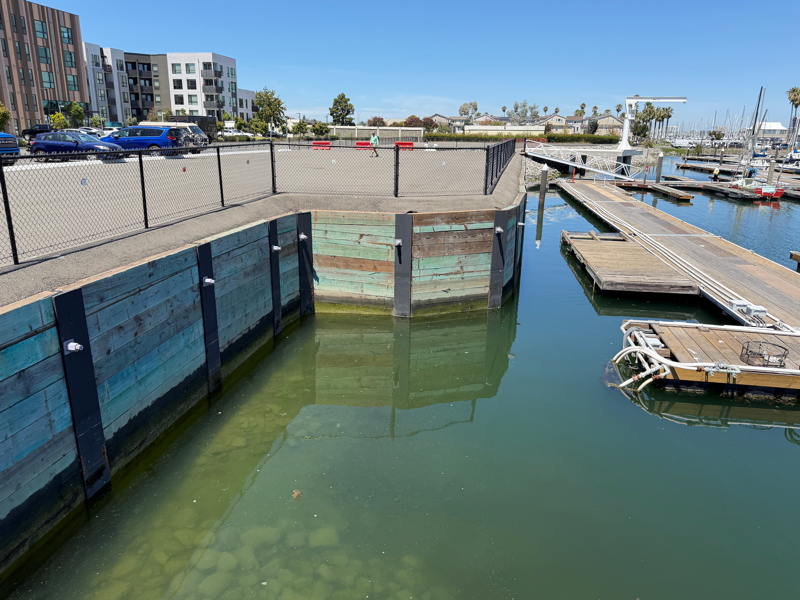 From 2018 to 2026: Lots of housing has been built and the seawall has been repaired, but the dry storage remains vacant and the lone hoist unusable.
© 2026 John
Reading through Pacific Development’s proposal, it was suggested that the former Alameda Marina did not allow public access — something its mixed-use project would expand. All boaters know, however, that the marina was as open to the public as any shopping mall. Everyone was welcome to drive in, walk along the waterfront, or do business with the many marine businesses on the property.
Today, much more of the property is occupied by private residences, though the development will include a public shoreline promenade with views of the water. Many municipalities, as well as BCDC, often appear to equate/confuse shoreline bike paths and walkways with public access to the Bay.
But access to the shoreline and access to the water aren’t necessarily the same thing.
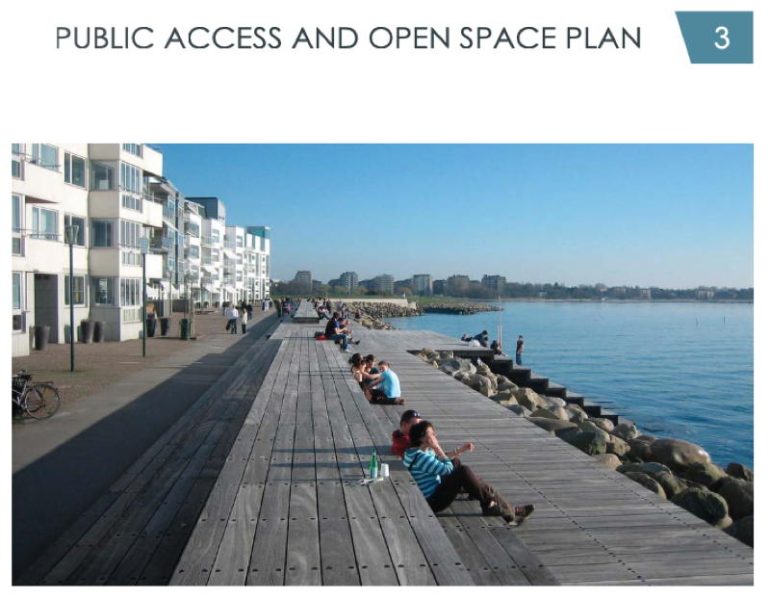 One of the developer’s renderings of “public waterfront access” in the submissions to the Alameda City Council. The image shows people sitting near boat-free water where there used to be dry storage and three working boat hoists.
© 2026 Alameda Marina
The image below is possibly the most accurate artist rendering of the completed mixed residential/commercial maritime redevelopment of Alameda Marina. The entire land portion of Alameda Marina is perhaps 90% residential, with the former DOER building still visible in the proposed maritime commercial core area, though no actual commercial maritime businesses can be seen.
What used to be one of the core centers of the island of Alameda’s maritime culture and marine-trades businesses has been completely overwhelmed by the housing approved by Alameda’s City Council.
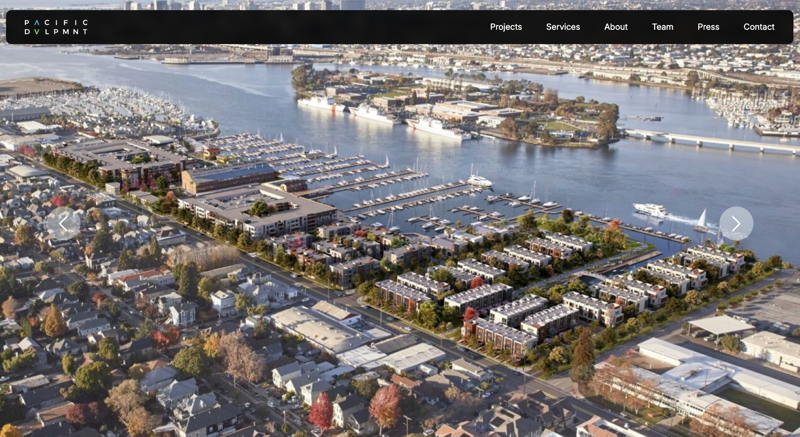 Though commercial maritime could appear in the future, the developers’ overhead rendering of the finished property shows what looks like a completely residential development.
© 2026 Pacific Development
We reached out to Pacific Development to ask if they anticipated any marine-trades businesses returning to Alameda Marina, but did not hear back. Since the project is still under construction, we can’t completely discount the possibility that maritime businesses could return, though we’ve spoken with some former tenants who can’t imagine moving back.
Unlike the Alameda Marina redevelopment, Sausalito’s Industrial & Maritime Preservation and Improvement Initiative, or Measure X, does not change the city’s current zoning to allow housing in the Marinship. Instead, it would allow future changes to certain zoning and development standards to be made by the City Council rather than requiring approval from Sausalito voters.
Like many working waterfronts around the country, the Marinship has aging roads and infrastructure in need of maintenance, upgrades and investment. Measure X is intended in part to encourage that investment by giving maritime and industrial businesses greater flexibility to improve and develop their properties. But it would also leave future zoning decisions largely in the hands of the City Council — and the ultimate effect on the Marinship will depend not only on what the measure allows today, but on what future councils, property owners and developers choose to do with that flexibility.