
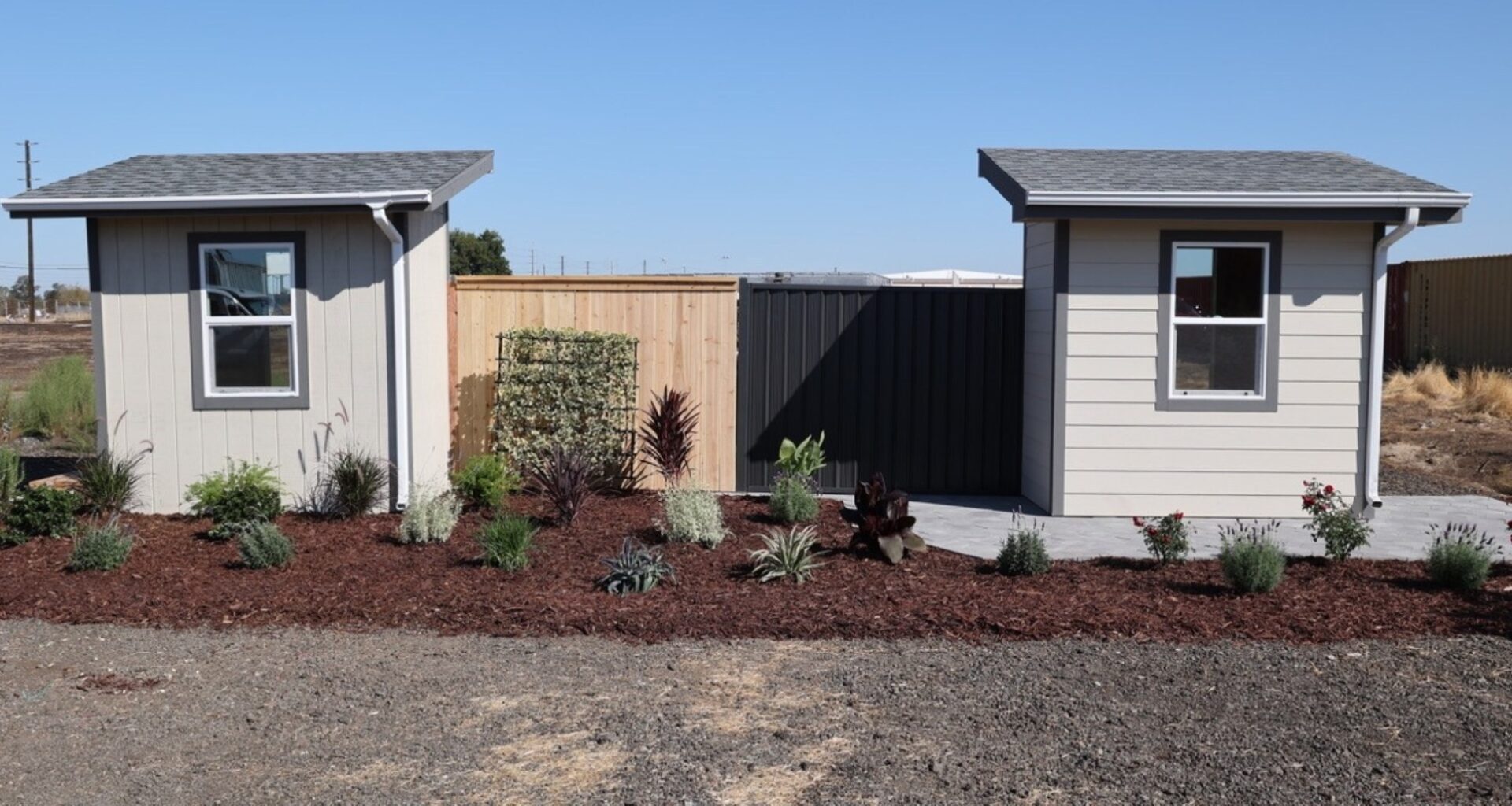
With more than 90% of Poway’s geography having some level of wildfire hazard identified by fire officials, it is with some urgency that residents learn how to create defensible space to protect their homes.
Poway Fire Department staff continued their education efforts by giving two Zone Zero Defensible Space presentations in the Poway City Council Chambers on Sept. 8 and 10.
Jenna Stein, the city’s emergency preparedness program manager, said the goal is to engage the public in wildfire preparedness strategies and reach voluntary compliance with state rules regarding preparedness.
“We will not knock on your door and issue a fine because your plant is too close to the wall,” she told a group of about 50 attendees on Sept. 8. “We’ll spend most of our resources on engaging folks who want to know how they can help protect the entire community.”
A final draft of the state’s new Zone Zero fire-safe landscaping rules were approved by the California Board of Forestry and Fire Protection on Aug. 19. For existing homes, it calls for removing combustible materials away from a home within three years, while larger projects — such as replacing wood fencing within five feet of a home — has a five-year timeline for implementation.
Poway Fire Chief Brian Mitchell said the city “does a great job” of keeping most wildfires to 10 acres or less, but generally fires have become bigger and more destructive since the area’s 2003 Cedar fire and the 2007 Witch Creek fire.
Both destroyed dozens of homes in Poway, with 38 lost to the Cedar fire and 90 to the Witch Creek fire.
In all, the 2003 Cedar fire burned 273,000 acres, destroyed 2,820 structures (with more than 300 of them in Scripps Ranch) and killed 15 people. The 2007 Witch Creek fire burned 197,990 acres, destroyed 1,650 structures (365 destroyed homes were in Rancho Bernardo) and killed two people.
Since then, according to fire officials, other very destructive wildfires throughout California include the Camp fire in 2018, which burned the town of Paradise and destroyed nearly 19,000 structures. In 2020, the August Complex fire burned more than 1 million acres. Fires that burned more than 1,000 structures each included the Glass fire in September 2020, the Dixie fire in July 2021 and the Caldor fire in September 2021.
More recently, the Palisades and Eaton fires in January 2025 killed 31 people and destroyed around 13,000 homes combined.
“The environment has shifted and the circumstances have changed,” Mitchell told the audience. “Zone Zero rules help make your home more resilient to wildfires.”
Julie Gallant
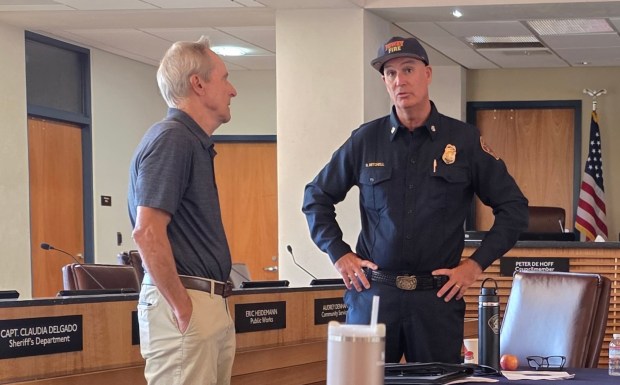
Poway Fire Chief Brian Mitchell, right, talks to a Zone Zero Defensible Space Workshop attendee before the hour-and-a-half presentation. (Julie Gallant)
Zone Zero is the term used for the area that is closest to a structure in the Home Ignition Zones guidelines.
Zone Zero – referred to as the Immediate Zone – includes the home and the surrounding 5 feet of property. Zone One is the Intermediate Zone that starts at 5 feet from a structure and extends to 30 feet from the structure. Zone Two is the Extended Zone and starts 30 feet from the structure and extends to 100 feet from the structure.
“Science has proved that the first 5 feet surrounding your home is the most important defensible space zone,” according to “A Homeowner’s Guide to Defensible Space & Ornamental Vegetation Maintenance.”
“Keeping this area clear of combustible materials creates an ember-resistant zone designed to keep fire and embers from igniting material that can spread the fire to your home,” according to the guide.
Steps the guide suggests for “greatly improving the chance of your home surviving a wildfire” including the following in Zone Zero:
• Use noncombustible materials such as rock, stone pavers, cement, bare earth, gravel or sand. Do not use combustible bark or mulch within this zone. Poway Fire Safety Inspector Kristin Holden also suggests removing all vegetation within 1 foot of a home. Vegetation should also be cleared within 2 feet of windows, doors and vents, and also cleared within 5 feet of attached decks, stairs and pergolas, Holden said.
• Remove all plants and shrubs near windows.
• Limit plants in this area to low-growing, non-woody, properly watered and maintained plants.
• Limit combustible items (outdoor furniture, planters, etc.) on top of decks that may capture embers.
• Relocate firewood and lumber to be stored at least 30 feet from your home.
• Replace combustible fencing, gates and arbors attached to your home with noncombustible alternatives.
• Relocate garbage and recycling containers outside this zone.
• Relocate boats, RVs, vehicles and other combustible items outside this zone.
Julie Gallant
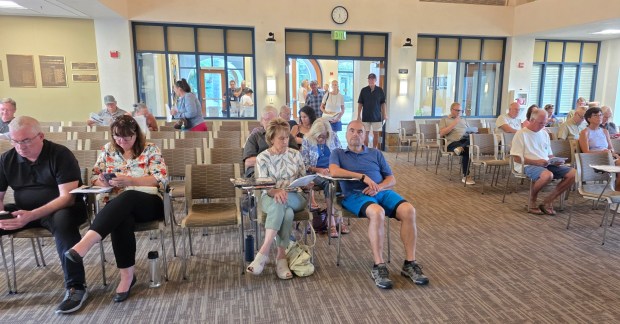
Poway residents waiting for the Sept. 8 Zone Zero Defensible Space Workshop to begin in the Poway City Council Chambers. (Julie Gallant)
Additional tips for Zone Zero are to clean debris from roofs, remove leaves from gutters and to trim trees at least 5 feet away from the roof and at least 10 feet away from a chimney. Tree branches should be kept at least 1 foot away from eaves and walls, Holden said.
Holden said some grasses and potted plants are allowed in Zone Zero, but they should be no taller than 18 inches from the soil and plants should be in noncombustible pots, not plastic pots.
A good tip is to keep plants spaced apart to deter the spread of fires and to plant “fire smart” or fire resistant vegetation, Stein said. Plants containing oils and sap are generally not fire resistant, she added.
Stein said defensible space measures were first introduced in 1987 with the goal of preventing a structure fire from spreading to the surrounding forest.
In 2005, after the Cedar fire, defensible space regulations expanded with the goal of protecting homes from wildfire. These rules expanded defensible space from 30 feet to 100 feet, required the removal of dead or dying vegetation including fallen leaves, and required the mowing of annual grasses and weeds.
For Zone One, fire officials recommend keeping the area “lean and green” with separation between plantings to stop the spread of wildfire.
In Zone Two, the officials suggest this area be kept “trimmed and maintained” with separation between plants.
Existing homes have until January 2030 to meet the state’s minimum requirements for the maintenance of defensible space in the Very High Fire Hazard Severity Zone, states a pamphlet distributed at the Zone Zero Defensible Space workshop.
“The goal of Zone Zero is to reduce the structure ignition potential from embers, radiant heat and direct flame contact,” the handout stated. “By reducing the structure ignition potential, we can improve the chances that a building will survive a wildfire, even under extreme circumstances.”
More information about wildfire hazard and defensible space is available online at Poway.org/Wildfire and at Poway.org/FireZones.
Learn more about community driven wildfire risk reduction activities at PowayNEC.com and defensible space assistance programs at bit.ly/PowayWildfirePrograms.
Learn more about state regulations at fire.ca.gov/dspace and review construction materials at OSFM.fire.ca.gov.