
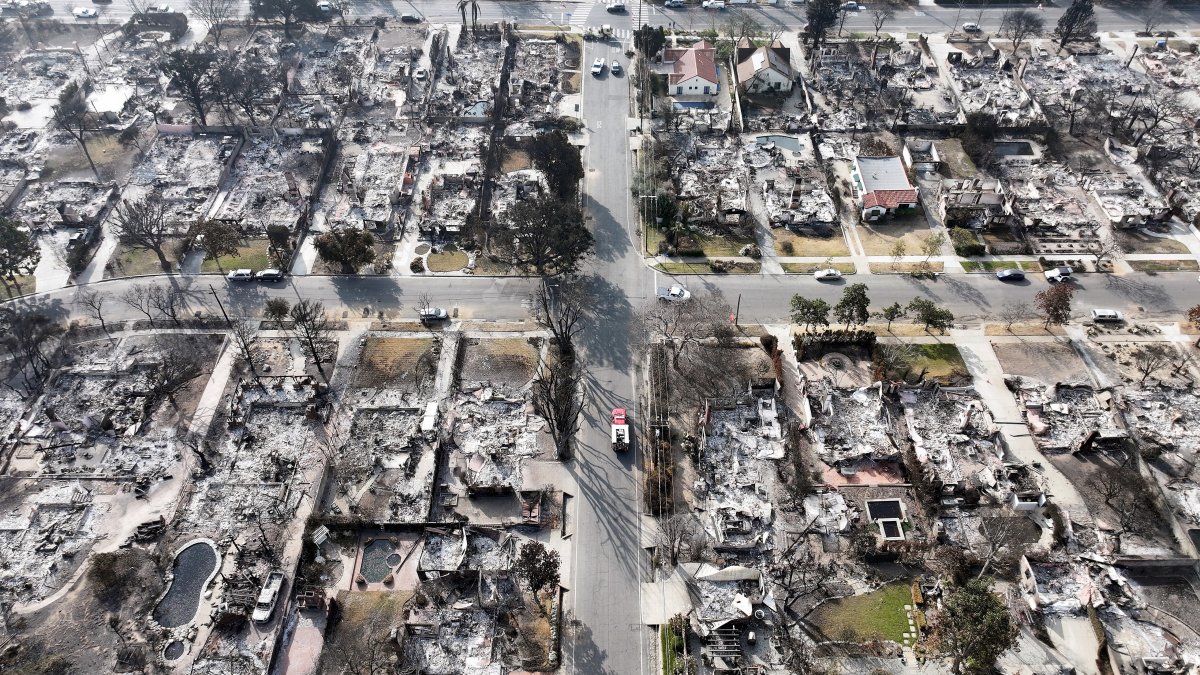
Los Angeles County did not have formal systems and plans in place to support recovery and re-population efforts after the deadly Palisades and Eaton fires in January 2025, according to a new review of events in the months after the wildfires.
The county responded effectively in real-time after the fires with a joint-information center, unified access pass system, recovery task force and other tools for recovery and repopulation, but lacked a standing plan, codified authorities and a rehearsed system, according to the 180-page after-action report compiled by the McChrystal Group. The county’s board of supervisors approved the use of the independent consultant in March 2025 to conduct the review.
Read full report below.
The report focused on the county’s response in the three months that followed the fires, narrowing the review down to six critical areas. The Eaton Fire in Altadena and the Palisades Fire in Pacific Palisades started Jan. 7 in a historic windstorm that forecasters had warned of for days.
The six areas explored in the review were communications; volunteer and donations management; recovery; repopulation; shelter, housing and people at higher risk; and public health and access and functional needs.
The report said the county’s immediate response relied heavily on “institutional knowledge” from other major fires, but lacked a formal plan.
The review was expected to be discussed at the Tuesday meeting of the Los Angeles County Board of Supervisors. It includes a long list of suggested changes in an effort to help prepare for the next disaster emergency and its aftermath.
Those recommendations include an updated and formalized recovery and repopulation plan and adopting clearly defined systems and leadership roles to execute important aspects of recovery, such as communications, donations and volunteer services, and. housing and shelter.
The review also pointed to some effective actions in the months after the fires, including the county’s joint information center, recovery task forces and debris removal.
The Palisades Fire started on the morning of Jan. 7 and quickly spread to thousands of acres. Fanned by powerful Santa Ana winds that had been in the weather forecast for days, the 23,700-acre fire became the ninth-deadliest and third-most destructive wildfire on record in California. Twelve deaths were reported in connection with the Palisades Fire, which destroyed more than 6,800 structures.
Hours later, another wildfire broke out in the hills above Altadena. The Eaton Fire grew to 14,000 acres, leaving 19 people dead and destroying 9,400 structures. It is the fifth-deadliest and second-most destructive wildfire in California history.