
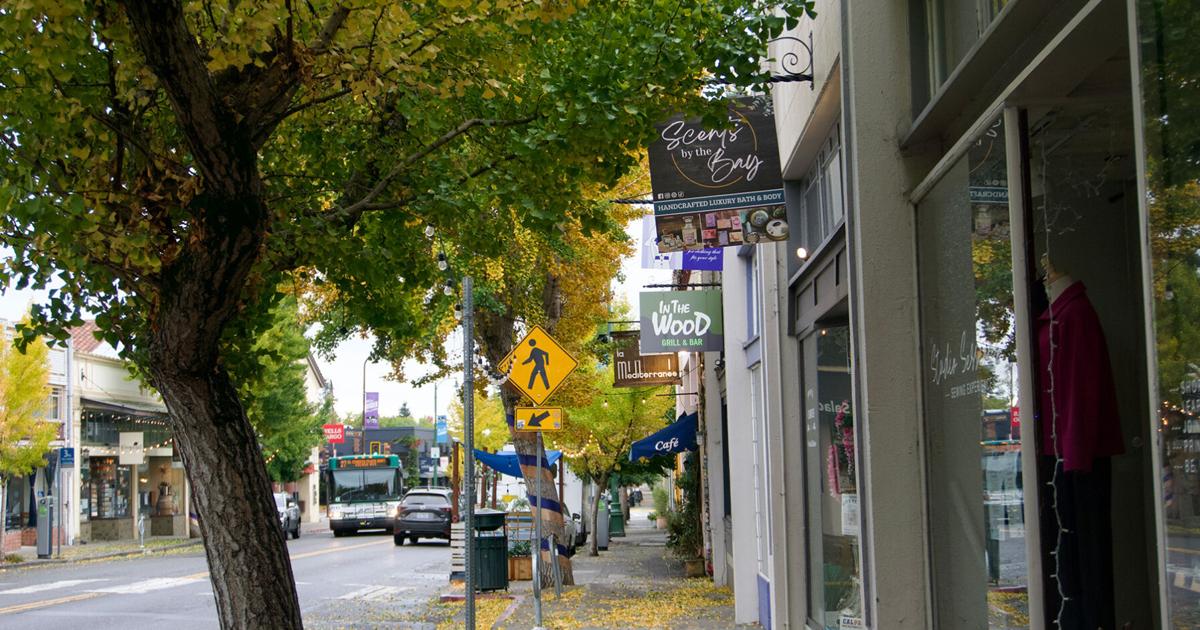
At a special Berkeley City Council meeting Thursday, city staff gave a presentation regarding a zoning plan known as the Corridors Zoning Update. About 160 people at the meeting opposed the current version of the plan. Many of those who gave public comment were small business owners concerned about the impacts that zoning changes would have on their businesses.
If implemented, the zoning plan would increase the height limit of buildings in all three corridors — North Shattuck Avenue, College Avenue and Solano Avenue. According to the presentation, the plan would “increase housing opportunities … particularly in the highest-resource and highest-income neighborhoods.”
Many attendees wore stickers and held signs reading “Save Berkeley Shops,” the name of a grassroots organization representing business owners from the three corridors.
“We all want more housing in our neighborhoods, we need it. We want more affordable housing especially,” said Donald Simon, an organizer with Save Berkeley Shops. “What has got us upset is that this would jeopardize — and, we believe, destroy our three shopping districts that we all depend on.”
Attendees periodically expressed their opinions during the presentation by applauding, booing or shouting.
On a back table next to printed copies of the meeting agenda, lay three stacks of paper. Two were brightly colored and read “pause” and “engage with us.”
The other was a summary of a petition stating that it was signed by 46 businesses in the North Shattuck commercial corridor that agreed “small locally owned businesses and neighborhood serving businesses must be protected from the adverse impacts of the Corridors Zoning Update.”
Christene Diehr, owner of a small business in the College Avenue corridor,said she worries that if upzoning is allowed and developers attempt to add stories to the building her business is housed in, the building would allegedly have to be demolished and she would be forced to move locations.
David Shere, a Berkeley resident and member of the Housing Advisory Commission, defended the zoning plan.said “to the extent there are sides, (he) would have been on the side (of Save Berkeley Shops).”
“We know that a child that grows up in a low-income neighborhood in all likelihood is going to have some struggles and difficulties in school, with health, things like that,” Shere said. “When you take that same child and raise them in what they call a high-resource neighborhood, it makes a humongous difference on a person’s life outcomes.”
One resident, who said she represented families with small children, noted during public comment that she felt an “anti-renter and anti-family sentiment” in the meeting room. She voiced her support of “maximizing allowed housing.”
Other public commenters included a worker-owner of The Cheeseboard Collective and an owner of Nabolom Bakery and Pizzeria. The worker-owner of The Cheeseboard Collective expressed her wish for the city to involve business owners in the process more.She claimed she had received little information about the possibility of zoning changes, and only found out through a letter from a neighbor.
“I would love to have a sit-down talk with a member from the council and just explain some of the challenges,” Diehr said. “If they don’t know the challenges, how can they help us?”