
A century ago this week, Sept. 17, 1926, was the third anniversary of the Berkeley’s 1923 fire that destroyed more than 600 structures on the city’s northside.
The anniversary was commemorated with a community luncheon attended by “more than 200 prominent citizens.” Reports were made on progress “for coordinating city departments, the university and the Red Cross in time of disaster,” the Berkeley Daily Gazette reported that day.
Elsewhere, the newspaper noted that more than $3.7 million had been spent on building new structures in the fire area. Over the previous three years, permits had been issued to build 437 residential structures and five new public buildings as well as repair 23 fire-damaged structures.
“Gleaming walls, shining roofs and pleasant gardens mark the area where an inferno raged,” the Gazette reported, “and leveled 40 blocks of homes to smoldering ruins in the short space of a single afternoon.”
Also on the anniversary day, two new lawsuits were filed against Pacific Gas and Electric Co. for “carelessness and negligence … of that company in operating a power line in the Berkeley hills.”
Insurance companies filed both lawsuits, and the Gazette noted that there was now “a total of 40 cases to be heard in Justice Court here, with 800 suits in all filed against the PG&E and involving six million dollars.”
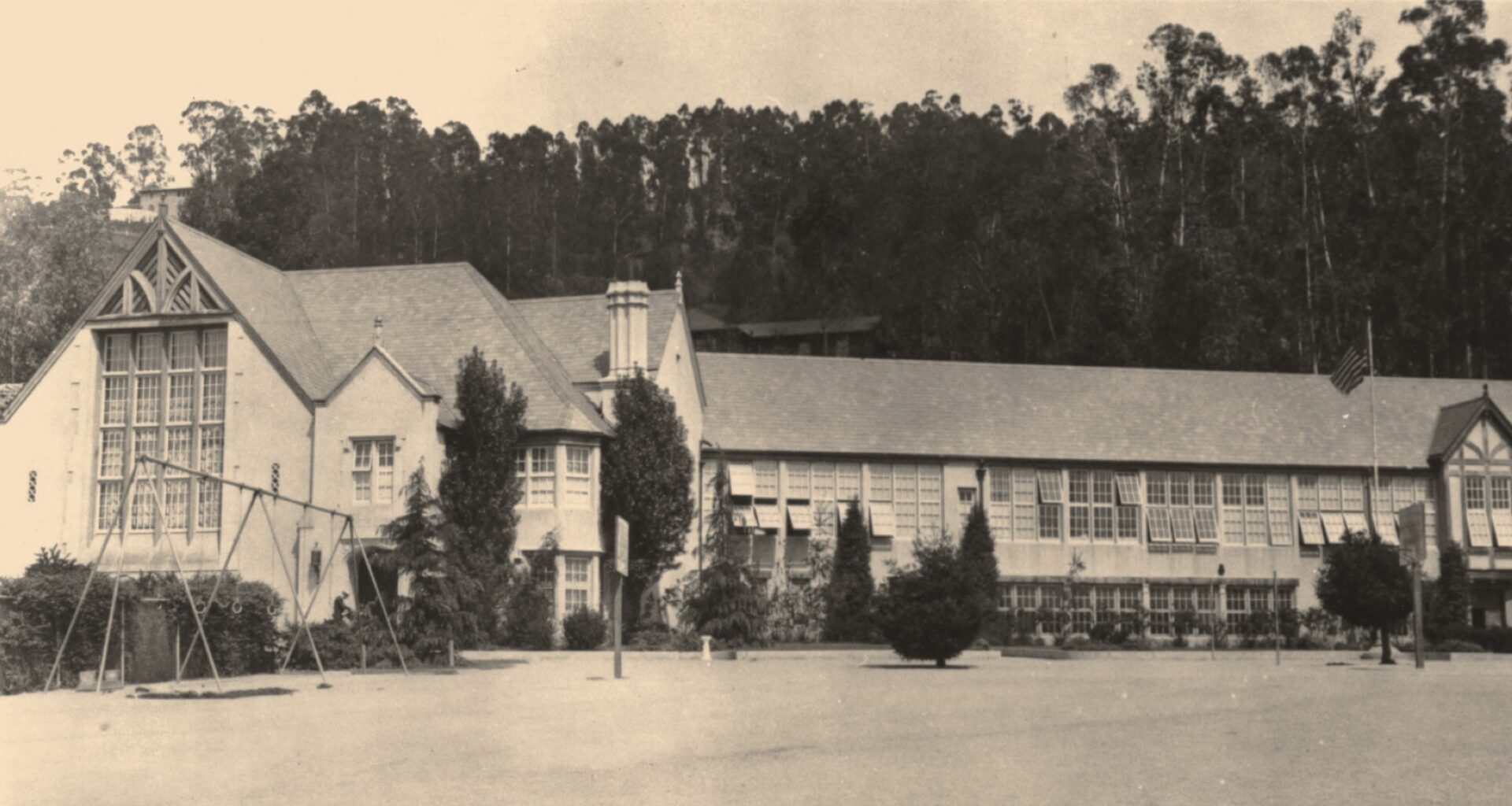
Hillside School: On the eve of the 1923’s fire anniversary, one of the five new public buildings in the fire zone had been dedicated on Sept. 16, 1926. This was Hillside School, a handsome $150,000 building at Buena Vista Way and La Loma Avenue.
“It is an ill wind that blows nobody any good,” C.E. Denman, the Berkeley school board’s president, told the assembled crowd. “There are some evil winds blowing here and there through Berkeley, winds of rumor with regard to this school.”
Denman offered “three facts” in defense against the rumors: First, a third of the school’s enrollment came from east (uphill) of the school, meaning it was centrally located; second, buying the land and building the new school on only cost about $250,000; and third, Berkeleyans had voted for a special tax in 1925 to build a new school.
The Hillside School building still stands but was closed in 1983, was later sold by the school district and is a private residence today.
New transit: On Sept. 19, 1926, a bus line operated by the Key System began operation on Spruce Street, starting at Los Angeles Avenue, where the streetcar line then ended. Key System officials said that if there weren’t enough patrons and the buses didn’t produce sufficient revenue, they would probably end the experiment. The city had been negotiating with the Key System for several months on the project.
“Work will start immediately on construction of a concrete trestle extending out into San Francisco Bay three-and-a-half miles from the foot of University Avenue,” the president of the Golden Gate Ferry Co. announced Sept. 18, 1926.
A contract had been awarded to the San Francisco Bridge Co. at a price of just more than $700,000. “Casting of concrete jackets or the trestle piling will be begun at once, and the structure is to be completed in 250 working days,” the president said.
A separate contract to build three ferry boats was planned. The ferries were expected to carry 80 automobiles each and run every 20 minutes from the pier to the Fisherman’s Wharf area of San Francisco’s northern shore.
Injured: A draftsman working for the city of Berkeley, Edgar Hoffman, was “seriously injured” on Sept. 18, 1926, when he drove his car across the streetcar tracks at California and Harmon streets and was hit by a train.
Bay Area native and Berkeley community historian Steven Finacom holds this column’s copyright.