
Here’s something to think about. Who should pay for public facilities and services?
I raise the question because we are continually being asked to pay for things that we rarely use. The popular response: “Is this fair?”
What is fair differs significantly depending on our reliance on such facilities and services.
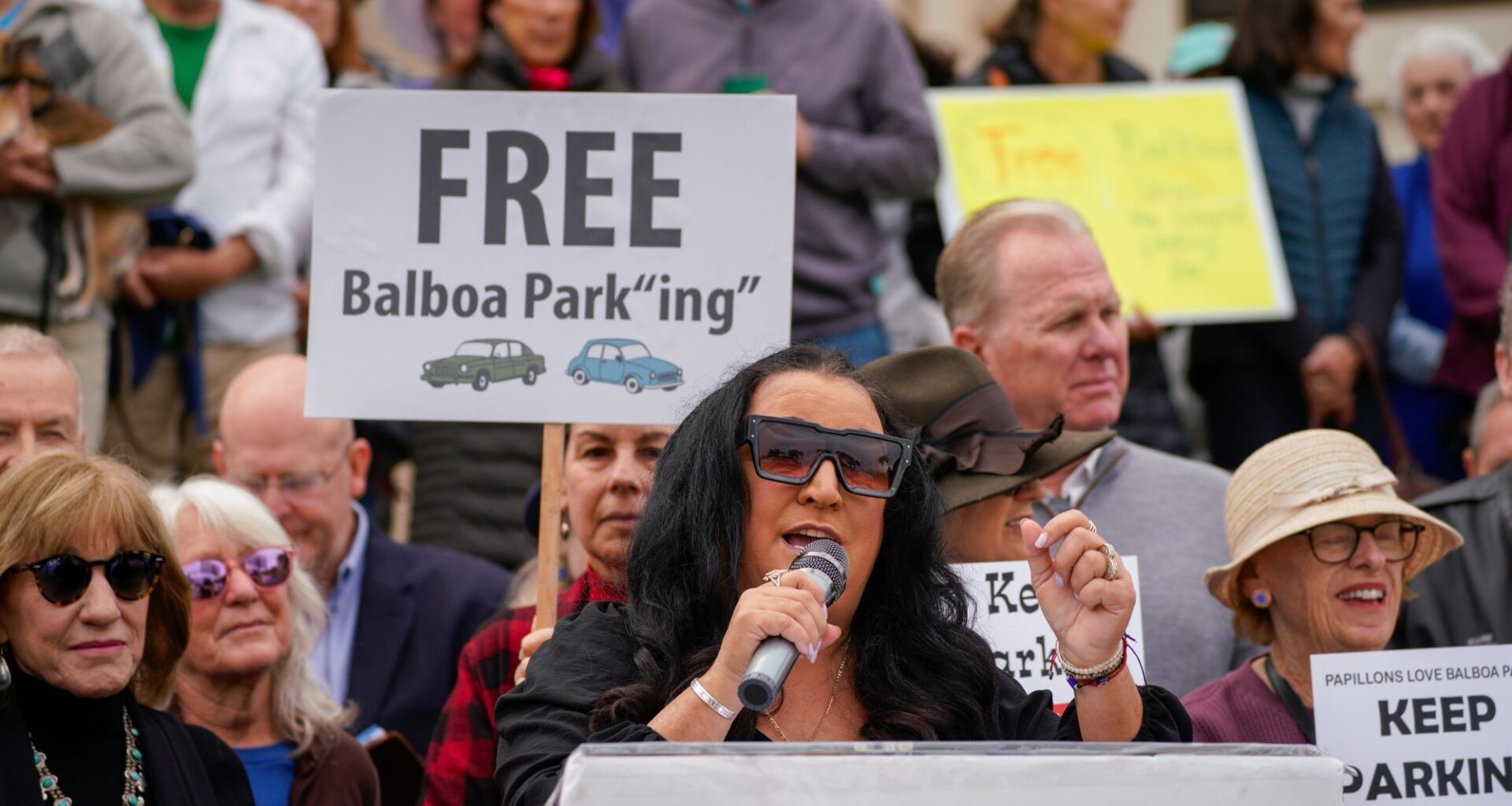
I thought about this when the entire city fumed at the audacity of San Diego charging for parking at Balboa Park. “Are you kidding me? Parking is a right. Look in the Constitution. It must be there somewhere.”
The process of implementing this policy for paid parking met with a horrendous backlash, which led to a reversal of the initiative. This is a shame, because lost in the smoke of a very poorly handled proposal, was the fact that there is probable need and justification for the fees.
This issue reaches deeply into several of our day-to-day experiences. For instance, the cost of public transportation has never been fully supported by patronage. Someone, other than the users, is footing the bill.
Roadways, even toll roads, cost more than the revenue received. What about libraries? The Rancho Bernardo Community Park? The San Diego-Coronado Bridge? Beaches?
 Harvey Levine
Of course, the common entitlement-oriented position is that these are public facilities and services. They are like free, aren’t they? That depends on what you call “free.” In most cases it’s free of a use fee, but certainly not free to provide.
The idea of splitting the costs for utilities between base (fixed) and use fees was recently expanded to our electricity bills. While primarily aimed at customers with rooftop solar systems, it makes sense to have a base fee for having access to the grid, plus fees based on actual usage.
This is what the City of San Diego does with water and sewer billing. There are four fees. One for being hooked up to the water meter and a second for actual water usage. Likewise, a fee for having sewer service and a fee based on the flow (tied to the water usage). Now, this makes perfect sense. I should have to pay for being able to access water and sewer service on demand. I should also pay proportionally for what I use.
So could this concept of paying for services split between base and use fees work for parking, transit and roadways? Assuming that there was a reasonable way to do it, would it not make sense for the city to provide various facilities and services, mostly paid through our taxes, and ask users to pay a modest fee based on their usage. I’m thinking about parks and beaches (parking fee), public transportation (we already do this) and highways (vehicle miles traveled fee).
I would impose the following ground rules:
● Fees would be modest, not necessarily conditioned by the actual costs.
● Adjustments would be available for people authorized for public assistance.
● Fees collected would be funneled back to the responsible agency, rather than into the city General Fund.
● There may have to be carve-outs for special circumstances, such as fees for employees and volunteers at city facilities, and whether fee schedules would be different for county (not San Diego city residents) and other visitors (this is not unusual).
Parking fees should never be employed as a means to punish voters for not supporting tax increases or to make up for poor budgeting. Nevertheless, it seems that a policy such as this is reasonable, fair and equitable.
The facilities and services would still be funded by the public through the traditional taxing methods. However, those who benefit the most from these facilities and services would cover a greater part of the operating cost.
Perhaps the largest challenge would be to build a change in attitude to match realities. We would also have to ignore the nasty taste that we have in our mouths due to the repeated goofs by city officials that have put us into this economic crisis.
We should not approach this as a bail-out, but rather a reasonable way to cover costs in relation to usage, as opposed to an increase in the sales tax.
What do you think?
A Rancho Bernardo resident, Levine is a retired project management consultant and the author of three books on the subject. Write to Levine at levine-rbnews@earthlink.net.