
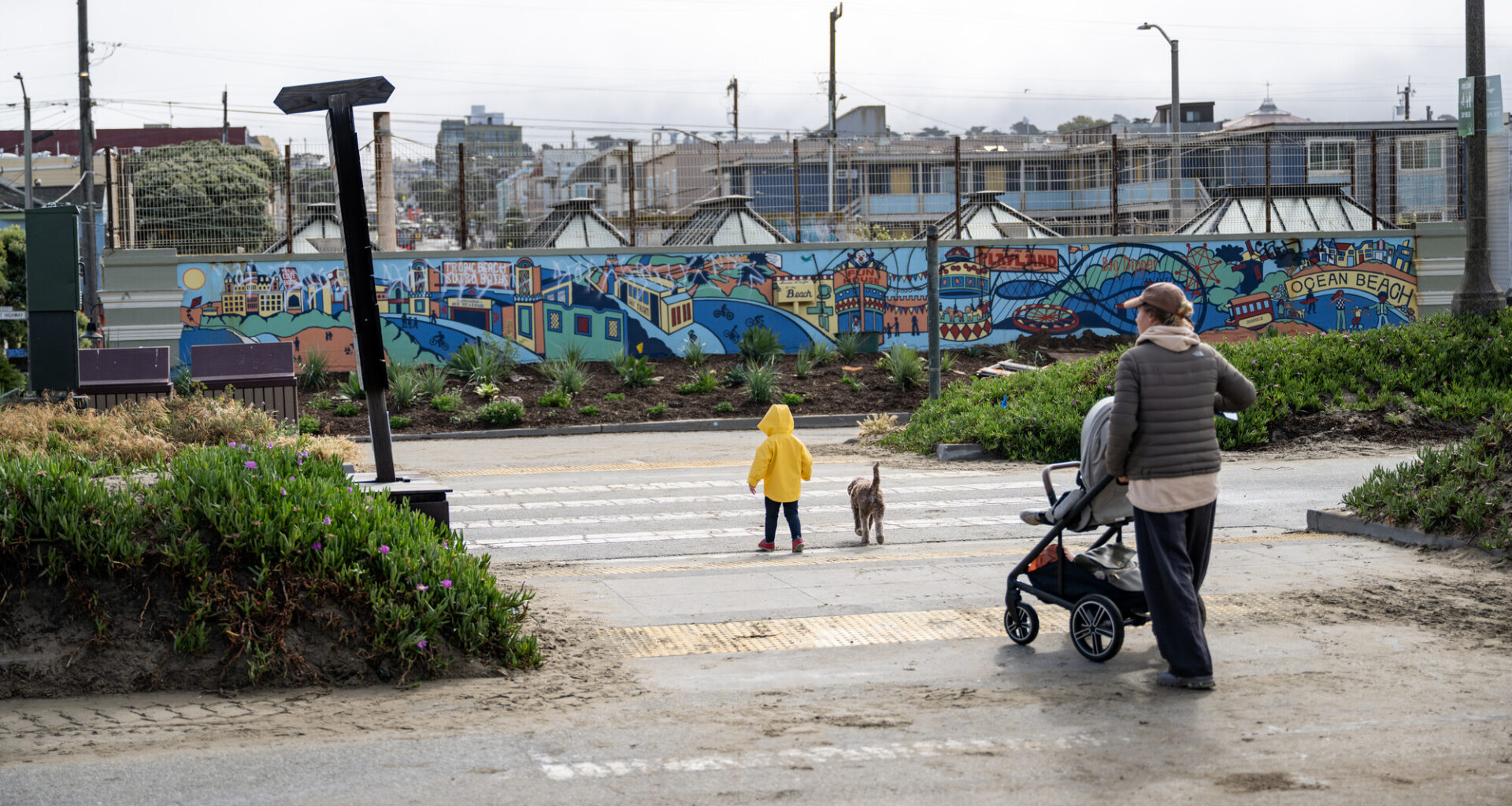
Proponents of reopening the Great Highway to cars have said it would improve safety.
Sep 16, 2026
Updated 2:11 pm PT
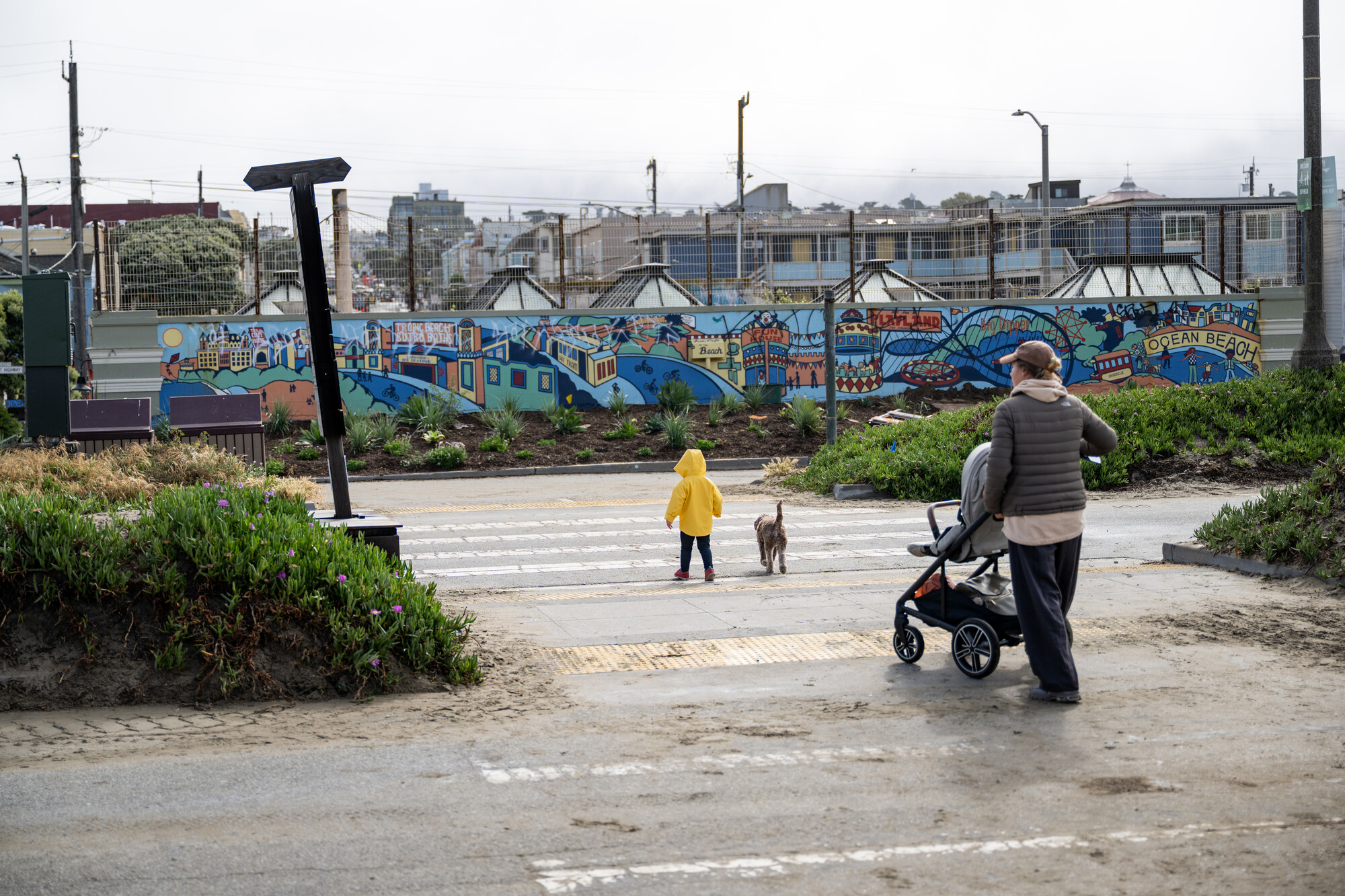
A mother walks with her child and their dog at Sunset Dunes, a park on the former Great Highway roadway, in San Francisco’s Sunset neighborhood on April 9, 2026. (Beth LaBerge/KQED)
San Francisco’s top street-safety advocates are accusing the campaign pushing to reopen the Great Highway of misappropriating pedestrian-safety imagery and falsely suggesting that restoring the road would make the Sunset neighborhood safer.
“This couldn’t be further from the truth,” the executive directors of the city’s bike- and pedestrian-safety organizations, along with the CEO of urban policy think tank SPUR, wrote in a letter they planned to release to voters Wednesday.
The pedestrian-safety advocates allege that supporters of Proposition G, which would reopen the shuttered stretch of the Great Highway to cars on weekdays, have used “misleading, cherry-picked” data to suggest that closing the road has significantly increased traffic injuries.
They call on the Yes on G campaign to cease using pedestrian-safety imagery and language in its campaign materials to suggest that reopening the road would bring about “safe streets.”
“Our organizations have spent decades working to make San Francisco streets safer for people walking, biking and rolling, and especially for kids,” the leaders said. “That’s why we feel compelled to write this letter.”
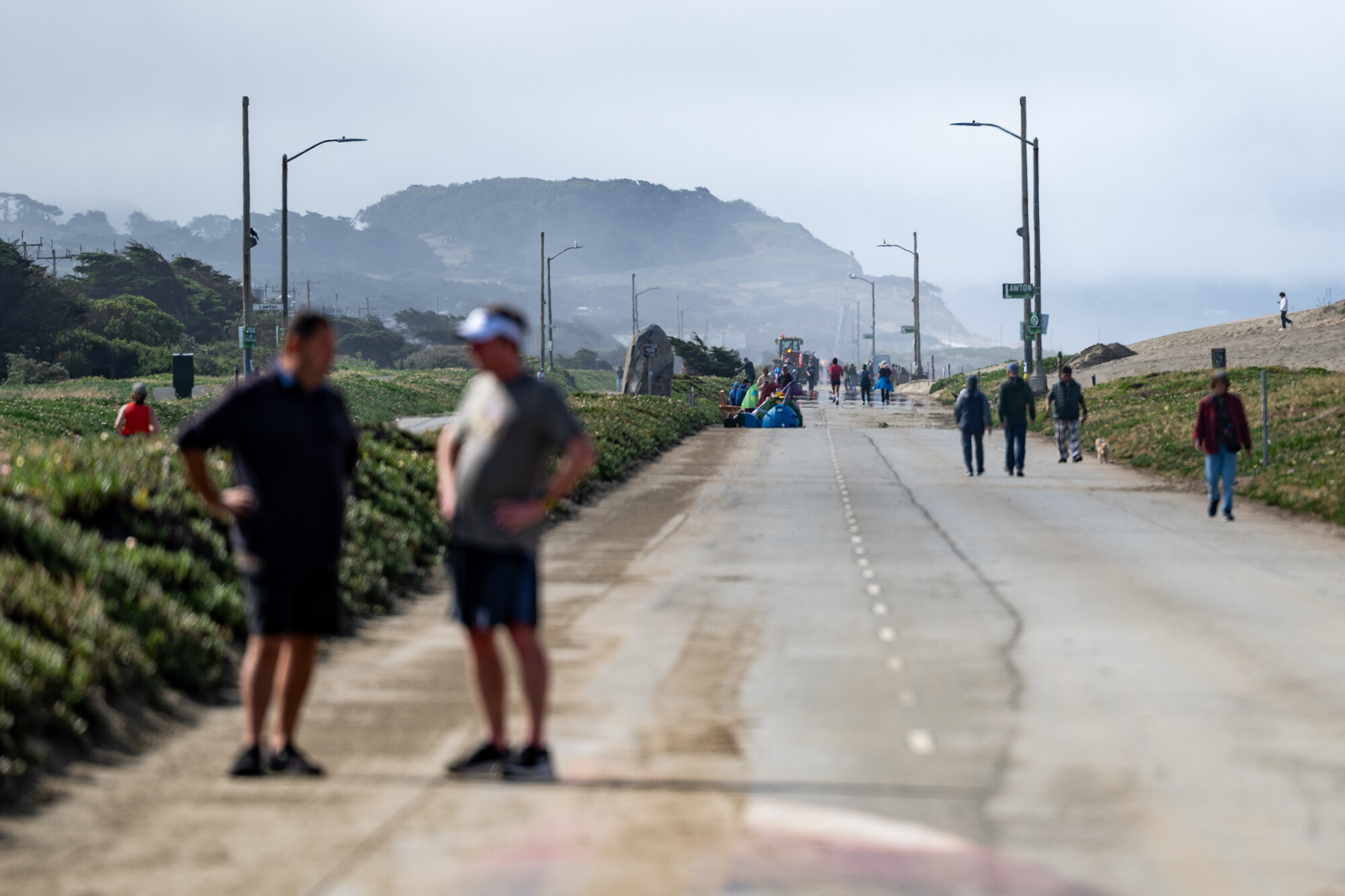 Visitors spend time at Sunset Dunes, a park on the former Great Highway roadway, in San Francisco’s Sunset neighborhood on April 9, 2026. (Beth LaBerge/KQED)
In November, voters will again consider the fate of the 2-mile stretch of the Great Highway that connects the west side, from Lake Merced to the Richmond District. It’s been closed to cars since voters passed Proposition K in 2024, but a new ballot measure, Proposition G, would reopen the road on weekdays. The campaign says the road would remain part of the car-free park on weekends.
Proposition K came after the Great Highway had been temporarily shut down during the COVID-19 pandemic, transforming into a popular spot for walking, running, biking and socially distanced recreating.
The measure sailed to victory, passing by a margin of nearly 10%, and, since, Sunset Dunes has become the city’s third-most-visited park. The city has installed hammocks in the former median of the highway and commissioned murals and art pieces that now line the walking and riding path.
But the majority of voters who live closest to the Great Highway opposed its closure in 2024, and its status remains at the center of west side politics, leading to the recall of District 4 Supervisor Joel Engadrio in 2025 and a now-dismissed lawsuit challenging Proposition K. Earlier this year, Supervisor Alan Wong, who was appointed to replace Engardio, tried and failed to place a similar measure on the June ballot.
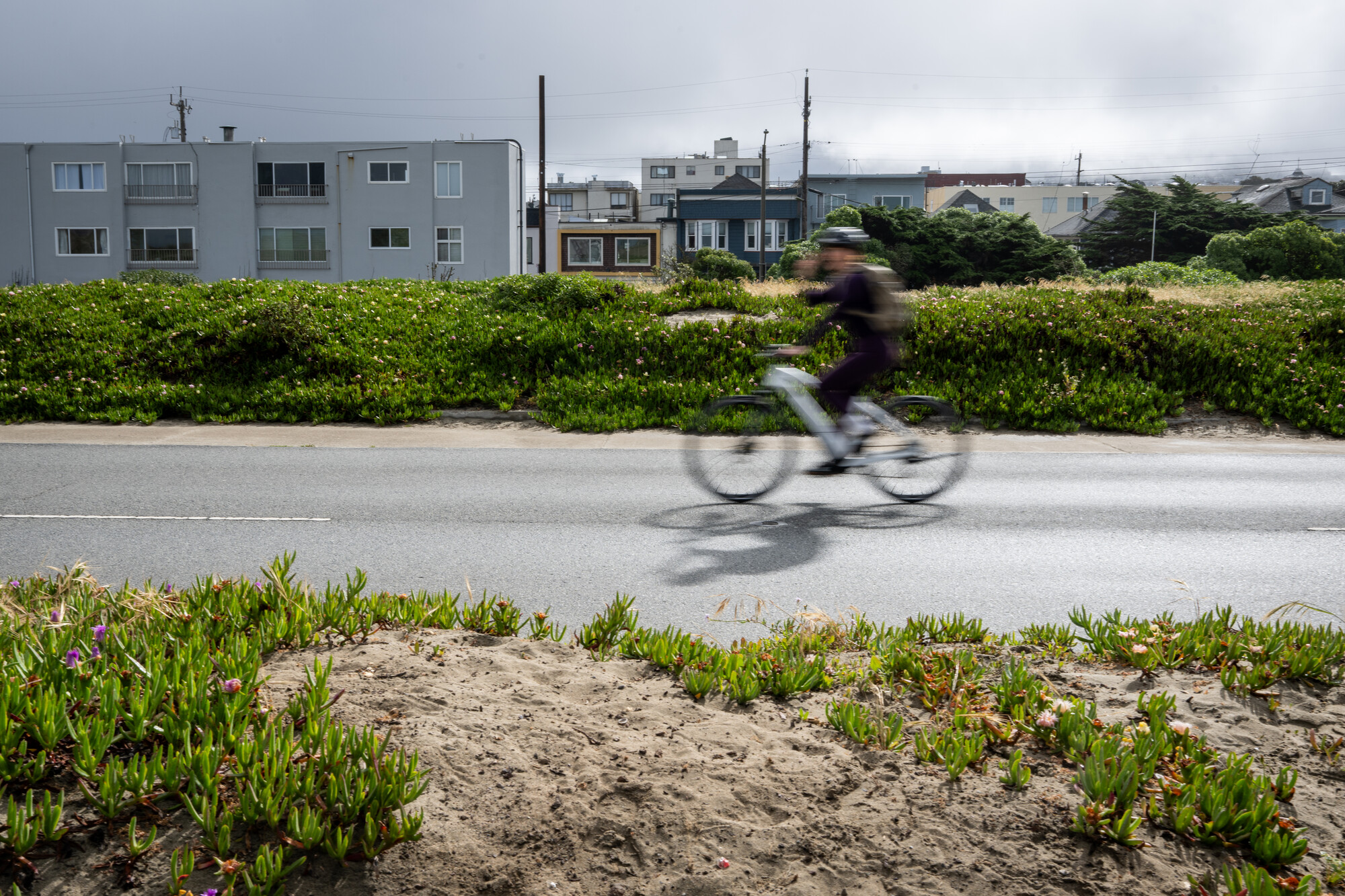 A bicyclist rides through Sunset Dunes, a park on the former Great Highway roadway, in San Francisco’s Sunset neighborhood on April 9, 2026. (Beth LaBerge/KQED)
According to the letter, multiple news outlets’ independent analysis of city crash data have found no increase in injuries in District 4, which includes Sunset Dunes.
Elsbernd said Wong, whose ballot-measure campaign first floated the 34% traffic-injury-increase figure, declined SPUR’s request to meet as it considered its stance on Prop G. When the organization asked proponents who did address it about the data, Elsbernd said they deflected and did not respond.
The Yes on G campaign did not immediately respond to a request for comment.
Sunset Dunes supporters have acknowledged that the road closure does slow some travel in the west side avenues — Elsbernd said this has specifically impacted western Richmond District residents trying to drive south.