
What This Story Is About
A massive, slow-moving underwater pulse of warm equatorial water called a Kelvin wave is traveling across the Pacific toward California.
Why It Matters
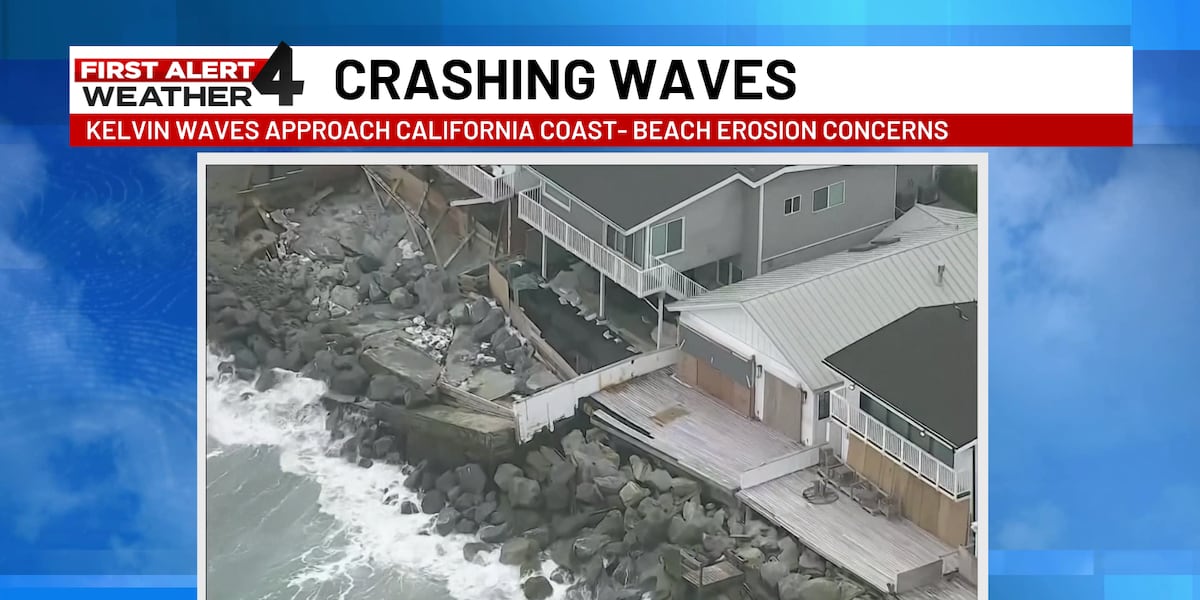
Because warm water expands, it can temporarily elevate sea levels, increasing high-tide flooding and worsening beach erosion if fall storms hit the California coast.
What Happens Next
The wave is projected to reach California’s coast this fall, prompting forecasters and coastal residents to closely monitor local tide levels and surf advisories.
For Context
During an El Niño pattern, typical westward trade winds weaken and reverse into “westerly wind bursts,” pushing warm surface water eastward over colder deep-sea layers.
NASHVILLE, Tenn. (WSMV) – Something unusual is churning thousands of miles out in the Pacific, and it could bring higher water to California beaches this fall.
It’s called a Kelvin wave — and while it doesn’t look like the crashing waves surfers chase, it packs enough punch to temporarily raise sea levels along the coast.
Here’s what’s happening, why it matters and what to expect.
What is a Kelvin wave?
Think of a Kelvin wave as a massive, slow-moving surge of warm water traveling deep beneath the ocean’s surface.
Under normal conditions, Pacific trade winds blow warm water westward toward Asia. But during an El Niño, those winds weaken and periodically flip directions in sudden “westerly wind bursts.”
When that happens, a thick layer of warm surface water gets pushed eastward along the Equator. Because warmer water expands when it sits over colder deep-sea layers, it creates a wide bulge in the ocean surface that glides across the Pacific.
 How does it end up in California?
Once this warm pulse crosses the Pacific and hits South America, it splits. Part of it turns north, hugging the coastline past Central America and Mexico before arriving in California later this fall.
As that warmer water reaches the shoreline, thermal expansion pushes coastal water levels up higher than standard tide charts predict.
What does this mean for California?Higher tides: Regular high tides may run several inches higher than usual, leading to minor street flooding in low-lying spots.Bigger storm impacts: If a fall or winter storm rolls in while sea levels are already running high, beaches face increased erosion, stronger wave runup, and cliff damage.
Copyright 2026 WSMV. All rights reserved.