
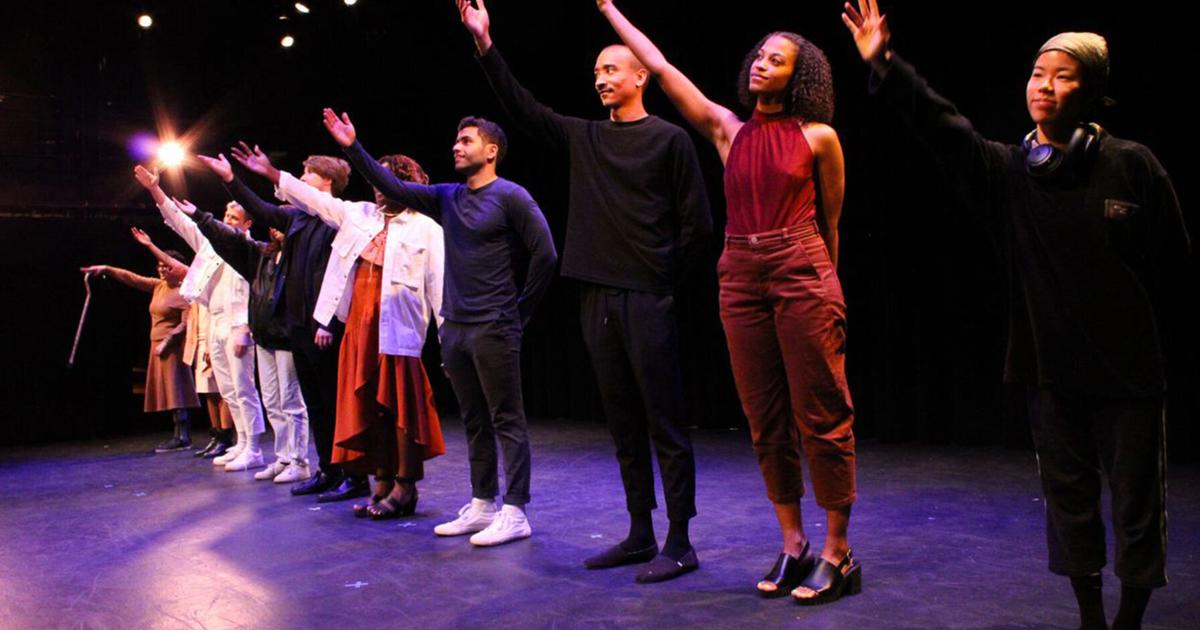
An exploration of queer identity, incarcerated marriage, a mother’s love and a failed situationship were some of the many pedestals of love described at “Crushing,” a three-night spectacle that took to A.C.T.’s Strand Theater in San Francisco this past week.
Codirected by Carly Steyer and Megan Calfas, “Crushing” returned to San Francisco at the Strand Theater stage from Sept. 10-12 after a sold-out show run in 2025. Backed by influential non-profit group the American Conservatory Theater, this year’s show ran 80 minutes and highlighted 10 different writers, actors and performers as they explored their quintessential experiences of love through original monologue.
The show began with the opening notes of Lorde’s “400 Lux,” a tune about the singer’s relationship with nostalgia, effectively setting the tone for the show. The first performer was writer Danielle Stagger, who presented a monologue about the precarity of situationships while maintaining a cool girl persona. Stagger hilariously wrote an anecdote that was both honest and relevant to modern dating standards, comparing the comfort of a situationship to the shelter of a tent: adequate, but not stable.
Stagger established the framework for the remainder of the night, imbuing both comedic zeal and illustrious writing which carried over into the succeeding monologue performances. The show was structured such that each actor had seven to 10 minutes of individual performance to curate intimate experiences, operating as a live vignette.
Queer romance and identity was a principal topic within the program, with performers Jake Montano, Nora Stein and Paul Loper exploring love through drag, queer self-discovery, and navigating the AIDS epidemic of the ’80s. Notably, Stein created a candid comparison outlining how their struggles with an eating disorder paralleled their confrontation with their lesbian identity, illuminating how emotional labors of love are not always a sugar-coated fantasy, but often rather a messy, gritty course.
The highlight of the program was the written strength of each monologue, wherein each performer presented their own unique sensibilities. Harriett Jernigan delivered the strongest written narrative, telling the story of how a tumultuous college boyfriend contributed to the writer’s block of her Ph.D. dissertation. In less than 10 minutes, Jerningan covered themes of race, nostalgia and selfhood while procuring the perfect comedic touch. Her story encapsulated how the strife of young love and nostalgia for the past may swell into the future, even if it’s in the most unknowing ways.
An interesting performance dynamic came from Karan Menon and Daisy Tichenor, who delivered a duologue about their relationship. Unlike the previous performances, this duologue emphasized couple banter, reading less like an isolated segment and more like a scene from a play, which gave audience members a physical presentation of modern romance.
The chief performance of the night came from Gerald Cypert, a company member with the Formerly Incarcerated People’s Performance Project, detailing his experience of romance during his time in incarceration. Cypert delivered a vulnerable and candid representation of how love ebbs and flows along with one’s selfhood and autonomy while moving through different phases of life. “Love doesn’t ask permission before it becomes something else,” Cypert noted.
The set design of the show was sparse, containing just two chairs and a series of elevated lamps.
The minimalist nature of the set worked seamlessly to ensure the viewer’s full focus was on the performers’ stories and emotional delivery, curating a connection that stretched from the stage to the audiences’ seat.
Fittingly, the show closed with Lorde’s song “The Love Club,” connecting to the opening song by the same artist and exhibiting the intentionality and thoughtfulness of the production beyond the written work.
Maintaining audience engagement while ten strangers babble about their love life can sound like a dull show. However, the delivery and execution of “Crushing” was comparable to telling your best friend about the excitement of your first love. The spectacle was a masterclass in monologue writing and individual performance, leaving audience members with a diverse definition of relationships and an understanding of the versatile grit, beauty and vulnerability that comes with romance.