


Adobe Stock image
Fresno residents pay more than the national average for breakfast groceries and face restaurant price increases slightly above the nationwide rate, according to DoorDash’s first State of Local Commerce Report released this week.
The report, analyzing hundreds of millions of transactions across the delivery platform, found that breakfast basics in Fresno — three eggs, a glass of milk and a bagel — averaged $4.48 in September, compared to $4.35 nationally. Everyday household essentials like shampoo, laundry detergent, diapers and toilet paper cost $54.38 in Fresno versus $55.19 nationally.
Restaurant prices in Fresno increased 3.25% year-over-year, slightly above the national rate of 3.2%. A cheeseburger, fries and soda in Fresno averaged $15.14, ranking the city 18th most affordable among 101 cities analyzed. The national average for the same meal reached $18.58.
Fresno’s restaurant resilience rate stood at 93.11%, matching the national trend where 93% of restaurants active on DoorDash in September 2024 remained open 12 months later. New restaurants joined the platform at rates exceeding 18% nationally.
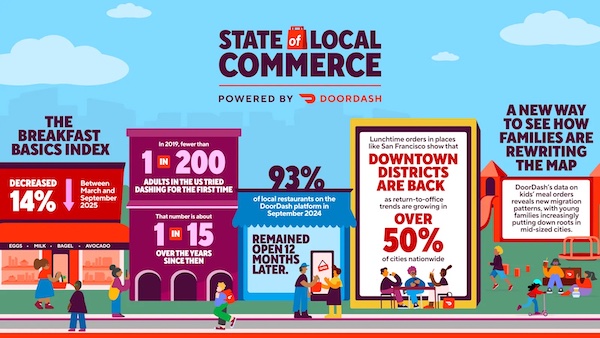 DoorDash graphic
The report revealed shifting consumer behavior in Fresno. Office food deliveries declined 1.58% year-over-year, contrasting with cities like San Francisco and Chandler, Arizona, where weekday lunch orders to business districts increased more than six times the national rate.
About 4.19% of restaurant orders in Fresno contained kids meals, placing the city 24th nationally and suggesting moderate family dining activity compared to places like Lubbock, Texas (5.2%), and Gilbert, Arizona (5.09%), which topped the list.
Nationally, DoorDash’s Breakfast Basics Index decreased 14% between March and September 2025, while everyday essentials remained flat. More than 50% of cities saw weekday lunch orders to business districts rise, up 2.5% overall, signaling a return to offices.
The report noted flexible work expansion since 2019, with about 1 in 15 Americans trying delivery work compared to fewer than 1 in 200 previously.