
Sacramento is joining the nationwide debate over data centers after news surfaced this week of a proposal that could be in the works in South Sacramento.
Following the news, Sacramento Mayor Kevin McCarty asked city staff to look into impacts of data centers within city limits at Tuesday’s city council meeting.
“There’s growing interest and curiosity and somewhat concerns about the issue across our country and locally about data centers,” McCarty said. “… I want Sacramento to be prepared if and when a project comes our way.”
The mayor’s direction comes after an Abridged by PBS KVIE report found a New York-based company has requested power from Sacramento Municipality Utilities District for a large-scale data center, with eyes on a property in Southeastern Sacramento.
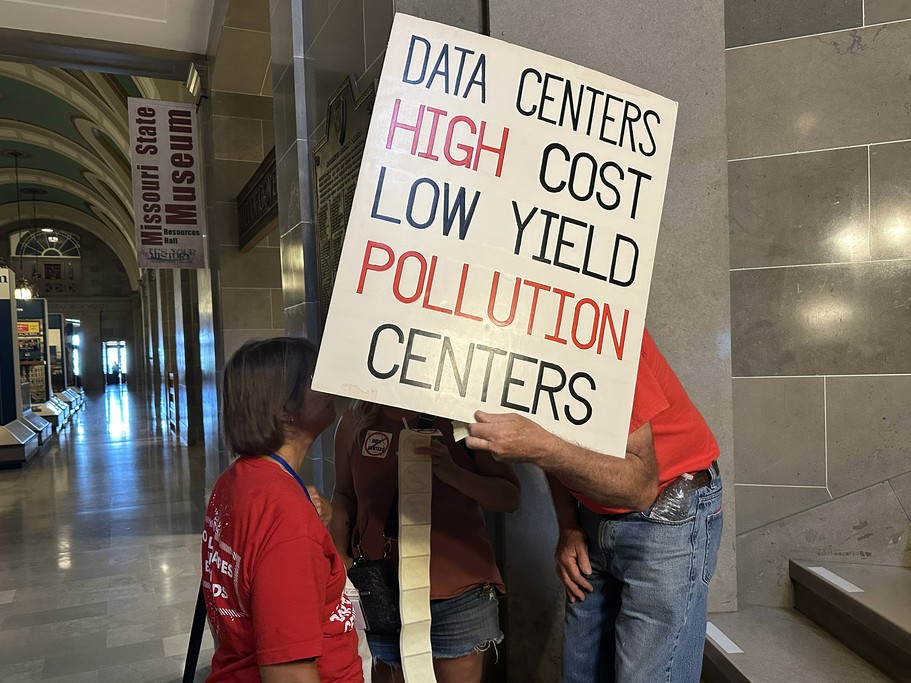
City and state leaders are skeptical about the benefits of data centers.. Constituents both in Sacramento and across the country worry their presence would cause noise pollution, raise public utility rates, strain local power grids and monopolize water sources.
All the while some developers in town worry Sacramento could get left behind if it doesn’t start building soon. Data center advocates say they bring jobs and contribute tangible benefits to surrounding communities.
As it stands, the city of Sacramento does not have a policy for the high-powered data centers that are required for the advancement of AI technology and use.
Local leaders aren’t sold
The project generating news buzz would be located in Councilmember Eric Guerra’s District 6.
Guerra, who also sits on the California Air Resource Board, told CapRadio this week that he is opposed to the projects.
“I met with these folks. I let them know that data centers aren’t allowed in the city,” Guerra said of the New York-based company Link Logistics. “The issue of air quality, the concerns about cost of water and utility, those are problems. Until those questions are answered I’m opposed to anything moving forward.”
The hypothetical project would also reside in Sacramento County’s District 1, where Guerra is running for an open seat on the Board of Supervisors. His opponent in the county race and 2024 mayoral runner-up Flo Cofer shares his skepticism.
“I think that it is important that we don’t put the cart seven miles before the horse. I would urge that our elected leaders in the region don’t make decisions without consulting experts,” Cofer said. “Don’t use pressures from industry to decide and help to push the speed along with which we make a really important decision for our region.”
Could Sacramento fall behind?
Some in the local business community see the concern around AI as overblown. They also say they don’t want the region to be left behind. John Vignocchi, urban developer and CEO of Sacramento Region Business Leaders Council, said the AI boom is similar to the advent of the railroad system.
“If you think back to the 1800s, railroads were unsightly. They went through farms and hunting grounds and other beautiful landscapes. They obstructed views. They were loud and noisy,” Vignocchi said. “But Sacramento back then made a decision to go all in on the railroad, and that made our town relevant. Other towns that didn’t stagnated.”
Vignocchi said some of the concerns, such as noise pollution, are legitimate, but some are unfounded.
“The illegitimate issues, the water consumption, the electricity consumption, AI is going to kill us all, that doomerism is unfounded,” Vignocchi said.
Khara Boender, director of Government Affairs for the Data Center Coalition, told CapRadio in a statement that data centers benefit communities and provide essential infrastructure to improve quality of life.
“The industry often creates permanent, high-wage jobs (many of which do not require a college degree), provides significant economic investment, and generates substantial local and state tax revenue that helps fund schools,” she said.
Environmental advocates raise equity and concerns for the future
How data centers impact the environments they’re built in is one of the central debates communities across the country are facing.
Herman Barahona is the executive director of Sacramento’s Environmental Justice Coalition. He said his group is deeply concerned with data center impacts on the local environment.
“This valley tends to store all kinds of pollution because of its geographic setup,” Barahona said. “We know that this cannot have any good impacts in the long run for the environment.”
Barahona also noted his group is disappointed with the lack of transparency from SMUD.
“It’s obvious that all these decisions at some point were introduced to SMUD, which handles all our electricity needs for the community,” he said. “There was no process for the community to know about these. How they purchase energy, if there were any NDAs (nondisclosure agreements) signed, we don’t know anything about that.”
In reference to the South Sacramento proposal, SMUD told CapRadio earlier in the week it’s not able to share any information with the public due to customer privacy.
“We’ve supported data centers here for decades, and with interest from larger-scale projects, we’re developing a fair and equitable large load policy to guide how we plan and connect these customers,” SMUD said in a statement. “SMUD does not make land-use decisions; once projects are approved at the city or county level, we have an obligation to provide power.”
Activists say they are also worried about the human cost of data centers. Laurie Litman with Third Act Sacramento, a climate and democracy advocacy group, said the thought of putting a data center in South Sacramento comes from an opportunistic place.
“They’re taking advantage of places where people are less organized, are less wealthy, are ignored.” Litman said. “Besides all the environmental costs, just the fact that they would consider siting it in South Sacramento where the air quality is worse, it, on every level, checks the boxes of continuing corporate and, and wealthy overlords on the rest of us.”
Legislation around data centers is on governor’s desk
Those on the state level are working on legislation to help local municipalities like Sacramento deal with the increased interest from developers.
California State Senator Steve Padilla represents the 18th District in the state in San Diego and Imperial counties. Padilla told CapRadio the largest data center proposed in the state, approximately one million square feet, is located in his district.
“They have the capacity to really impact a community, certainly when they’re hyperscale facilities,” he said. “Both in terms of the resources they consume, the natural resources, water but also the land area they consume.”
Padilla has authored two bills to study the environmental impacts of data centers and their effect on public utility ratepayers.
“It’s important that we make sure when these hyperscale facilities come into a community, that they are a net benefit to the community,” Padilla said. “That they don’t just suck energy off the grid and create new energy infrastructure demands and costs that are then socialized among people who aren’t causing that demand or using any of that benefit.”
Governor Gavin Newsom has until the end of September to sign or veto the bills.