
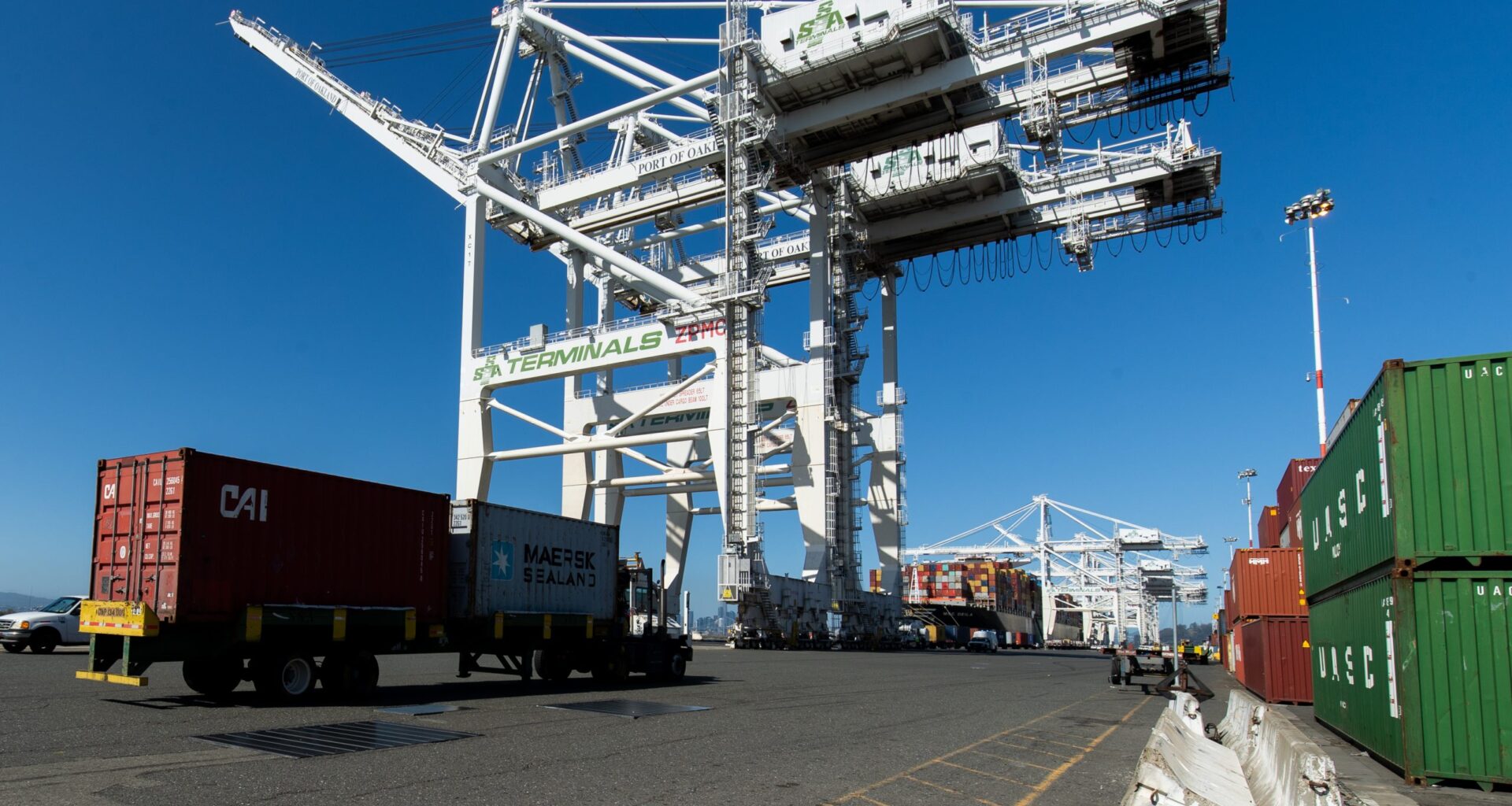
The Port of Oakland, the Oakland Roots soccer team and Los Angeles-based Industrial Realty Group have entered into an exclusive negotiating agreement to develop the Howard Terminal site next to Jack London Square as a sports stadium.
The Howard Terminal site, a 55-acre parcel at 1 Market Street, next to Schnitzer Steel, was last used as a marine terminal in 2013 and has since been used for maritime support operations and short-term rentals like shipping container storage.
The port commissioners approved a resolution at their September 10 meeting detailing the agreement. The team and the realty group are each required to make an initial payment of $25,000 to secure the one-year negotiating term. A refined description of the planned project will be due in 90 days, according to the port’s agenda report.
The port commissioners voted 6-0 for the resolution, with one commissioner excused.
“It’s exciting to see the two parties pursue a vision for Oakland’s waterfront that would both boost maritime operations and jobs, and bring another dynamic venue to the Jack London Square District,” Kristi McKenney, executive director of the Port of Oakland, told The Oaklandside.
The Oaklandside reached out to the Oakland Roots and Industrial Realty Group, but neither immediately responded.
As noted in the resolution, Section 706 of the City of Oakland Charter gives the board the “power and duty,” on behalf of the city, to operate waterfront properties, “including piers, wharves, sea walls, docks, and other improvements.”
The resolution says that the development agreement is exempt from the California Environmental Quality Act, as it “will not have a significant effect on the environment.” The Bay Conservation Development District had previously approved the Howard Terminal site for development of an Oakland Athletics stadium.
 The Howard Terminal area is 55 acres next to Jack London Square. Credit: The Port of Oakland
Among the items that will be worked on over the course of the year, according to the terms of the agreement, are determining the total number of acres proposed for use and development, figuring out parking and transit plans around the stadium, and what the expected workforce that will be created by the project will look like. This also includes identifying any environmental and land-approval needs as well as showing the developing group has the financial means and plans to complete the project.
The property covered by the agreement, the port’s agenda report says, excludes approximately four acres of land and adjacent water areas located in the southwestern corner of the property, which are set aside for the planned widening of the Inner Harbor Turning Basin.
The site of a planned A’s stadium
The Oakland Athletics came close to taking over the site a few years ago when they were seeking to exit the Oakland Coliseum. They entered into an exclusive negotiating agreement with the port in 2019, which was extended several times until it expired in May 2023. That development plan sought to add large apartment towers and retail businesses around a new 35,000-seat, oyster-shaped baseball stadium. The city promised hundreds of millions in funds to help pay for the development, whose price tag eventually ballooned to $12 billion. The stadium itself, A’s management said at the time, would have cost about $1 billion to build.
After the A’s agreement dissolved, the port publicly sought new proposals from developers for mixed-use development.
Neither the Roots nor the realty group have said how much they expect their own stadium or the full parcel development to cost.
The Oakland Roots, officially incorporated as Oakland Pro Soccer LLC with headquarters in Alameda, have been searching for a permanent home since they began play in the USL second division in 2019. They started at Laney College’s football field, which often drew raucous sell-out crowds in the intimate venue, then played its 2023 and 2024 seasons at Cal State East Bay’s Pioneer Stadium in Hayward. In the last two seasons, the team has played before often sparse crowds at the Oakland Coliseum, the 45,000-seat stadium that was the longtime home of the Oakland A’s and the Raiders.
The Industrial Realty Group focuses on developing industrial properties, according to its website, and has developed corporate parks around the country. One project that appears similar to the one they’re working on with the Roots is the Hall of Fame Village in Canton, Ohio. Attached to the National Football League’s Hall of Fame museum, the village includes youth football fields, a hotel, performance facilities, and retail spaces.
“*” indicates required fields