
San Francisco is celebrated for its 230 parks, but some of its green spaces give city residents room to cultivate more than just a love of the outdoors.
Often nestled next to playgrounds or squeezed between homes, SF’s community gardens sprouted in the 1970s. City Hall launched the program with federal funds to train nearly two dozen gardeners, but in 1977, budget cuts stemming from California’s tax revolts ended the city’s involvement.
A few gardens went fallow, but by 1980, a nonprofit group that became the San Francisco League of Urban Gardeners (SLUG) took over. A decade later, the now-disgraced City Hall insider Mohammed Nuru had taken the group’s reins. In 2004, SLUG was found to have used public funds to do political favors for Gavin Newsom, then a mayoral candidate. Nuru wasn’t penalized, but it was a preview of the wider corruption scandal that eventually sent him to prison.
The garden program had a tough row to hoe until 2006, when the Recreation and Park Department became the steward.
Today, 20 years later, the bounty extends to 41 community gardens. The oldest is the Fort Mason Community Garden, which dates to 1976, and the youngest is Maria Manetti Shrem Community Garden at Francisco Park, which opened in 2022.
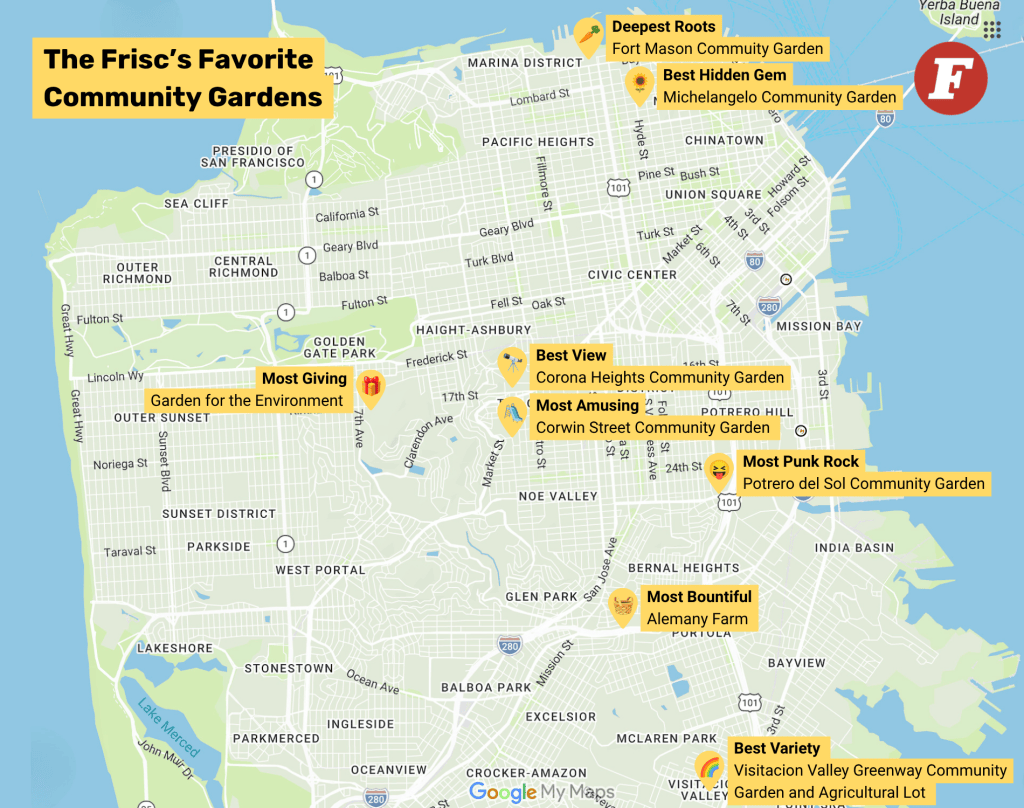 We plotted out and rated some of our favorite community gardens around the city. (Google Maps; The Frisc)
The program is thriving; most community gardens have assigned plots and often yearslong wait lists — more than 10 years at the Michelangelo Community Garden. Six of the gardens, including the expansive Alemany Farm, are communal. Just sign up or show up for shifts and get your hands dirty.
Some gardens are behind locked fences but easy to admire. At the others, a walk among the rows and raised beds delights the senses: the smell of ripening tomatoes or lemon blossoms, the buzz of bees, and the feel of the local microclimate on your skin. (But no picking or tasting, please. Respect the gardeners!)
To celebrate the start of harvest season, The Frisc toured a selection of gardens — we’ve anointed them with our own rating system — to guide you from majestic views to unusual fruit, from rich histories to delicious futures.
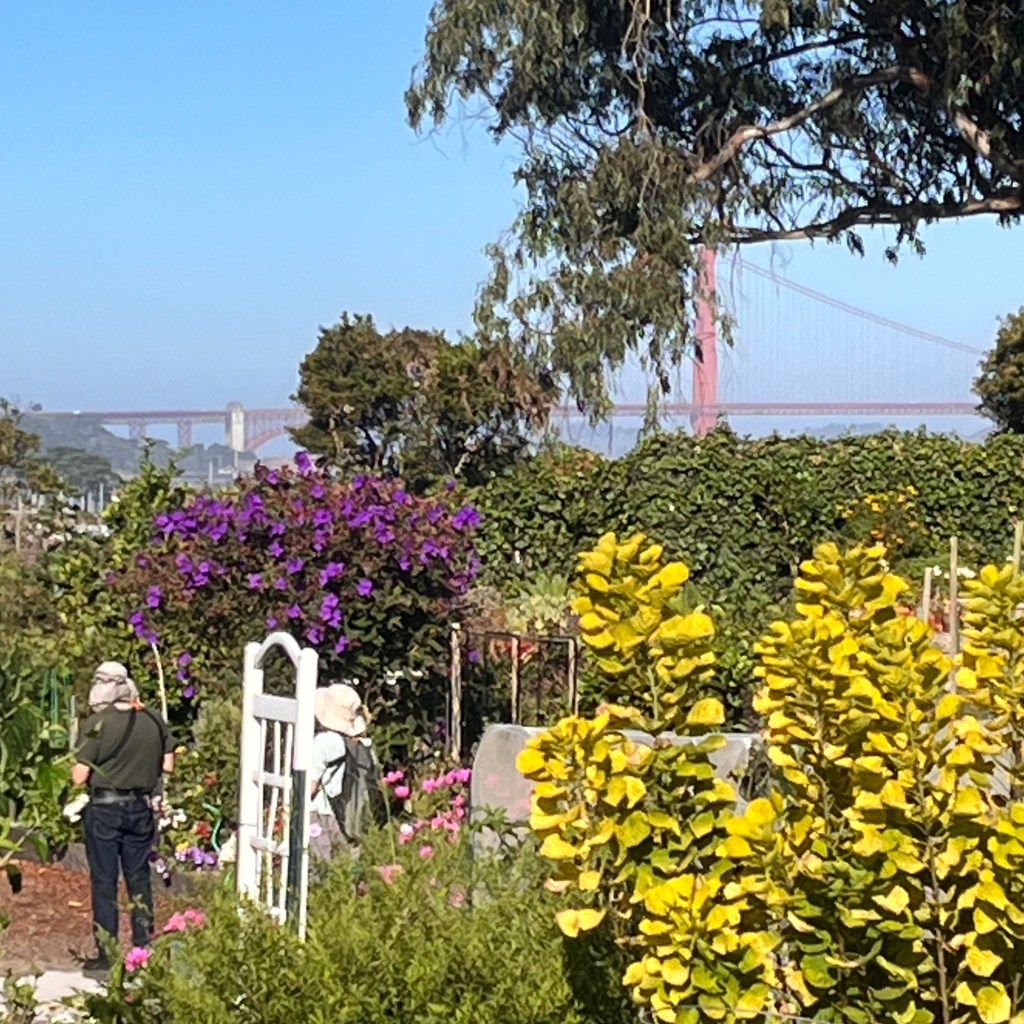
The Fort Mason Community Garden, the city’s oldest, celebrates its 50th birthday on Sept. 20. Once an army post, Fort Mason is now part of the sprawling Golden Gate National Recreation Area, and the park headquarters overlook the garden. The post’s original garden, founded in 1890, was in the same spot.
Today it has 128 plots, all assigned to individuals, and a wait list of eight to nine years. It’s so popular that administrators have closed the list for now.
But everyone is welcome to come snap photos, spot birds and butterflies, and take in majestic views of the Golden Gate Bridge, Presidio, Pacific Heights, and beyond. Make it part of a longer waterfront exploration that includes Aquatic Park, Fisherman’s Wharf, and Fort Mason’s historic wildflower garden. Additionally, there are volunteer opportunities to work in the communal areas of the garden, and it’s a popular field trip destination for schools and youth groups.
How to get here: Muni’s 43, 49, 28, and 19 lines stop nearby.
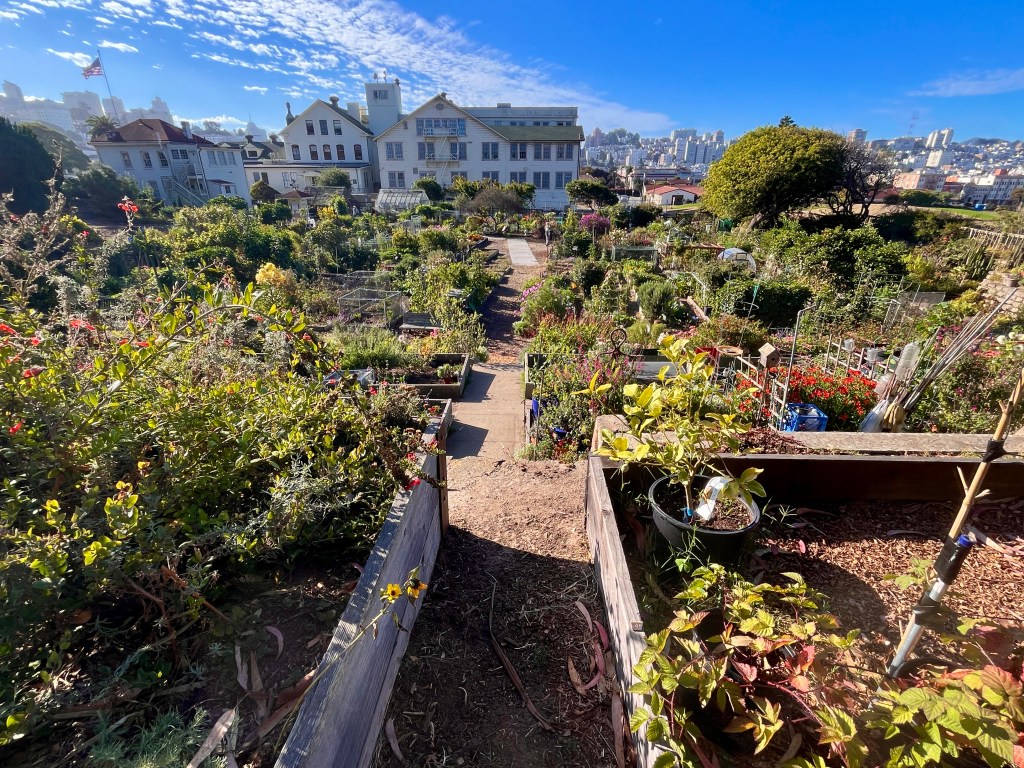 The Golden Gate National Recreation Area headquarters overlook the garden. (Alex Lash)
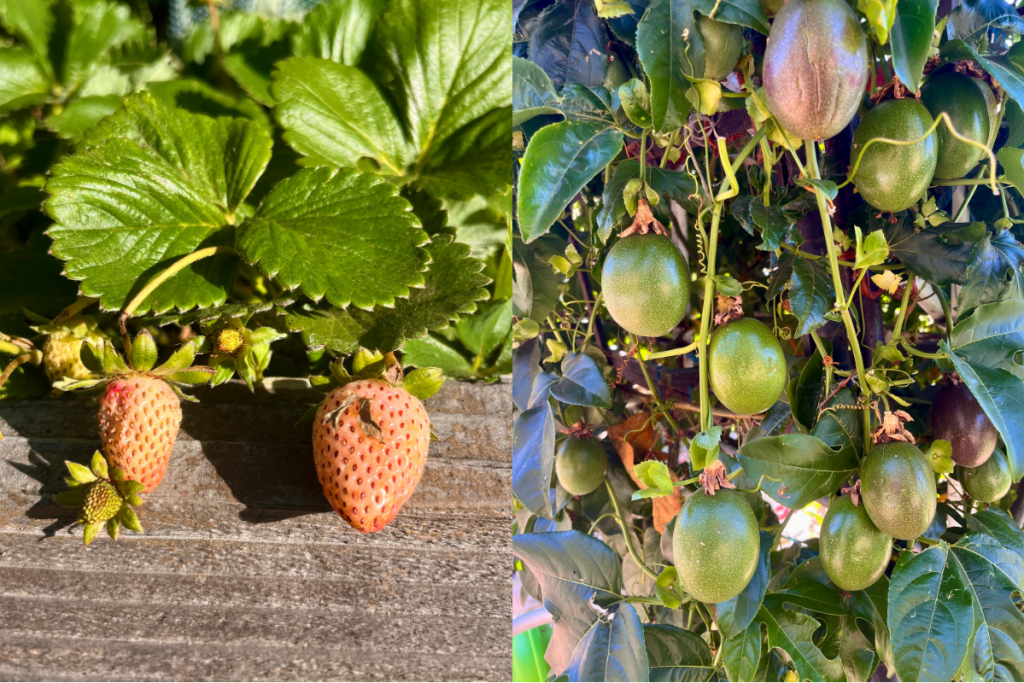 When we visited Fort Mason in early September, the strawberries weren’t quite ready, but there were plenty of passion fruit. (Alex Lash)
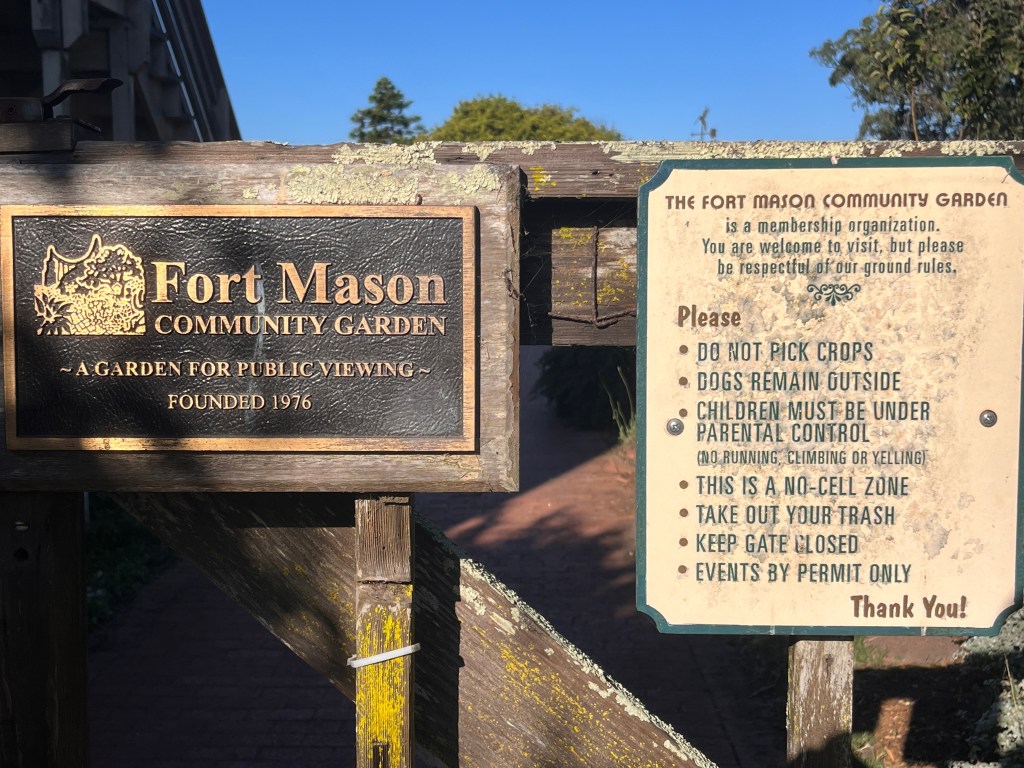 ‘This is a no-cell zone’ and other rules of engagement. (Alex Lash)
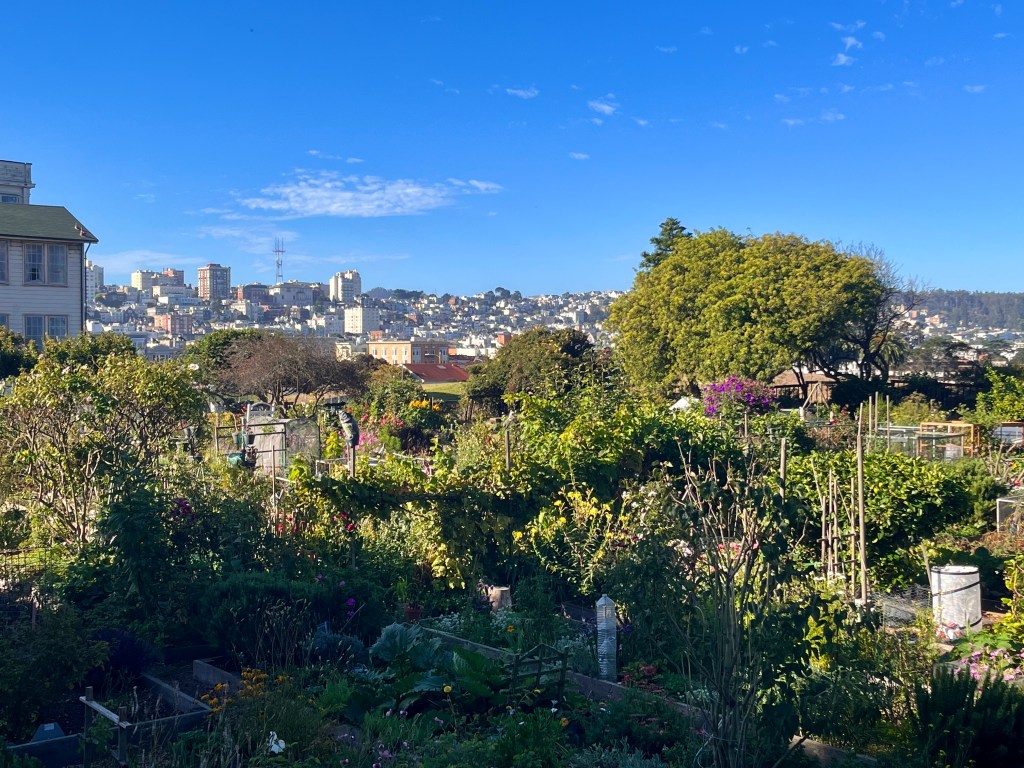 Looking southwest from Fort Mason for a little peek of Sutro Tower. (Alex Lash)
Most bountiful
Alemany Farm
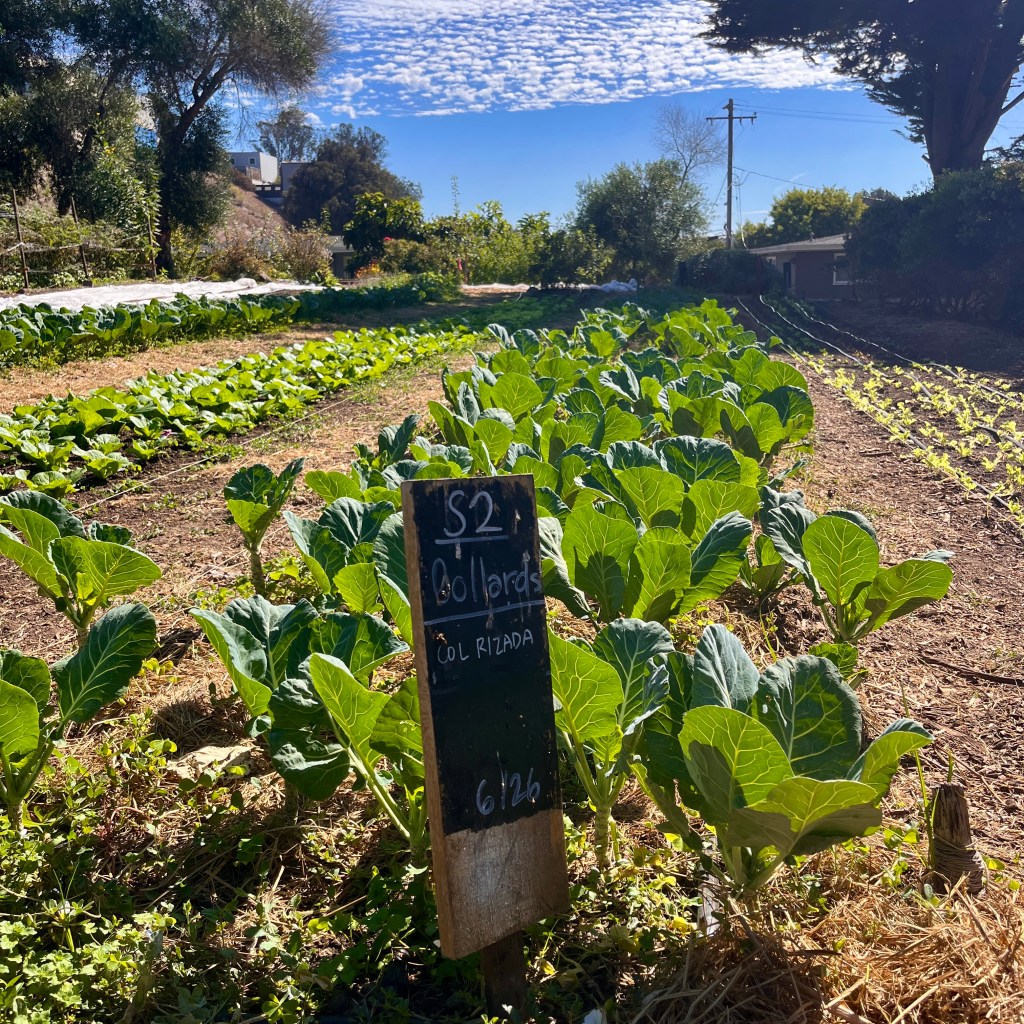
At 3.5 acres, Alemany Farm is the largest agricultural site in the city. Last year, the farm produced a whopping 35,500 pounds of fresh fruits and vegetables, all given away to households through the Free Farm Stand and the Alemany Apartments Food Pantry.
Farm volunteers also receive free produce based on need. Last year, the farm hosted 99 community workdays and clocked more than 4,000 volunteer visits.
Alemany Farm gives in other ways too, with year-round workshops on beekeeping (see if you can find the double hive on site), worm-bin composting, and raising fruits and vegetables. No one is turned away from a workshop for lack of funds.
No need to get up to your elbows in compost to enjoy; just walk in through the Alemany Boulevard entrances and wander through the tiny redwood grove, terraced slopes, fruit tree orchard, and row upon row of sumptuous greens.
The centerpiece might be a mini-wetland, fed by a manmade stream, where tiny fish, tadpoles, and dragonflies aloft might have you believing you’ve made a rural escape, even as traffic on Alemany and Highway 280 rushes past a few hundred feet away.
How to get here: Muni’s 44, 49, 14R, 23, and 67 lines stop nearby.
Best Variety
Visitacion Valley Greenway Community Garden and Agricultural Lot
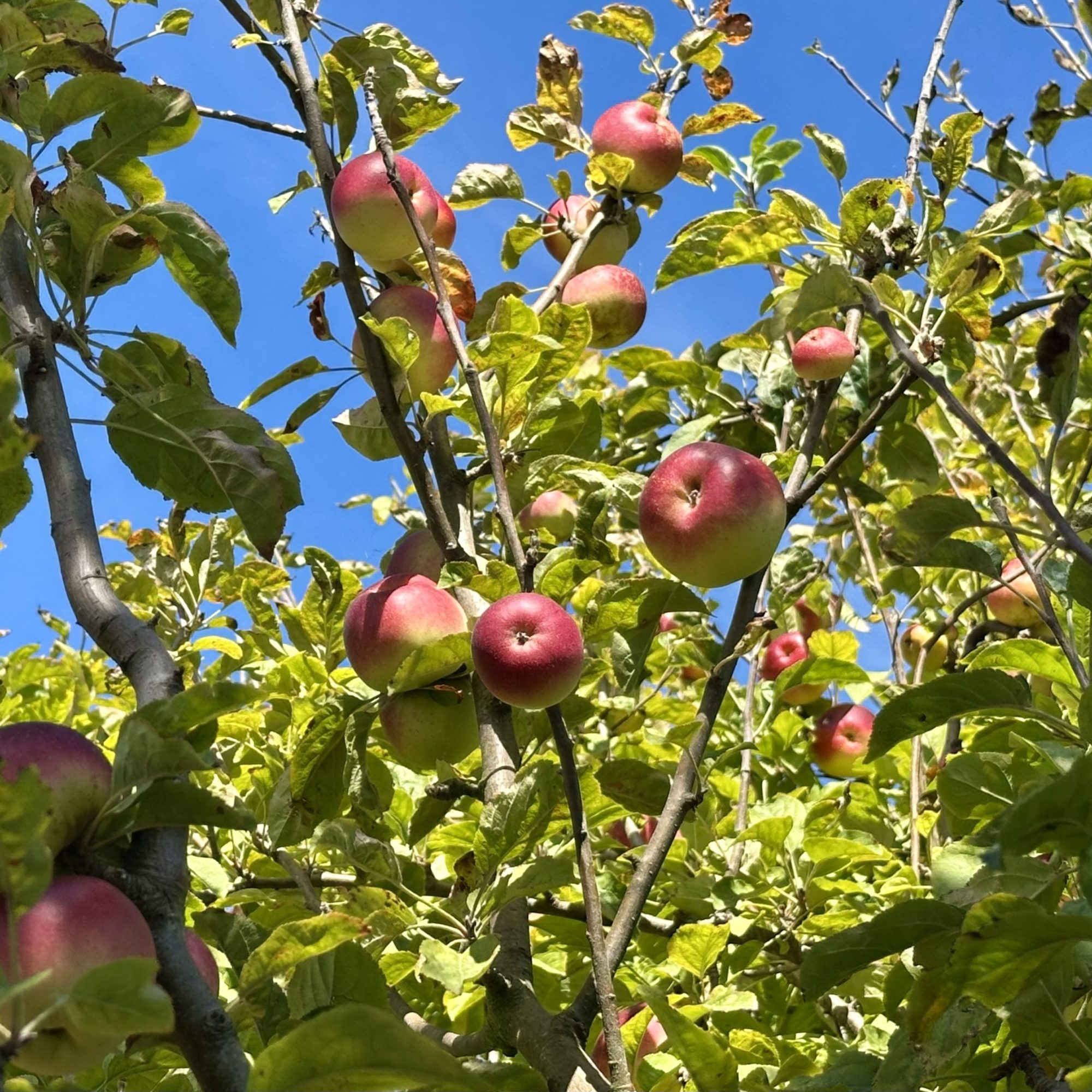
The Visitacion Valley Greenway, with its inventive reuse of a string of empty lots, is one of SF’s most remarkable green spaces, full stop. Its garden and agricultural lot make it even more so.
The garden and lot, which include two greenhouses, reflect the neighborhood’s diversity with crops like the cherimoya, originally from Central America. The greenway’s gardeners have developed their own cultivar — a variety unique to Visitacion Valley. The garden also produces the subtropical passion fruit and the winter banana (actually a variety of apple, pictured above).
Like other communal gardens in the city, the greenway offers after-school programs, senior workshops, and opportunities for intergenerational and multicultural groups to work in the garden.
How to get here: Muni’s 8, 9, 9R, 29, 56, and T-Third lines stop nearby.
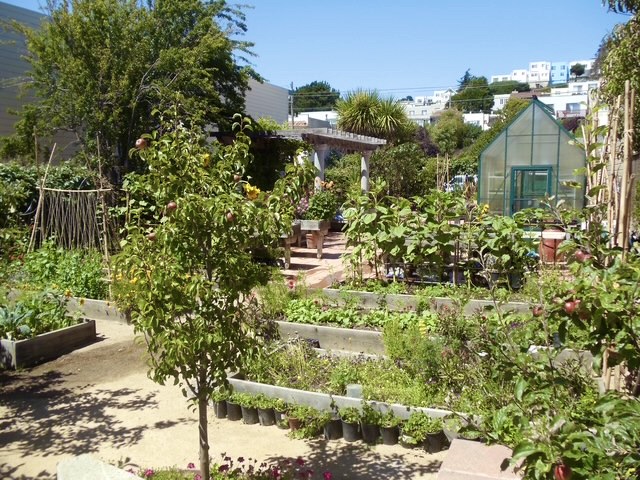 The Visitacion Valley Greenway raises a wide range of produce in raised beds, orchards, and even two small greenhouses. (Anne Seeman)
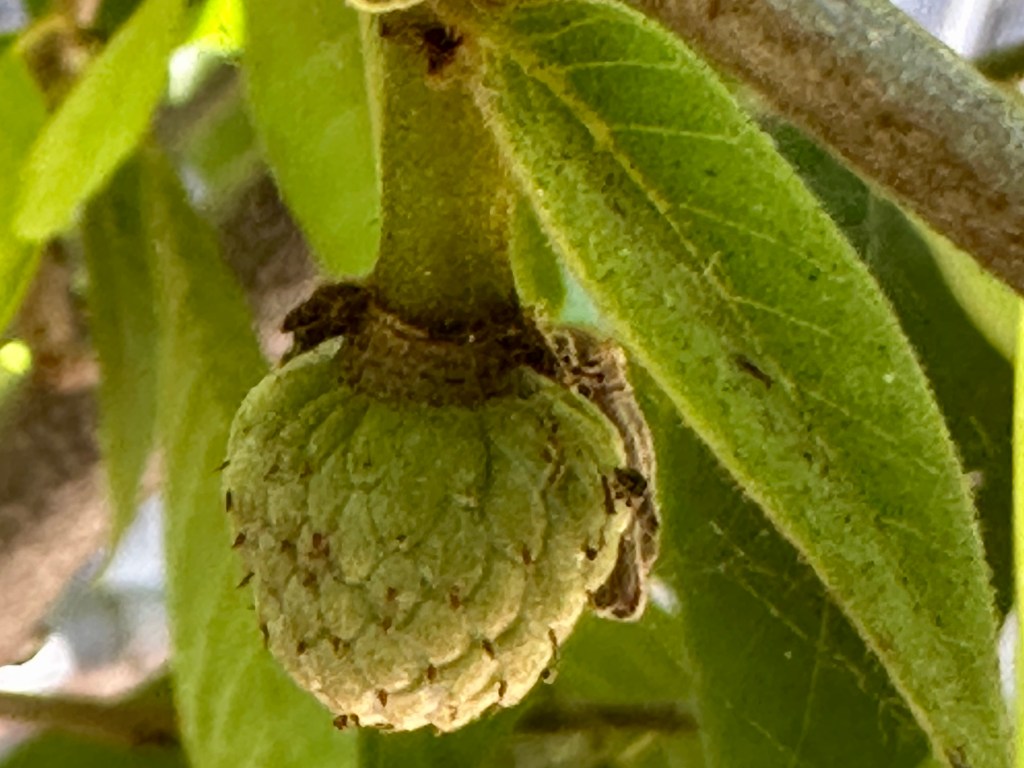 Greenway cofounder Anne Seeman says the gardeners have cultivated their own variety of the Central American cherimoya, aka the custard apple. (Anne Seeman)
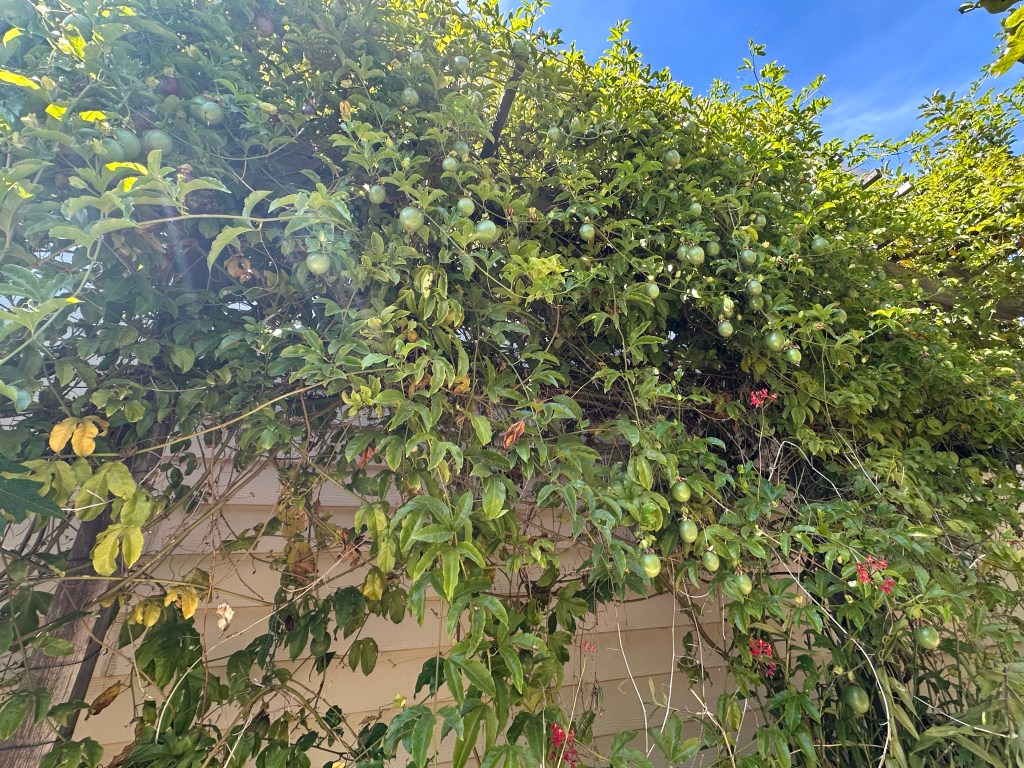 A wall of passion fruit. (Anne Seeman)
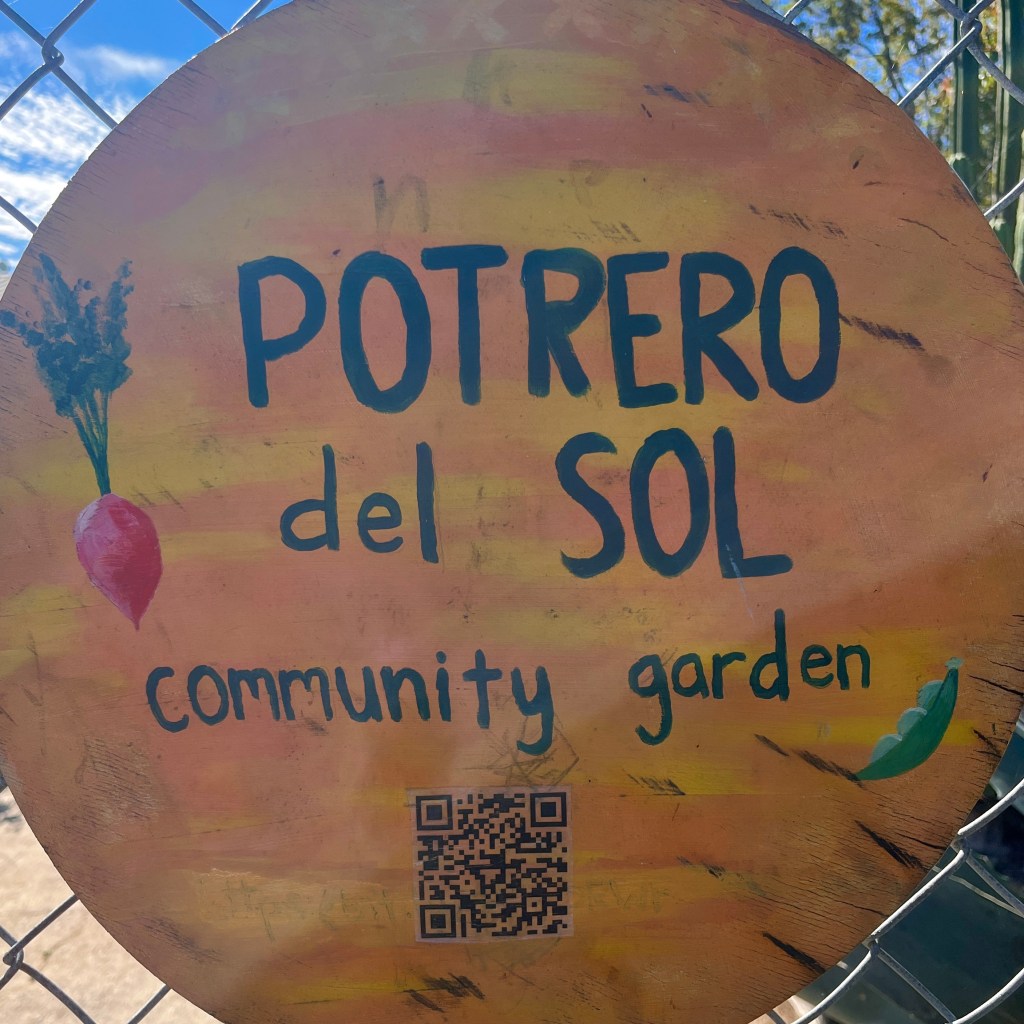
This area was a working dairy for much of the 20th century. In 1974, local artists — call them avant gardeners? — dug up the concrete of the abandoned site, where Highway 101, Army Street (now Cesar Chavez Avenue), and Bayshore Boulevard meet, and called their new community space “The Farm.” They raised corn, tomatoes, and cabbage, among other things, and goats and chickens roamed about. It was also home to an art gallery and rehearsal space for the San Francisco Mime Troupe and other groups.
That was all pretty punk rock, and then in 1983, it literally was. That’s when The Farm began hosting live shows to raise money and became an underground favorite, especially with now-legendary punk bands like Black Flag, Frightwig, and Bad Brains.
At first, it didn’t have permits. (Of course.) “Nobody cared because The Farm was in this little corner that was hard to get to, and the police couldn’t really find it,” said Andy Pollack, The Farm’s director, in an oral history.
A legal dispute with the property owner closed The Farm in 1987. Part of the property became offices and art studios, and a public park also grew alongside, which now includes the Potrero del Sol Community Garden. It’s locked, but the chain-link fence affords views of lemons, cacti, tomatoes, and other crops in raised beds. The adjacent park has a tiny amphitheater, skate park, and plenty of local kids. Close your eyes, and the sounds might blend together into a communal music all their own.
How to get here: Muni’s 9, 9R, 33 and 48 lines stop nearby.
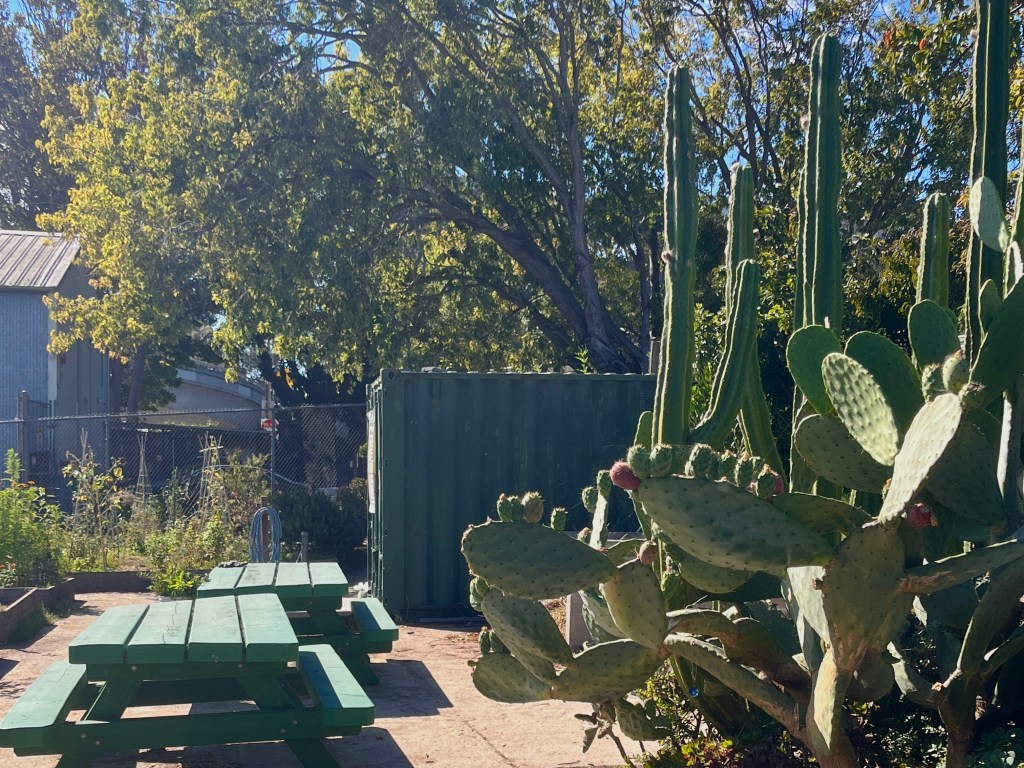 Saguaros and prickly pear cacti guard the entrance to the Potrero del Sol garden. (Alex Lash)
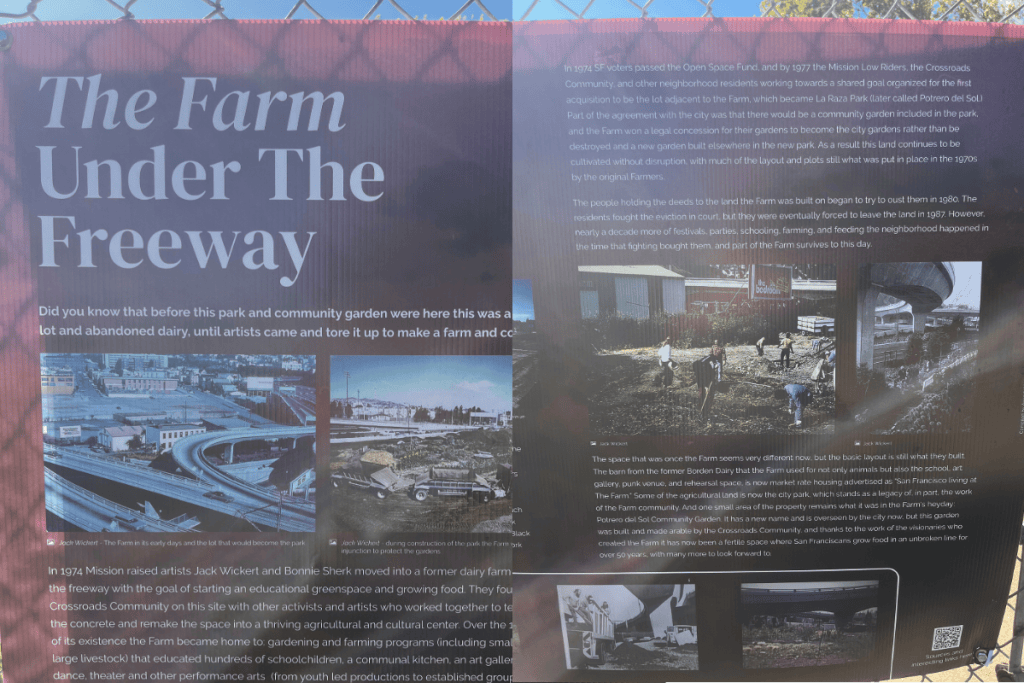 Potrero del Sol has deep history. It was a dairy farm, then a collective that housed animals, grew produce, and hosted punk shows and other musical acts into the 1980s. (Alex Lash)
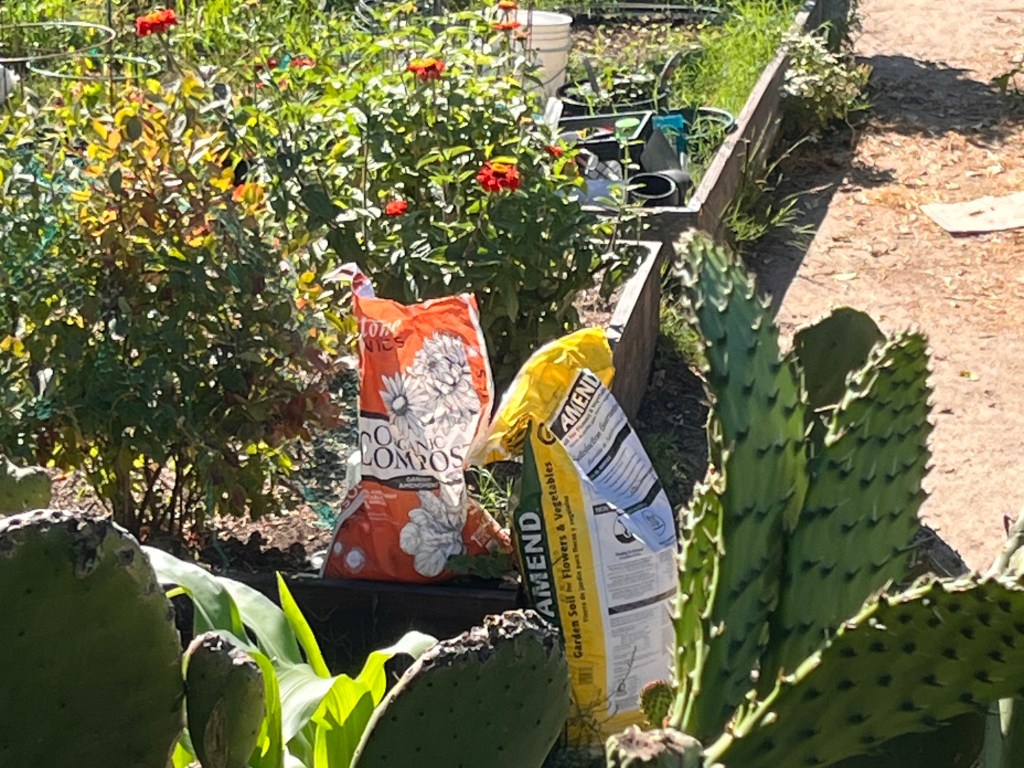 Potrero del Sol gardeners get ready to fertilize the raised beds. (Alex Lash)
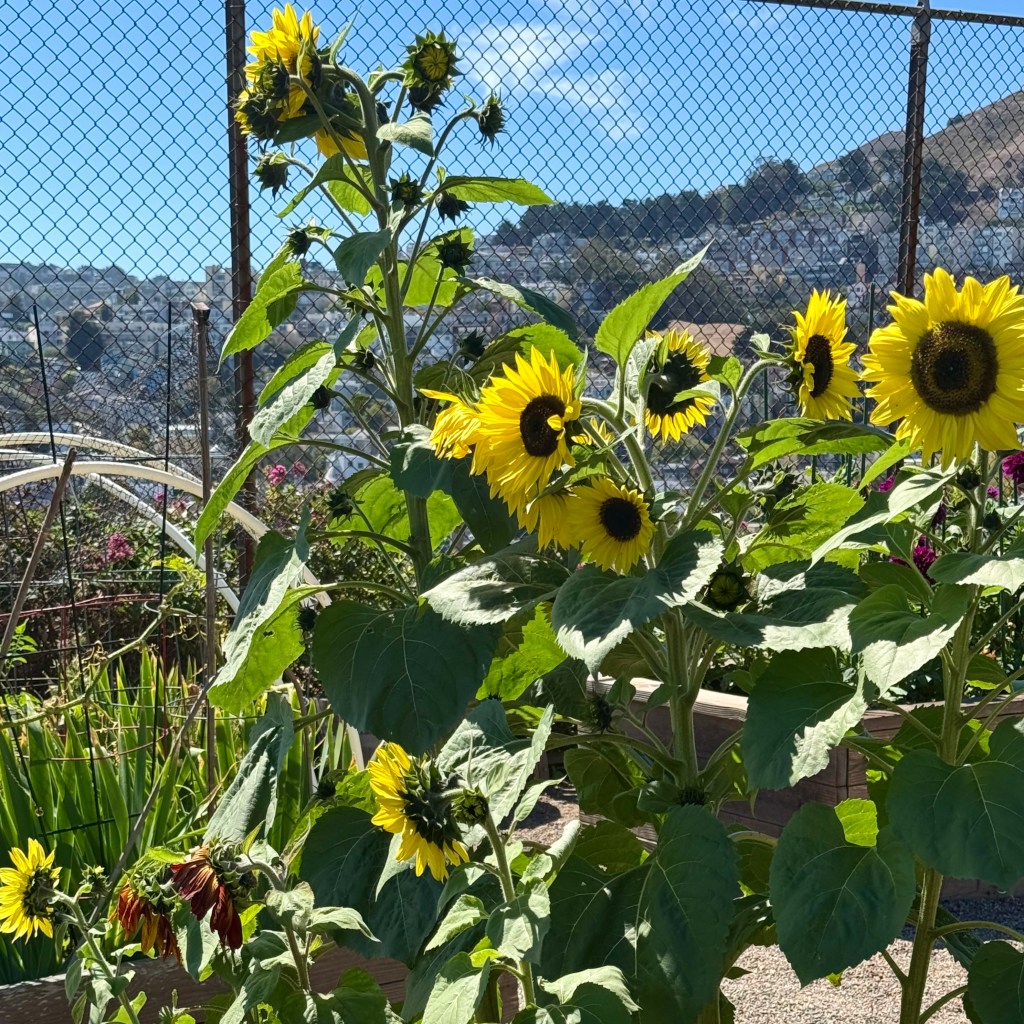
Just down the hill from the Randall Museum in Corona Heights, there’s a lot blooming: sunflowers, fuchsia, dahlias, and more. Easily visible despite the locked gate, flowers are a big reason to visit this community garden, but its gardeners also grow edibles: peppers, lettuces, tomatoes, even pumpkins — no small feat in the city.
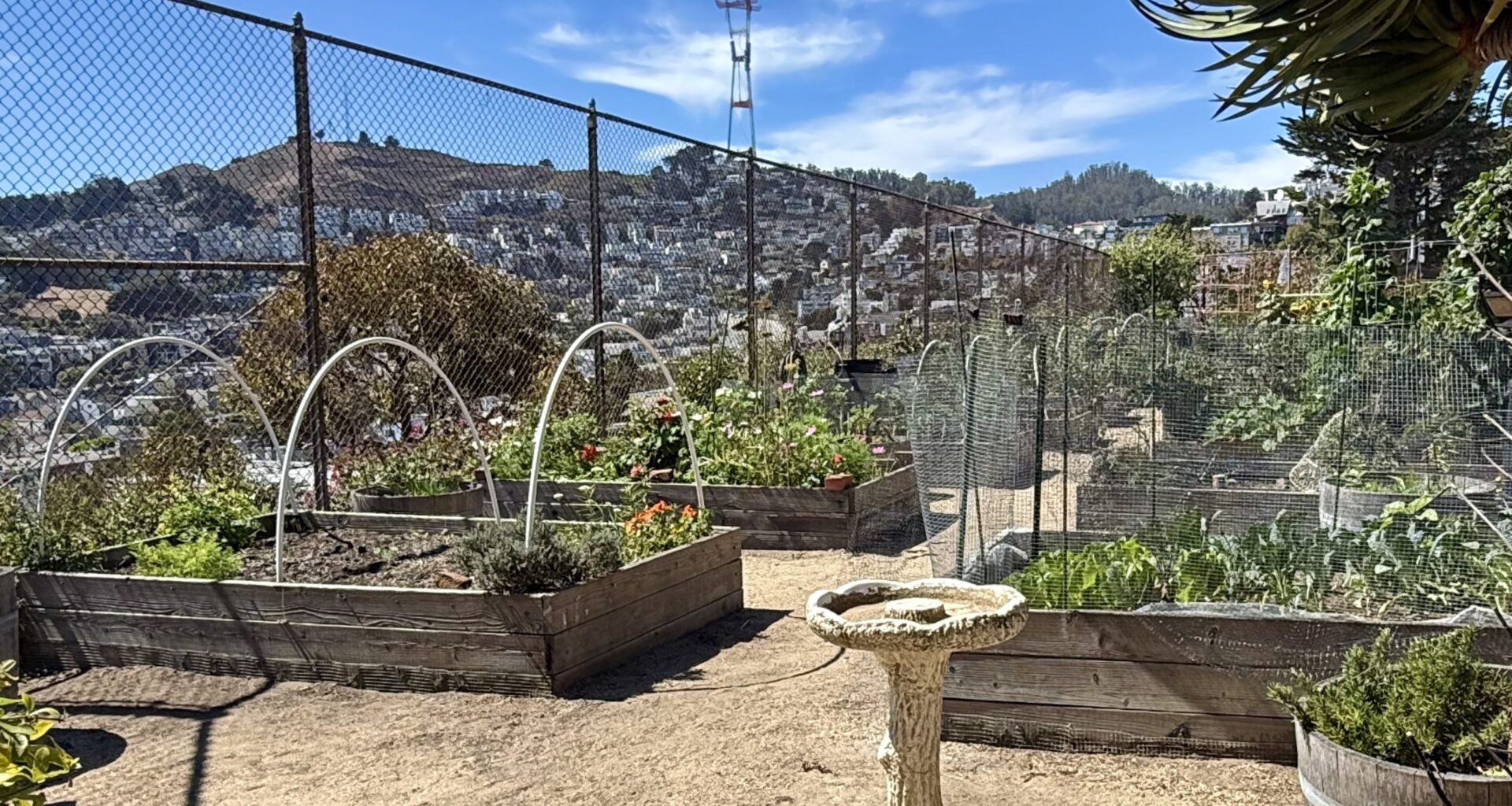
The small, well-organized space has plenty of fun features for the observant visitor. We loved the whimsical cement bird bath and appreciated the DIY irrigation made from plastic water bottles and tubing.
Outside the garden gate — and therefore open season to pick — a couple fig trees are just now bearing lush fruit.
Once you’ve sated your sweet tooth with a fig, savor perhaps the best feature: gorgeous city views of Sutro Tower and Twin Peaks, down into the Castro, out over the Mission and east across the bay — if the weather cooperates.
How to get here: Muni’s 24, 37, and several metro lines at the Castro Street Station stop nearby.
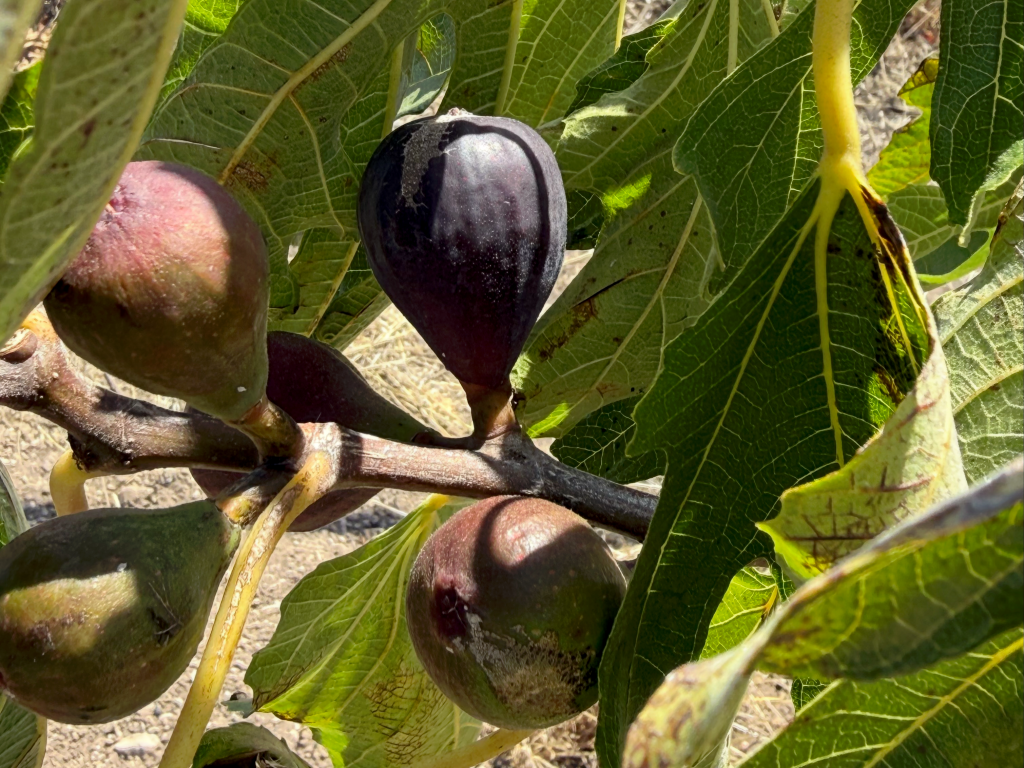 Lucky visitors can grab a fig from the tree that hangs beyond the garden gate. (Kristi Coale)
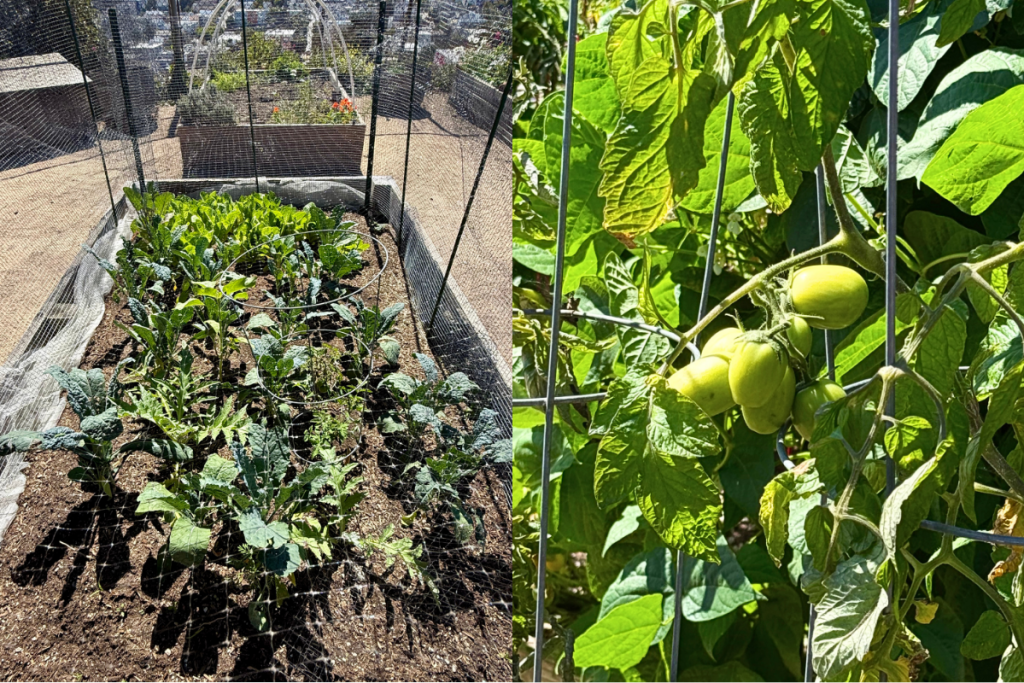 Kale and tomatoes working their way through the Corona Heights soil. (Kristi Coale)
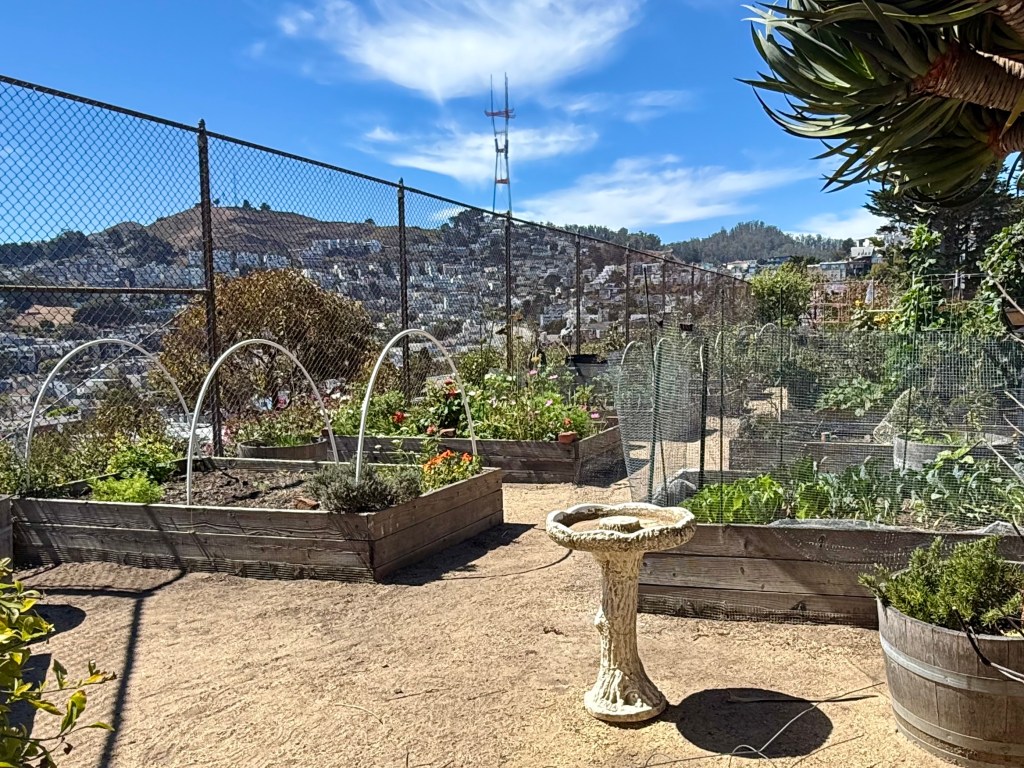 Corona Heights has views for days. (Kristi Coale)
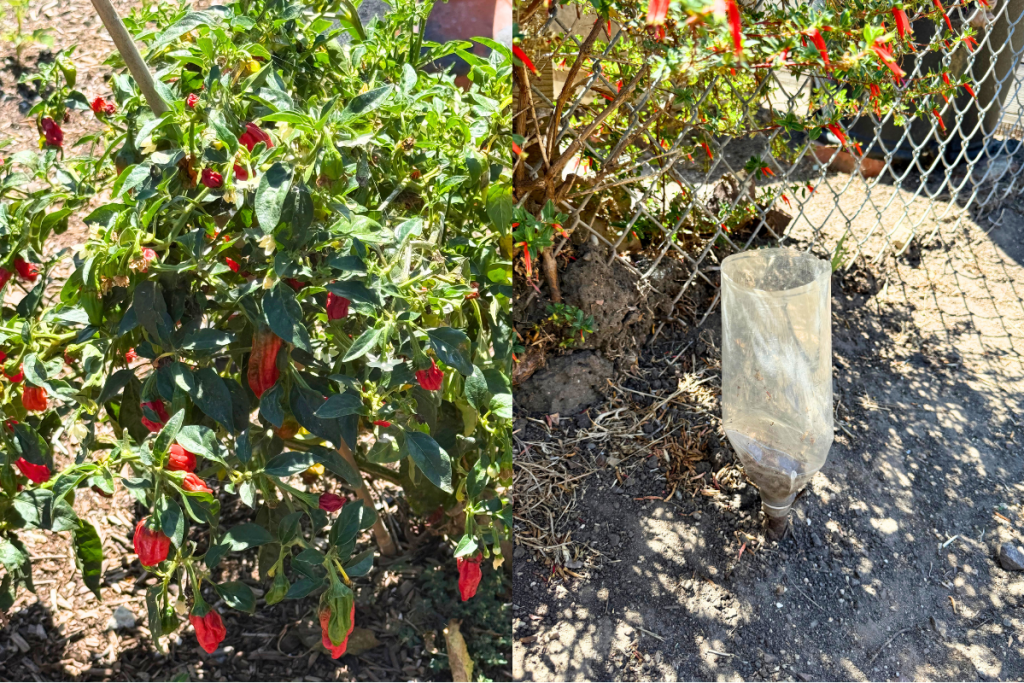 Spicy peppers (left) and a cigar plant (right) grow thanks to a resourceful watering system. (Kristi Coale)
Most Giving
Garden for the Environment
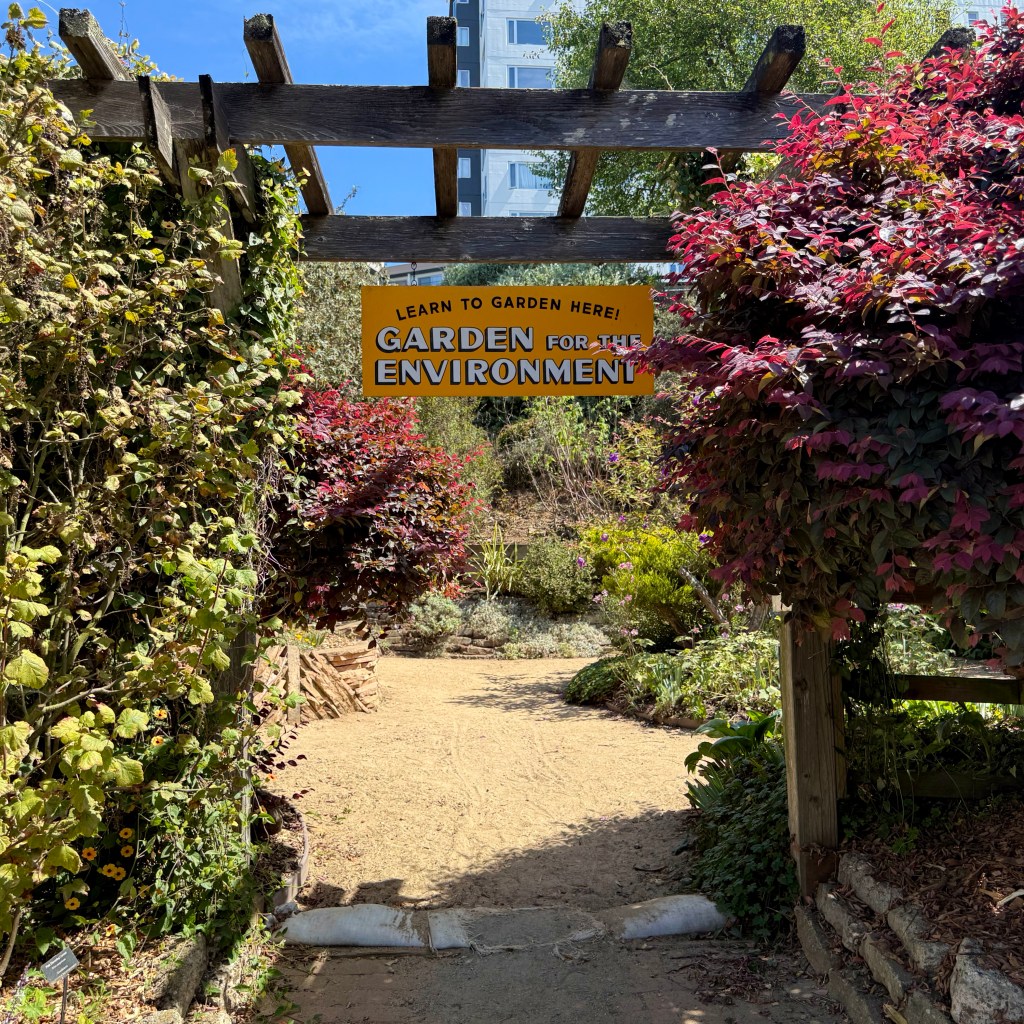
This large Inner Sunset garden welcomes all who wish to dig, weed, shovel compost, or even just sit on a bench to take it all in. Passersby are welcome so long as no one picks the produce — which the Garden for the Environment harvests for food programs. This spirit of giving includes a seed library, and everyone is encouraged to take seeds to plant at home.
The garden is also there to pass along knowledge. It bills itself as a “teaching garden” that has a series of placards, the kind you typically see on a nature trail, that inform visitors about native plants, carbon sequestration, and antipollution strategies. (Clean up your dog’s poop, folks.)
The garden consistently hosts school field trips and adult workshops on native plants, growing fruit, vegetables, and herbs, beekeeping, and composting.
For a double-dip, head a few minutes south — past the lot that hosts Clancy’s seasonal pumpkin patch and Christmas trees — to check out White Crane Springs Community Garden, which should be open to let you wander among the 80 plots.
How to get here: Muni’s 6, 43, 44, 66, and N lines stop nearby.
How many times have you said about some place in San Francisco, “I never would’ve known it was there if I hadn’t…”?
In this case, it could be “…if I hadn’t been walking up a steep Russian Hill slope and needed a bathroom break.” Michelangelo Park, less than half an acre on Greenwich Street, is tucked midblock between towering apartments and old-school wooden homes. At first there seems to be only a playground, basketball court, and (much-appreciated!) bathroom.
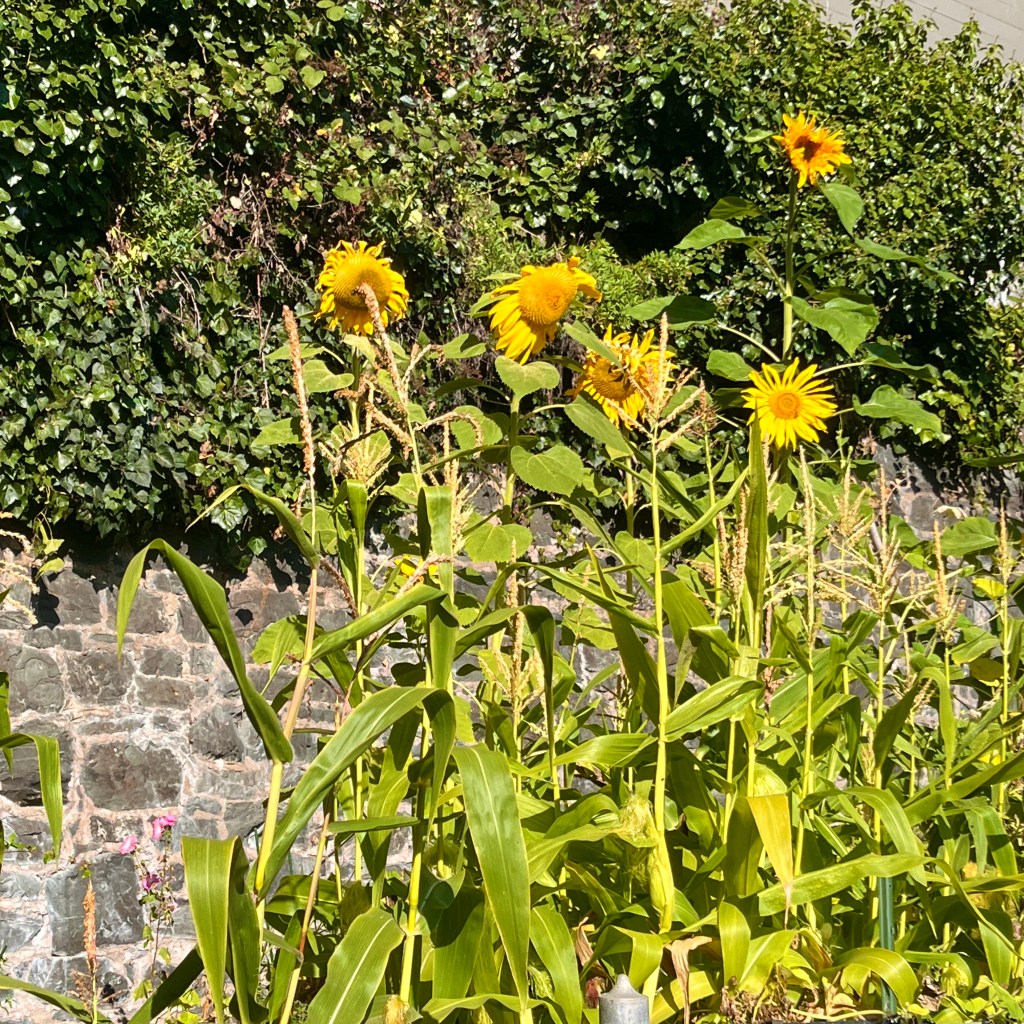
You need to go into the surrounding park to see the community garden. And what a treat it is, including the most amazing sunflowers we found in our citywide survey. There are also vibrant flowers, tomatoes, artichokes, and — wait, what? — corn. It might not be as high as an elephant’s eye, but it’s shocking to see it in such a tight urban space.
This sweet little garden is behind a locked fence, but it’s only waist high, making it easy to enjoy the view. If you’re hoping to work on the other side, however, don’t hold your breath. The wait list is more than 10 years long.
How to get here: Muni’s 30 and 45 lines stop nearby. You can also take the Powell-Mason Street and Powell-Hyde Street cable cars.
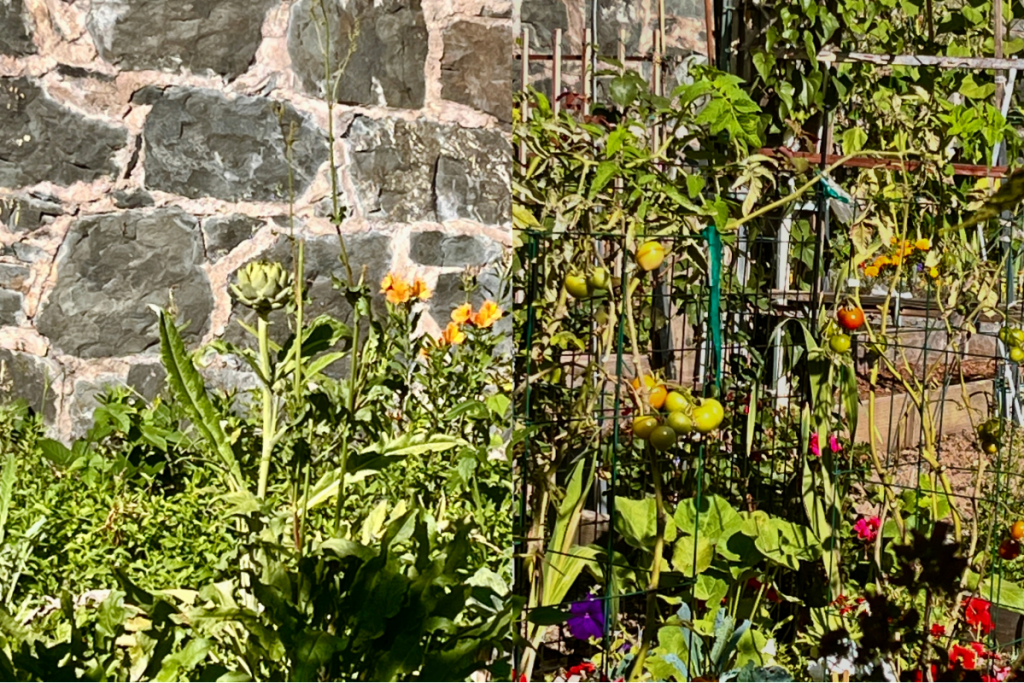 An artichoke on its way up (left); tomatoes and flowers (right). (Alex Lash)
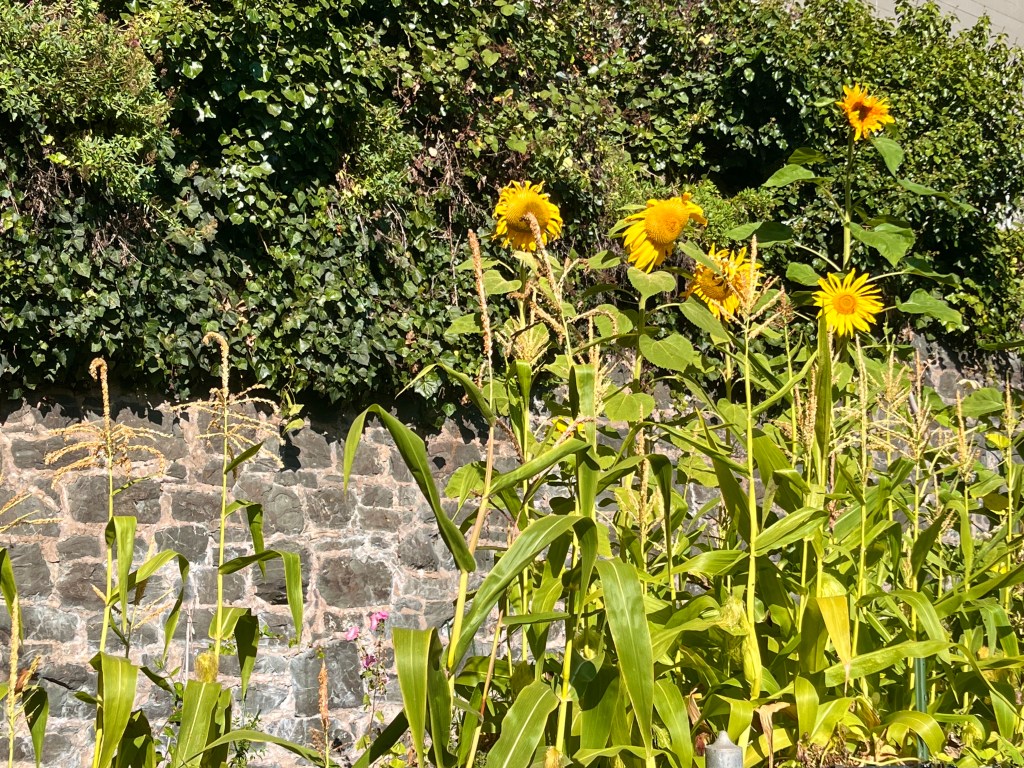 Sunflowers were the stars of the show when we visited Michelangelo. (Alex Lash)
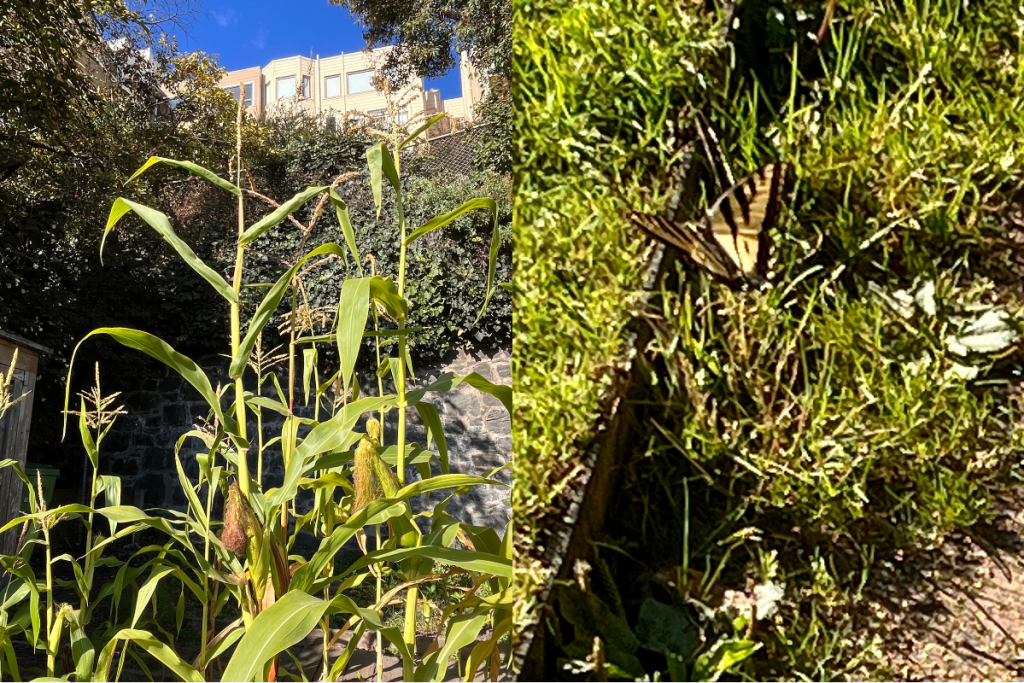 Corn! (left), plus a visit from a swallowtail butterfly (right). (Alex Lash)
More from The Frisc…