
This story is part of our September 2026 issue. To read the print version, click here.
At first the light flaring up outside Camelia Enriquez’s home in
rural Newcastle seemed harmless — maybe headlights casting a
glare in the window or someone goofing around. Then she saw the
truth, burning clear and bright under the California sky: Her
family farm’s packing shed, the heart of their operation, was
going up in flames.
It was devastating — the loss of the facility where they packed
peaches and other stone fruits, the financial hit, the
generations of memories. It was also the start of a
transformation.
“Innovation comes, sometimes, just out of desperation,” Enriquez,
48, says.
Since that 2020 fire, Twin Peaks Orchards, which has been around
since 1912 and favored by farm-to-fork chefs across the region,
has been the site of constant innovation, from installing a new
irrigation system to changing how they pack their harvest.
Whether born of desperation, aspiration or both, Sacramento’s
Capital Region is emerging as an international zone for
agricultural innovation.
The cutting-edge technological research, industry evolution and
hardscrabble on-farm practices like those at Twin Peaks offer
rare solutions for family farms in tough economic times and fuel
Sacramento’s status as “America’s Farm-to-Fork Capital.” The
question is just how many farms this innovation can save before
it’s too late, with family farms and food systems in deep peril
after decades of farm loss and modern crises like the war in Iran
raising the stakes.
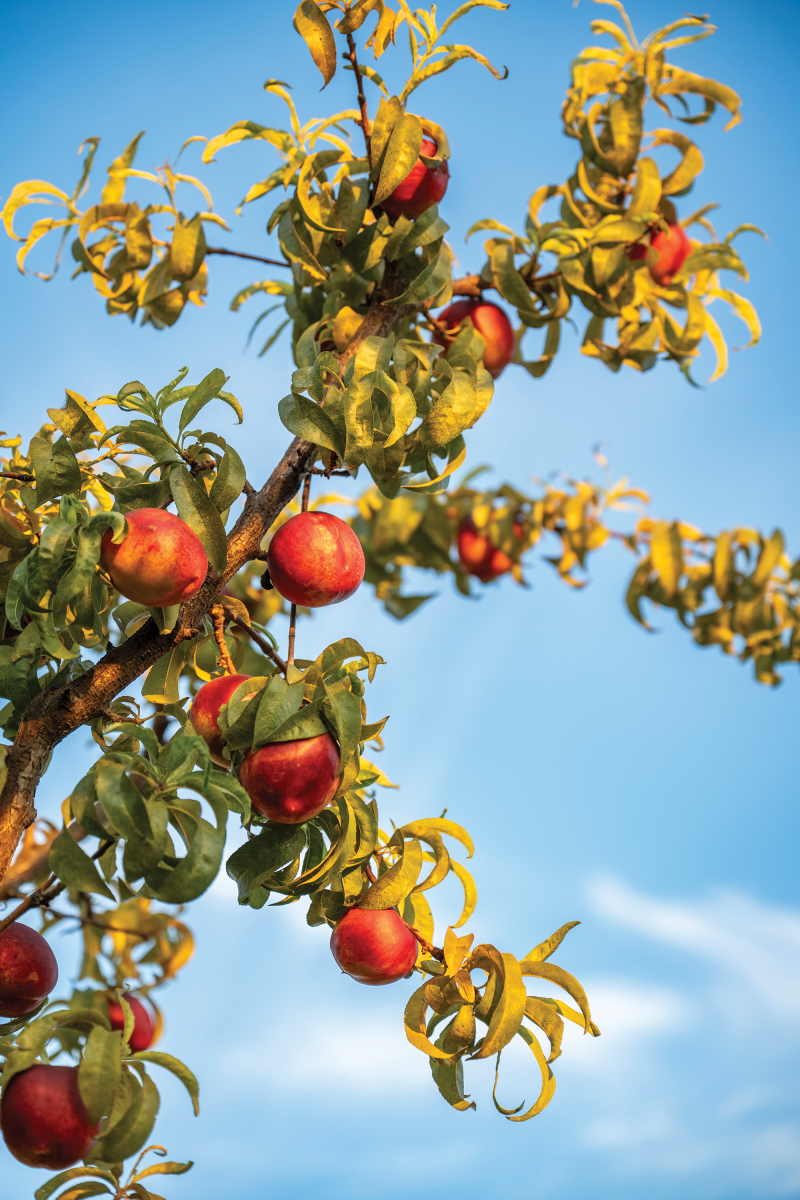
Twin Peaks Orchard in Newcastle, a favorite among chefs for their
fresh fruits and vegetables, grows 50 different varieties of
peaches.
Making innovation — and its benefits — affordable
While long known for its farming roots, the Capital Region
punches far above its weight on the innovation side of
agriculture, according to farmers, industry leaders and
researchers. There’s UC Davis, a hub for ag innovators from
across the country, a burgeoning start-up culture and scores of
farmers and researchers trying to tie past farm traditions to
future food solutions.
Central to that success, some innovators say, will be how much of
the technology can be “scale neutral” — meaning, technology that
can work on small and mid-sized farms as well as large farms, to
serve all levels of agriculture. For decades, agricultural
technology in America has largely centered on helping farms
reduce costs while getting bigger, according to leading
agriculture researcher James MacDonald of the University of
Maryland. That’s a goal that was necessary decades ago as farming
lost workers to other industries at much higher levels, he says,
but now leaves many farms behind by promoting technology they
can’t afford or implement.
Technology that can save farms can also doom them if it’s not
affordable for small and mid-sized farms, experts say. In that
case, it’s just one more force driving farms to “get big or get
out,” as they have for decades. The rising costs for farmers to
produce a crop, while the prices they receive stay the same, has
contributed to wiping out 70 percent of America’s farms in the
past century, according to U.S. Department of Agriculture data.
Rising costs include land, equipment, labor, fuel, seeds,
fertilizer and labor are the most immediate pressures farmers
cite. But they are also facing the historical effects of economic
catastrophes like the farm crisis of the 1980s and recessions of
the 2000s, which economists say reshaped the industry in ways
that disadvantage many family farms, including the role of
government policy in agriculture. Other factors in farm loss
include farmers retiring or consolidating their farms into larger
farming operations.
Bart Peintner, CEO of Elemental Agronomy, was living out how to
solve that dilemma in the region when he attended the FIRA USA
conference hosted in Woodland in October 2025, part of an
international network of events exploring robotics in
agriculture. His Denver-based company has developed an
award-winning device that can help make spraying fields far more
precise and affordable for farms of all types and sizes.
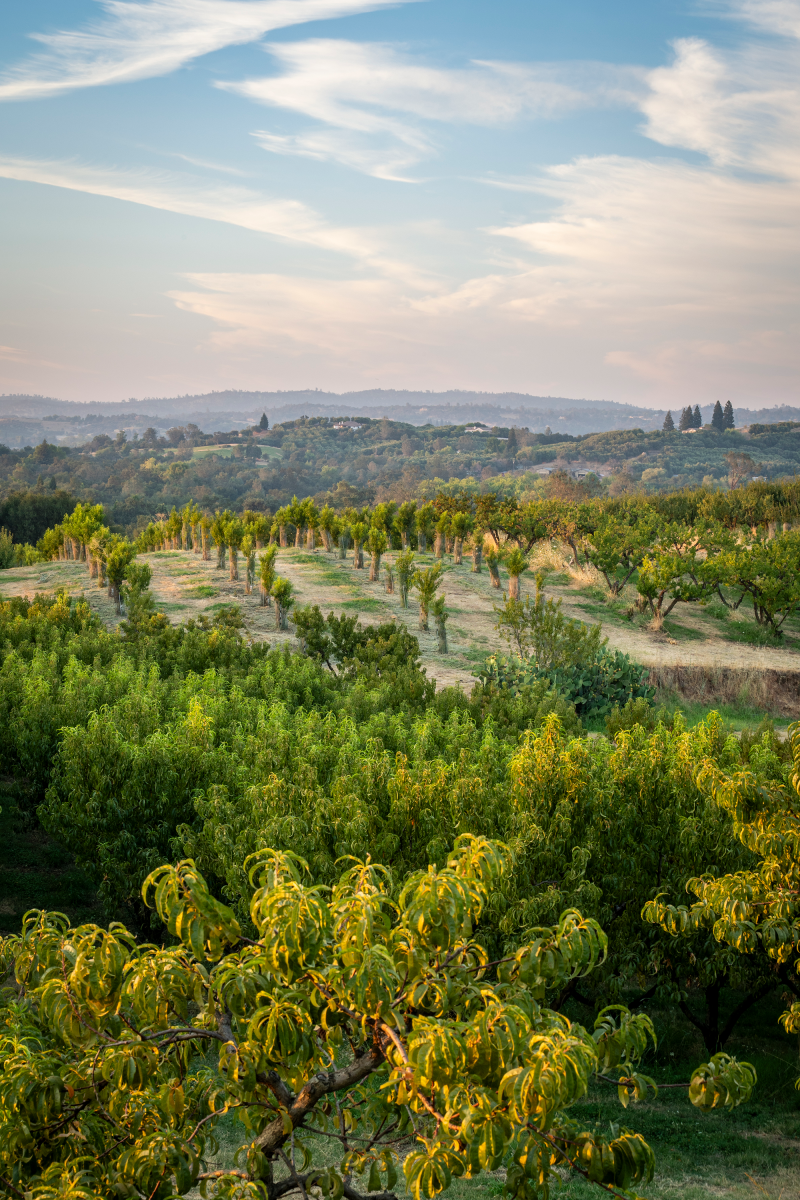
California, which has long been a major agriculture-producing
state, has been losing farmers for decades due to high costs for
fertilizer, labor, fuel and other reasons.
“You better be removing costs overall, or your value proposition
better be absolutely bulletproof,” Peintner says of the effort to
make technology work for farms. “It matters who is in charge of
that destiny.”
The sun is bright as Peintner and dozens of other innovators roam
the FIRA demonstration site at the Yolo County Fairgrounds, with
technological demonstrations going on over mock orchards,
vineyards and more. At one point, a drone hoists weights over the
mock orchard, its whirring weedwhacker noise surging as it
strafes left and right to show how it can help family farms
efficiently move equipment out to their fields.
Enriquez says for Twin Peaks, farm efficiency had to be improved
so that they could survive. She and her husband poured their
savings into transforming the farm as they recovered from the
fire and bought it from her parents. They started packing their
fruit right in the field rather than constructing a new packing
shed, removing steps and cost. They also invested in a new
irrigation system that was more efficient and environmentally
friendly, and decided to shift their farm toward being organic —
something they believed in, but also hoped would pay off with
better profits.
One of the biggest dilemmas farmers face in innovating is cost.
New practices can mean meeting other goals — such as supplying
local food or helping the environment — but they also have to
make financial sense by driving better profit, cutting costs or
otherwise “penciling out” when farm families do their math.
Sometimes those transitions make economic or practical sense for
one farm, but not for another.
“It’s not an easy environment to survive. So I think the farms
that are around are more forward-looking.”
— Tim Nuss, vice president of operations, Nuss
Farms,
a fifth-generation farm in Lodi
Nuss Farms in Lodi, a fifth-generation, 1,500-acre farm, is also
evolving its irrigation techniques — the controversial issue of
water is a ripe place to save money and promote conservation by
using less, but the family, whose motto is “restoring our soil
and our planet through regenerative agriculture,” is also
experimenting in other places. They recently tested out an
Ecorobotix “see and spray” implement, a sprayer they pulled
behind their tractor that uses artificial intelligence to discern
weeds from crops. The machine “spot sprays” those weeds, rather
than spraying the entire field.
“It’s not an easy environment to survive,” says Tim Nuss, one of
three brothers helping their dad run the farm. “So I think the
farms that are around are more forward-looking.”
Innovators hope to give farms more ways to reduce costs and meet
their goals. Danny Bernstein is CEO of Reservoir, a California
company that operates an ag startup incubator in Salinas, where a
barn serves as a robotics laboratory, and is developing
additional locations in Santa Rosa and Merced. Bernstein says the
Capital Region is near the top of places also ripe for a new
incubator.
“We need more energy, more ideas,” Bernstein says.
Mixing the old with the new
The region’s innovations also go far beyond technology, extending
to countless practices by farmers trying to find new paths
forward. For Eric Walker, it means blending the old with the new.
He and his brother, Andrew, run Farmboy Organics in Winters,
growing a wide range of fruits and vegetables. They’re constantly
trying to figure out what other crops they can grow, making sure
each is something they can make money on before moving forward.
They recently connected with the University of California
Extension for an on-site, computerized method of soil testing.
But they also proudly use more primitive practices that also
count as innovation these days — for example, using string to
guide their tomato plants upward so they’re easier to harvest.
“You can’t just let an AI control your whole farm,” Eric says of
mixing technology with his own judgment and hard work. “You need
the farmer’s footsteps on there.”
There are many other ways to innovate, one of them being shifting
from traditional chemicals to fertilize or protect crops to
“biologicals” that draw on more natural materials. But here
again, even farmers who want to make the change have real reason
to worry it won’t work on their farm. The key is winning over
farmers who already live with so much risk that they can’t afford
a product failure, says John Finegan, founder of Beck Ag, a
Sacramento-based company that helps ag companies commercialize
new products by identifying and encouraging markets of farmers
willing to adopt new practices. (He is also a member of
Comstock’s Editorial Advisory Board.)
Beck Ag does this through peer review — working with farmers who
test out a product and, if it works, vouch for it to their fellow
farmers. This can help win the faith of farmers who can’t afford
to have a crop fail. A biological spray that doesn’t work can
mean a field that has low yields or is overrun by weeds or pests,
leaving a farmer with all their costs for the year and none of
their income. It puts another dimension on the cost savings
aspect — for many farmers, the possibility of saving money can’t
outweigh a risk that is too high.
“You can’t afford to take a big risk on a product failure when
you’ve only got one shot in a full 12 months to make your profit
for keeping your farm alive,” Finegan says.
Finegan thinks the time to innovate is now, with the war in Iran
choking off shipping through the Strait of Hormuz, sending
fertilizer prices spiraling upward more than 30 percent as of
August, according to the World Bank. It’s just another crisis for
farmers, and it may mean there is a financial incentive to try
new biologicals. Beck Ag has created a new Bio Efficiency Council
to study that and seize the moment.
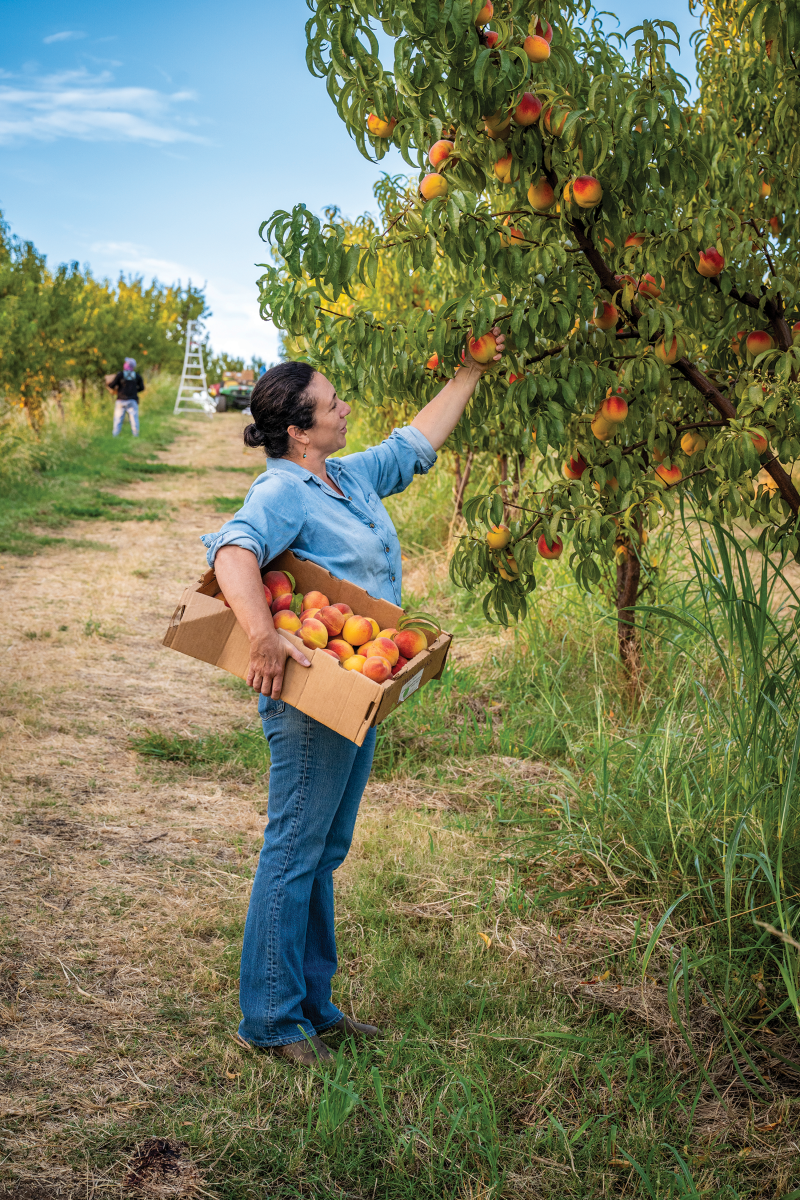
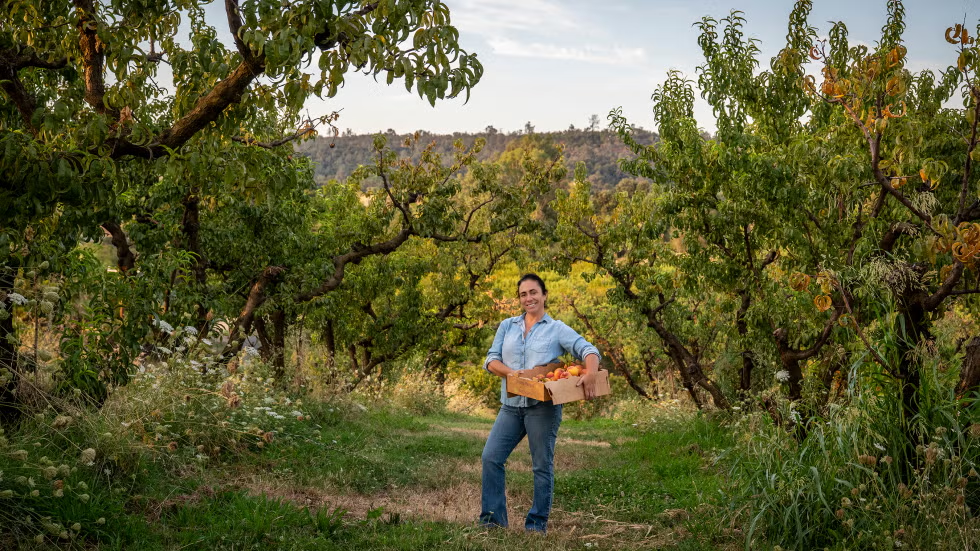
Camelia Enriquez picks peaches at Twin Peaks Orchards.
Enriquez at Twin Peaks agrees innovation takes many forms. Since
the fire, the family has worked to recover emotionally and
financially. They’ve weathered the dip in crop yields that can
come with the switch to organic when conventional chemicals are
no longer protecting against threats to crops — but then watched
yields rise and profits improve as their soil got healthier.
Thanks to new technologies, they feel they’ve got a brighter
future for themselves and their kids.
“You have to have a five-year plan, a 10-year plan,” she says of
making it through such transitions to put the farm in a better
place for the future. “Our biggest goal, the thing that we’re
aiming for, is sustainability.”
–
Stay up to date on business in the Capital Region:
Subscribe to the Comstock’s newsletter
today.