
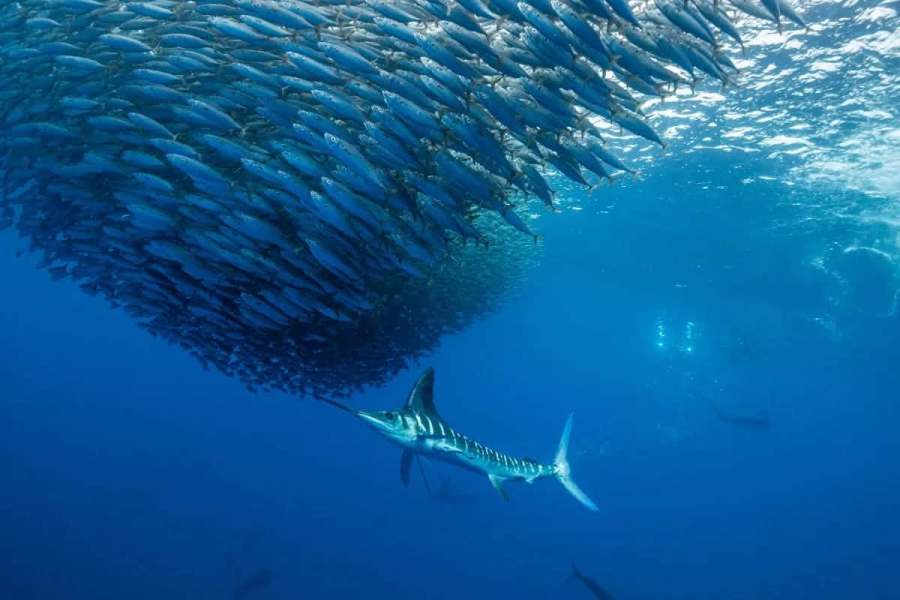
El Niño years typically mean warmer ocean temperatures in California. The warmer waters can also bring more exotic fish to the region from tropical and subtropical areas.
Though these fish are sometimes rare to California waters, they’re generally okay to catch as long as they aren’t a protected species and anglers respect catch-limit laws, according to California Department of Fish and Wildlife regulations.
“When you catch an unusual warmwater fish, one that isn’t listed by name in regulations, it falls under the California Code of Regulations, Title 14, Section 27.60(a), which states that no more than 20 finfish in combination of all species, with not more than 10 of any one species, may be taken,” the CDFW said.
Yellowfin, bluefin and albacore tuna are showing up along the California coast in large numbers in 2026, according to the CDFW. Less commonly seen wahoo, striped marlin, bullet tuna, and dorado are also migrating to the region due to the warmer El Niño waters.

Fish more commonly seen off the California coast during an El Niño year. (CDFW)

Fish more commonly seen off the California coast during an El Niño year. (CDFW)

Fish more commonly seen off the California coast during an El Niño year. (CDFW)
“A marine heatwave has increased ocean temperatures this year, drawing warmwater and tropical fish species farther north than usual – into California coastal waters and beyond,” the CDFW said. “Before you head out with your rod and reel or spearfishing equipment to try and catch some of these visitors from warm southern waters, it’s a good idea to review California’s sport fishing regulations.”
In general, if an angler hauls in a fish that’s not listed by name in California’s sport fishing regulations, CDFW code states that they can keep the fish as long as they adhere to the following rules: “No more than 20 finfish in combination of all species, with not more than 10 of any one species, may be taken.”
Rules for more commonly caught fish, like halibut, tuna, rockfish and surfperch, already have specific catch limits, per California’s Code of Regulations. These fish all have specific bag limits, minimum-size limits, weight restrictions and other regulations.

A hammerhead shark sighting from the Malibu Pier on Aug. 13, 2026. (@PIERMACKEREL)
However, protected fish like white sharks are strictly off-limits and must be thrown back.
“White sharks are among the suite of fish that may visit California waters in greater numbers during the marine heatwave and the coming El Niño conditions,” the CDFW said. “Scientists believe juvenile white sharks, which typically measure between four and ten feet in length, are moving northward even into central California, and may stay in nearshore areas for longer than usual. White sharks may not be targeted or taken off California, and any white sharks unintentionally hooked by recreational anglers must be released, per longstanding fishing regulations.”
Hammerhead sharks and whale sharks are examples of protected fish that are rare to Southern California waters, but were recently sighted off the coast as the region faces an intense El Niño season.
Copyright 2026 Nexstar Media, Inc. All rights reserved. This material may not be published, broadcast, rewritten, or redistributed.For the latest news, weather, sports, and streaming video, head to KTLA.