
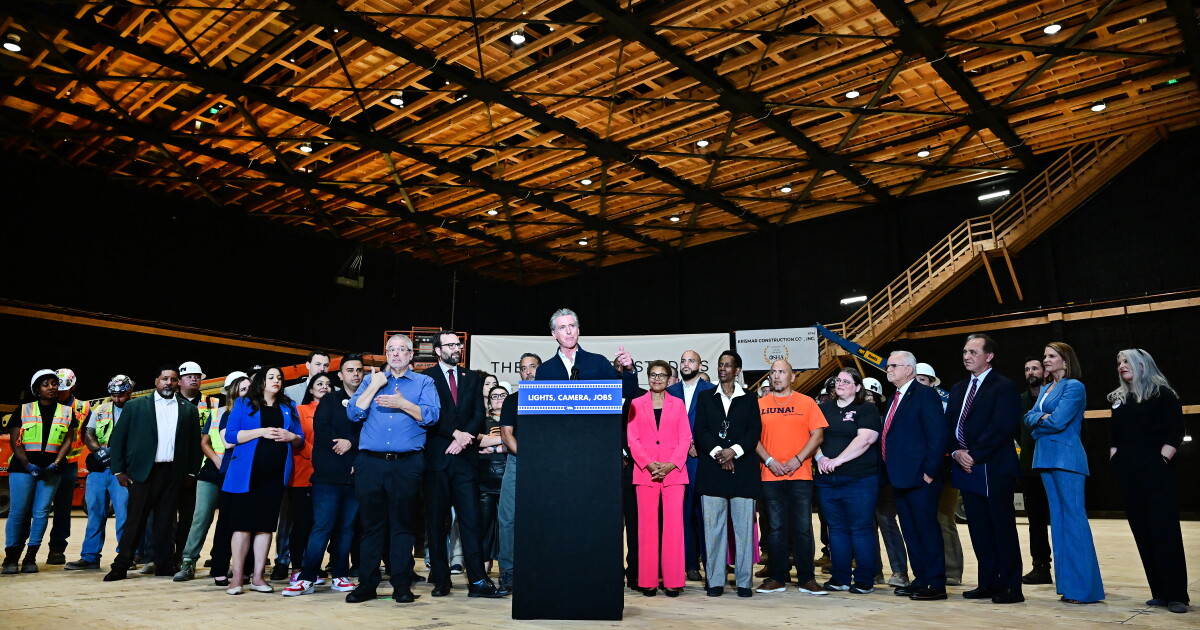
President Trump says ‘Hollywood is dead.’ What’s being done to revive it?
In 2025, California majorly boosted its film and TV tax credit program for the first time since 2014 in an effort to keep jobs in the Golden State. One year out, is it working as planned? And why is President Trump now calling for a national incentive program? On this episode of Imperfect Paradise, we explore these questions with veteran entertainment journalist Dawn Chmielewski, and hear from local film and TV workers about how they’re faring.
“Was it like this during the Great Depression?”
It’s a question that prop house owner Pam Elyea says she’s asked herself in recent years, as the film and TV industry has weathered multiple hits — the pandemic, the dual industry strikes of 2023, the 2025 fires — and a loss of production jobs to other states and countries that began decades ago.
Elyea, along with her husband Jim, opened History for Hire, a prop house in North Hollywood, in 1985. Before the pandemic, they had a staff of 20 people, but now employ only nine full-time employees.
“As an employer and a business owner, the feeling you’re always trying to overcome is that feeling of weariness,” Elyea says. “ That it was just dragging on and on, and there’s really no big hope in sight.”
‘It got everybody excited’
Elyea says she was heartened by the boost to California’s film and TV tax incentive program in July of 2025 — from $330 million to $750 million: “It got everybody excited.”
Elyea says she started to see positive effects sooner than she expected, about three months in, first with new TV productions that were tax credit recipients coming to History for Hire for props, and more recently feature films.
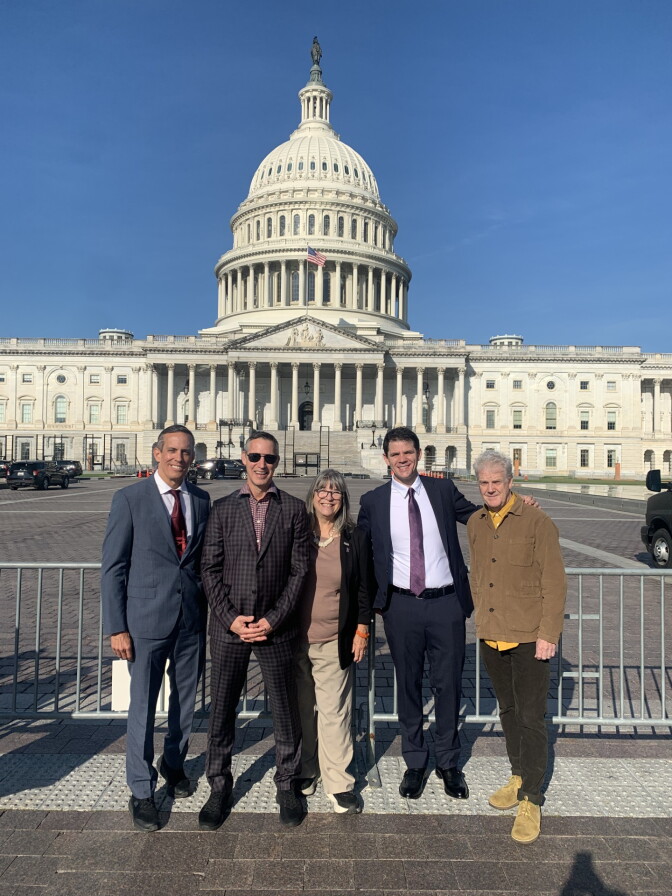
Members of the Set Decorators Society of America (Pam Elyea in center) in Washington, D.C., lobbying for a federal film and TV tax incentive on September 16, 2026.
She’s also now lobbying for a new federal film and TV tax incentive, which President Donald Trump recently said he’d support.
“Are we at where we were before? No,” she says. “But we certainly are so much better, and so it kind of gives you hope moving forward.”
‘Flickering back to life’
Elyea’s experience is reflective of some of the data on film and TV productions in Los Angeles over the last year.
On the LAist podcast Imperfect Paradise, entertainment journalist Dawn Chmielewski notes that Film LA, which tracks permitting for on-location shoots in and around Los Angeles, showed that when it comes to television production, there was a 51% increase in the second quarter over the first.
“Overall, the numbers are still down year over year,” Chmielewski says. “But it’s showing that the industry is sort of flickering back to life.”
Another promising data point Chmielewski points out: ProdPro, which tracks productions around the world, “showed that both the number of films being shot and overall production spend are both up in California for the second quarter of this year.”
But there are also statistics that point to a less rosy picture.
Film LA research that shows the number of shoot days in Los Angeles has decreased by nearly 50 percent since 2017. And it’s estimated that since the peak of the streaming era in 2022, nearly 50 thousand production jobs have been lost in Los Angeles.
Support local arts & entertainment coverage
Your support helps sustain local coverage of culture, arts and entertainment that keeps our community connected.
‘It feels incredibly uncertain’
Costumer Andrea Wheeler describes the current climate in the industry as one where “everybody is on eggshells,” with so many people she knows who’ve had to pivot to other careers that “you feel like you’re in a dying industry right now.”
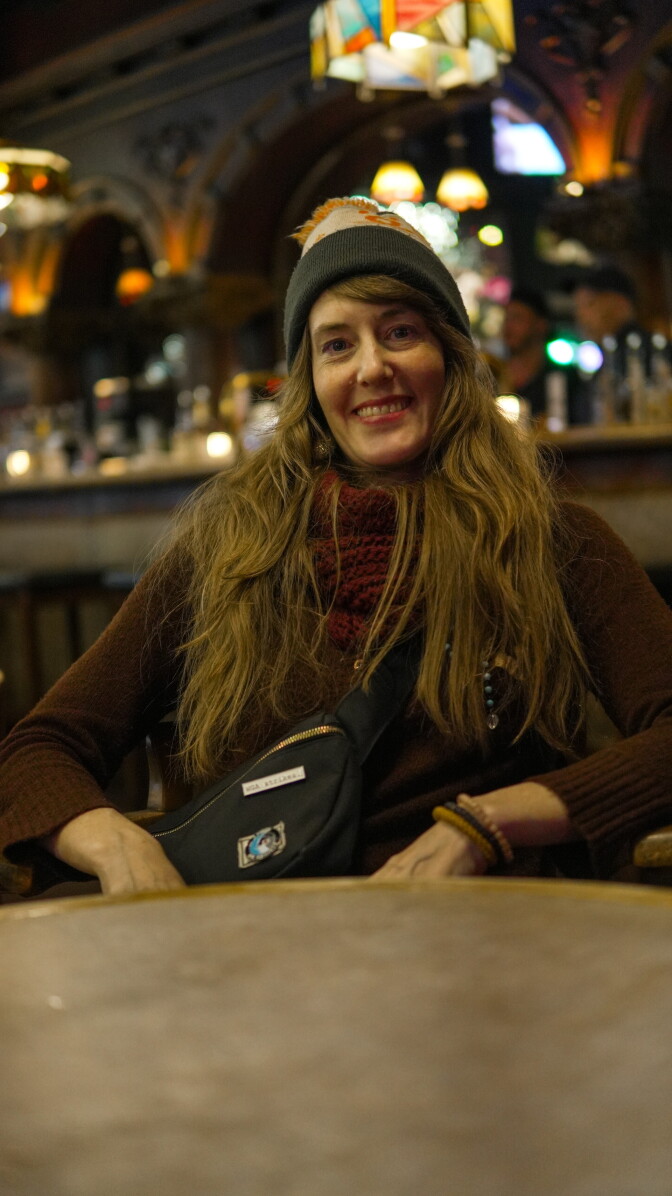
Andrea Wheeler is a costumer who has worked on TV shows like “Lopez v. Lopez” and movies like Marvel’s “Eternals.”
(
Courtesy of Andrea Wheeler
)
While Wheeler was recently able to find work on a show that moved from Vancouver to California because of the tax credit boost here, she says the pay and working conditions didn’t match up to the kind of work she was able to find in the past.
From around 2016 to 2019, she says, “if you were in a job that was really atrocious, just like really bad working conditions … You could just leave and find another job the next day. There was a lot of security there, [but] not now.”
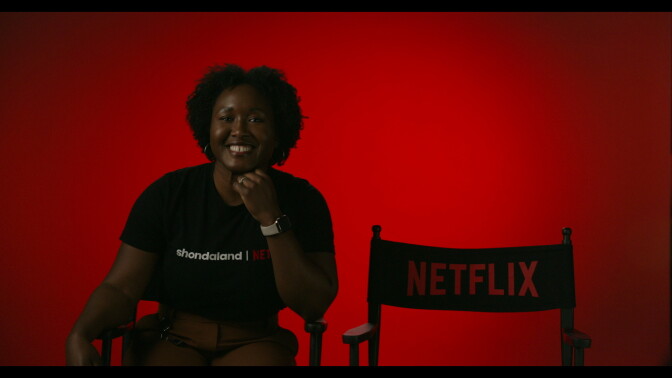
Chineza Ezinkwo is a production coordinator based in Los Angeles. She most recently worked on “Tyrant,” a Charlize Theron film that shot in LA.
(
Courtesy of Chineza Ezinkwo
)
Chineza Ezinkwo, a production coordinator who’s worked in the film and TV industry in Los Angeles since 2011, echoes Wheeler.
“ Yes, there’s more work happening, but also it’s hard to find,” Ezinkwo says. “You can’t really plan to build a life in the way that you felt like you used to even a few years ago.”
Still, she says there is also a bit of a renewed sense of optimism in the industry right now.
“It feels incredibly uncertain, but I will say there’s more hope these past two years than there was certainly [in] the past three or four years.”