
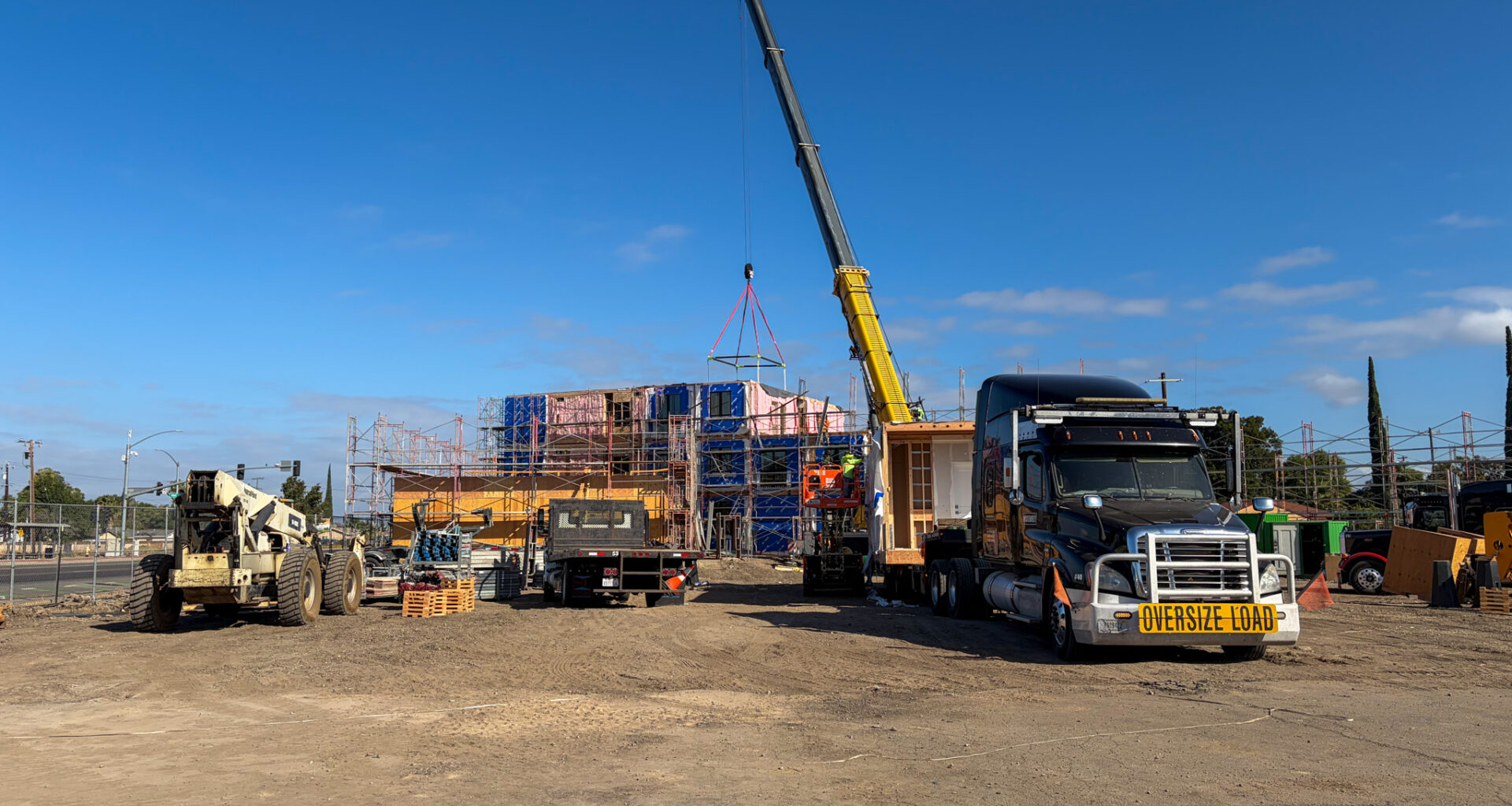
A crane lifted what looked like a giant shipping container with a window and door several stories into the air at a construction site in South Stockton last week. Like a LEGO block, the box was only one piece of what will become an entire apartment complex. The prefabricated units were built in Idaho and trucked to Stockton nearly finished; crews then lifted them into place and stacked them on top of each other.
Together, the modules will make up Fairview Terrace, a roughly $70 million affordable senior housing development from Mutual Housing California. And Stockton is just the start. A push to utilize this building technique is becoming more popular in California, where high construction costs have affordable housing developers looking for ways to build faster.
The Sacramento-based affordable housing developer plans to use the same factory-built approach for approximately 600 homes across Northern California over the next several years, including for projects in Sacramento, Elk Grove and Vacaville.
Stephanie Hawk is a researcher at UC Berkeley’s Terner Center for Housing Innovation. She said the concept isn’t new, but with Mutual Housing planning so many factory-built homes, developers could learn how to make these builds more common.
“California needs more houses, right? We are in a housing deficit,” Hawk said. “We need to make housing. We need to make it quickly, and we need to make it at a little bit of a cheaper price point.”
Previous studies have found factory-built housing can cost 10% to 20% less than traditional site-built construction under the right conditions, Hawk said. But researchers are still gathering data on how consistently those savings can be replicated.
“We know that there are benefits anecdotally; we know under the right conditions there are benefits, but we want to understand that a little bit better,” Hawk said.
At Fairview Terrace, much of the construction that would normally happen onsite is instead happening hundreds of miles away at a factory in Boise, Idaho. Ryan Cassidy, vice president of real estate for Mutual Housing California, said that allows two parts of the construction process to happen at the same time.
“The first thing really is speed,” Cassidy said. “While the site team is working on, you know, grading and foundations, our factory team is building these modules in a factory. So when the site’s ready, the modules show up and then they get put together just a lot like Legos.”
Inside the prefabricated modules, most of the work is complete when they arrive. Flooring and painted walls are already in place, and appliances like ceiling fans, a dishwasher and a fridge are installed.
Paul Dille manages the Guerdon factory that assembled the modules for this project. He said the Boise factory can assemble about three full apartment units in a single day. Since arriving in Stockton, crews have set about 10 modules a day.
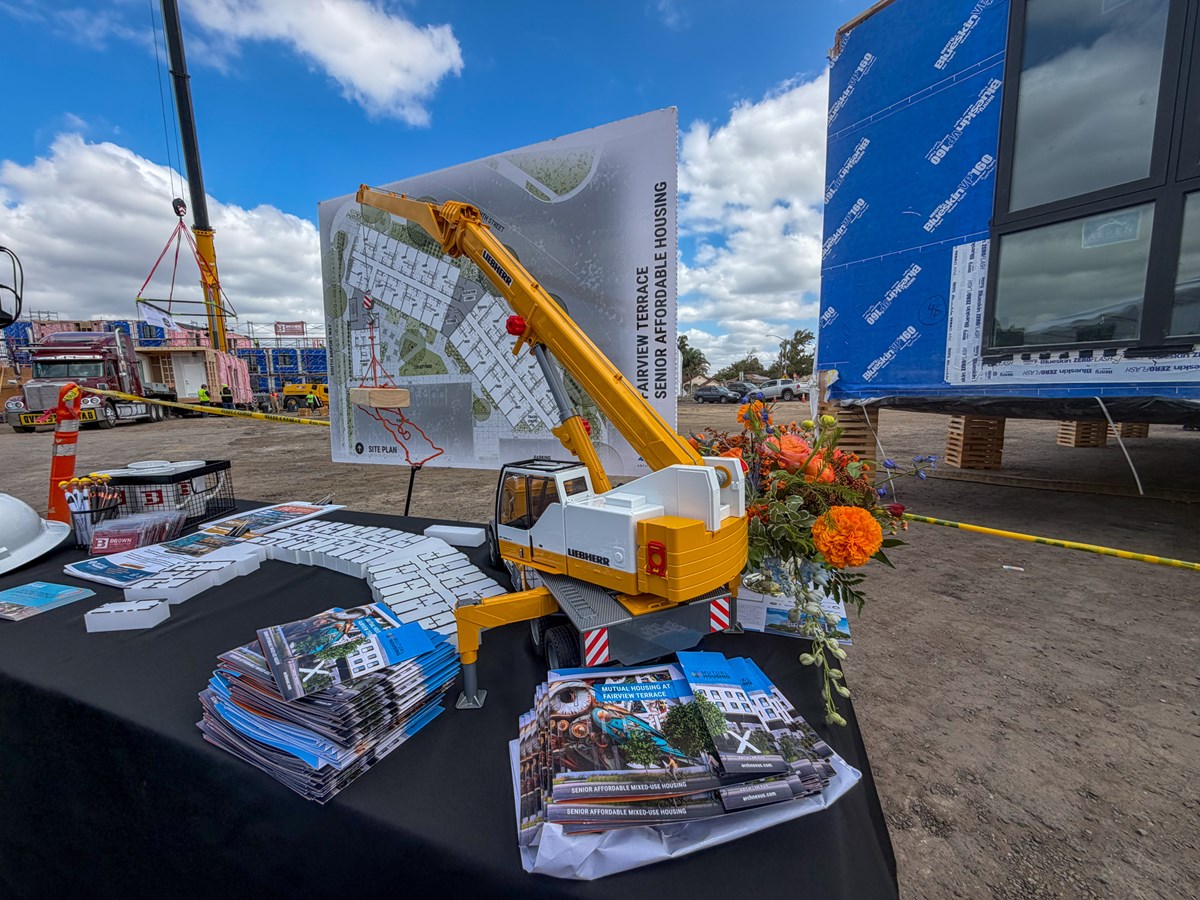 A model crane is displayed at the Fairview Terrace construction site in Stockton on Sept. 17, 2026.Tony Rodriguez/CapRadio
“We take a lot of that construction work that you’d normally see happening on site. That’s all happening in Boise at a very rapid pace,” Dille said. “And so when you get here, you blink and you miss it.”
The factory built the 73 units in about a month for the Stockton development. Some portions of the building, such as the lobby space and community rooms, are still built on site. They then piece the apartment modules together around them.
Cassidy said they expect to finish the more than 70-unit project in about 14 to 15 months.
“It really compresses our time frame,” Cassidy said. “On a project like this, 70-plus units, we’re going to get this done in about 14 or 15 months. And so that saves about 40% to our normal construction timelines.”
Mutual Housing CEO Craig Adelman said the developer estimates Fairview Terrace is costing about 7% less than a comparable site-built project.
“We’re also saving significantly on time,” Adelman said. “And we know time [also impacts] cost. And because we have a housing crisis, the sooner we can get these homes to market, the more people that can be housed and the quicker we can move on to the next opportunity.”
Fairview Terrace is the first piece of a larger factory-built housing buildout that Mutual Housing plans to roll out in Northern California. On Sacramento’s Stockton Boulevard, construction will begin next summer to add 70 pre-built senior housing units. A similar development in the Strawberry Manor neighborhood is expected to follow in the winter of 2027.
Altogether, Mutual Housing says it expects to produce more than 600 homes in the region over the next several years. Adelman said doing multiple developments with pre-fabricated units is important to making the factory model work.
“You don’t realize those benefits by just dipping your toe into the system,” Adelman said.
Mutual Housing plans to keep the same factory, general contractor and architect working together across the developments. Adelman said that will allow the team to take what it learns from one project and apply it to the next.
“As we move down that pipeline, we will continue to realize better gains,” Adelman said, “not just in cost, not just in time, but also in quality.”
Hawk, the UC Berkeley researcher, said consistency could help overcome some of the challenges factory-built housing has faced.
“They’re going to be working with this team across the different phases of this project,” she added, pointing to the same architects, builders and factory working together. “I think [that] is going to help remove a lot of the barriers that we see in the factory-built housing industry.”
Dille, the factory manager, said Guerdon has been building modular housing since 2001 and has seen demand grow in recent years as affordable housing developers look for ways to control increasingly high construction costs. He said factory-built housing can still carry an outdated image of mobile homes or trailers.
“Back in the day, people saw modular and thought trailer park, thought low quality,” Dille said. “But it’s really the opposite. It’s higher quality.”
Building inside a factory also means construction happens in a controlled environment, not outside in rain, heat or other weather. Developers say the modules go through several stages of quality checks at the factory and in the finished apartments.
“This is really like construction technology and how we’re kind of cutting costs and cutting build timelines,” Cassidy said. “But the built product is not something that anyone could ever tell was modular.”
Dan Dunmoyer, president and CEO of the California Building Industry Association, said the perception that factory-built housing means living in a “tin can” is outdated.
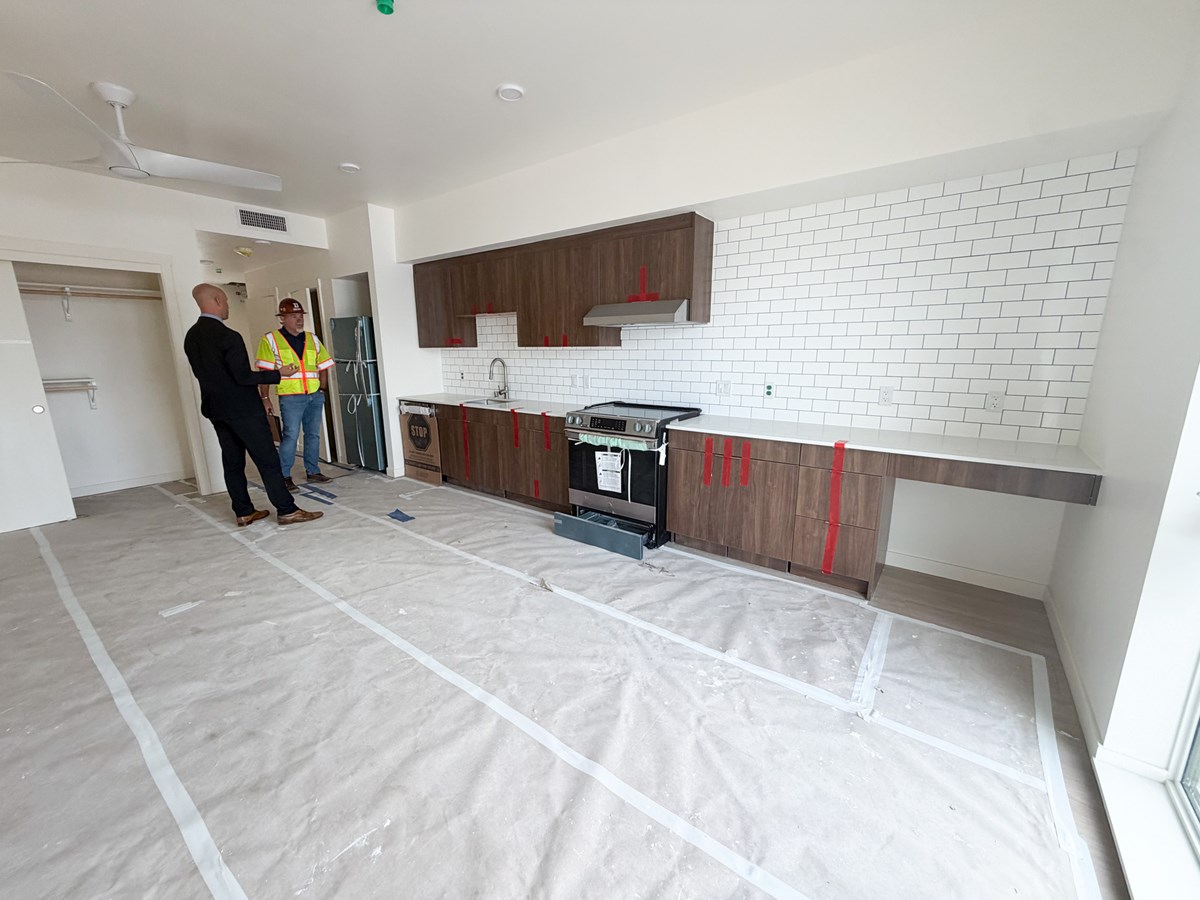 The inside of a nearly finished factory-built apartment on Sept. 17, 2026.Tony Rodriguez/CapRadio
“These are homes,” Dunmoyer said. “I’ll bet you lunch that if I walked you through a traditional build versus a manufactured home, you would not be able to distinguish it.”
But factory construction still has its own challenges. Dunmoyer said the factories must maintain a steady stream of projects to remain operating. Unlike a traditional construction crew that can move between jobs, a factory has permanent employees that need consistent work.
“It’s more complicated when you can’t really move at a steady clip because a manufacturer, unlike a standalone framer, it’s harder to start and stop a group of employees,” he explained.
Housing experts say that’s one barrier preventing this type of construction from taking off. Hawk also cautioned factory-built homes address only part of California’s housing problem. Differences in build requirements and rules between jurisdictions can reduce the efficiency of these types of projects.. Researchers still want more evidence on how much money and time factory construction can consistently save.
“It is not the panacea, right?” Hawk said. “We are still definitely going to need site-built construction, but this is another lever that we can pull to help get us out of this housing hole.”
Over the next several years, Mutual Housing will test large-scale factory-built housing as it moves from Stockton into the Sacramento region. Dunmoyer said other developers in the building industry are watching it closely.
“The actual concept of building is almost identical 50 years later from when I was a toddler,” Dunmoyer said. “This is an industry that’s ripe for disruption and this type of manufactured housing has the potential to be that disruption in a very positive way.”