
As artificial intelligence reshapes the economy, the Greater Sacramento Economic Council wants more Sacramento residents in the semiconductor industry.
Its solution: a new workforce development action plan that would create a pipeline from the classroom into semiconductor jobs, which is a market that’s expected to add more than 100,000 jobs nationwide by 2035, according to the U.S. National Science Foundation.
Semiconductors are materials used to make chips that power most modern electronics like phones, laptops, cars, solar energy, defense technologies, artificial intelligence and medical devices.
Sacramento is home to nine global semiconductor companies: Bosch, Samsung, Intel, Micron, Solidigm, AMD, Kioxia, Qualcomm and Western Digital.
Daniel Marrujo, president and managing director of Trusted Strategic Solutions, which is a consulting firm that helps navigate challenges related to microelectronics. He was approached by GSEC on the heels of an evaluation by Newmark with a vision to expand Sacramento’s chip manufacturing sector.
For the plan to work, he said they needed to focus on the one factor that will allow the region to thrive or not: its people.
“People are quintessential to any capability that is either being stood up or planning to expand,” Marrujo said. “We focused on workforce development as being the core focus for this action plan, looking at all of the demands that industry had in the region.”
Workforce development through education
Sierra College in Rocklin has already begun producing people to go into the workforce with their mechatronics program.
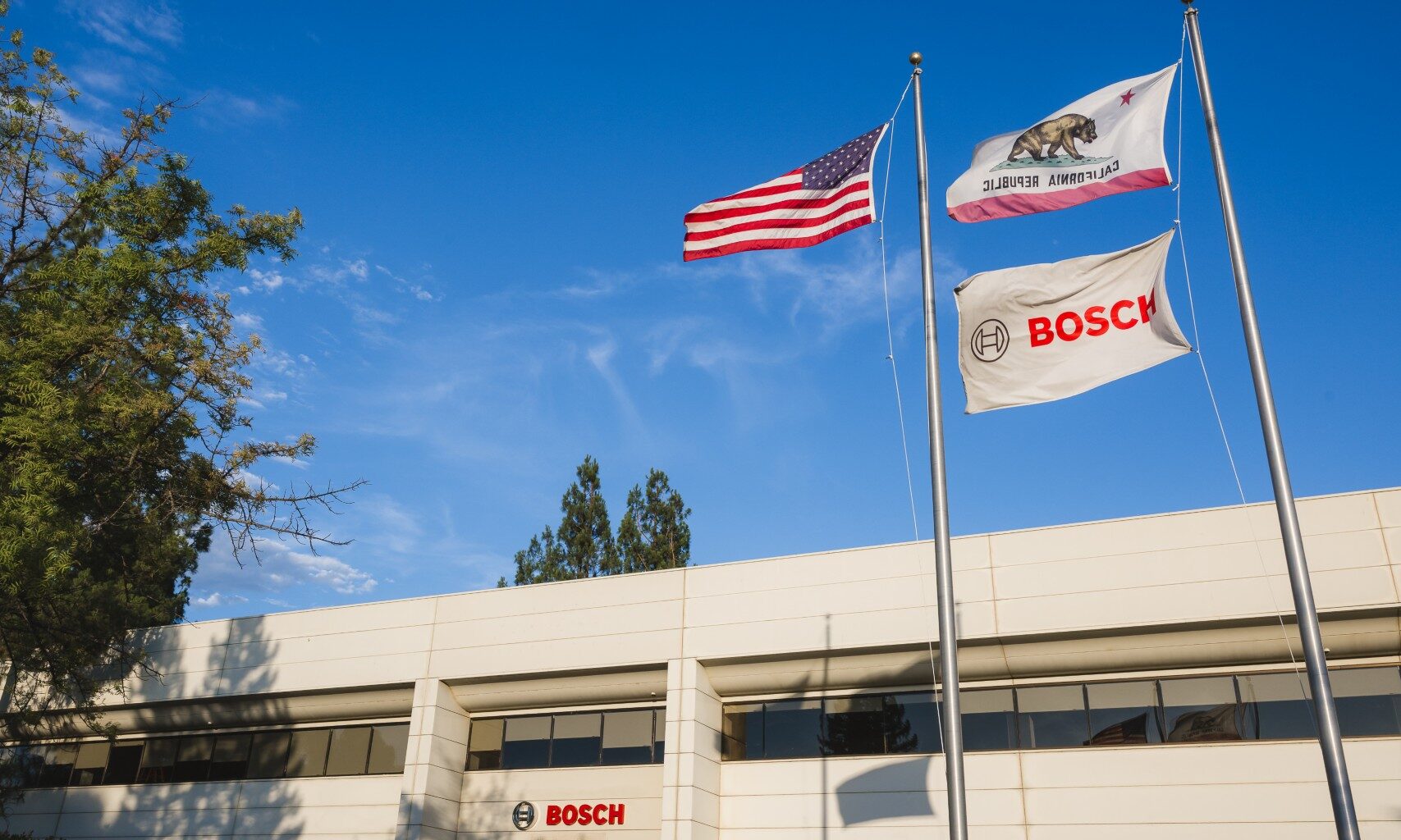
German-based manufacturing company Bosch acquired the former TSI facility in Roseville in 2023 and was just awarded $225 million in CHIPS funding to help transform the facility into a major U.S. production hub for silicon carbide chips.
Through their partnership with Bosch, Sierra College students have a direct pathway to a job through the program — the types of jobs that GSEC hopes more residents could fill.
Bosch said in an email that they’ve hired 13 technicians from Sierra College since they acquired the site. The positions include associates that were in operations previously and were then promoted after obtaining mechatronics certificates.
One of those hires is Sacramento native Ella Oettle who took the program at Sierra College and now works for Bosch as a line maintenance technician level 1. She’s been working at Bosch for two years.
“I was hired by Bosch right out of graduating from Sierra College Mechatronics program, and I had no prior semiconductor experience before that, or much prior work experience,” Oettle said. “This is my first full-time job out of college, but over the last two years, I’ve gained a lot of knowledge about the areas that I am working on in the fab.”
Willy Duncan, the superintendent for Sierra College, said their Mechatronics program combines the concepts of mechanical and electrical engineering into one program.
“It really gives students a real good strong basis on how things mechanically work, and then what happens when you electrify that situation and use a chip in the process to regulate the process and move processes,” Duncan said. “It allows students to work really hands-on and get the basics and all of those components.”
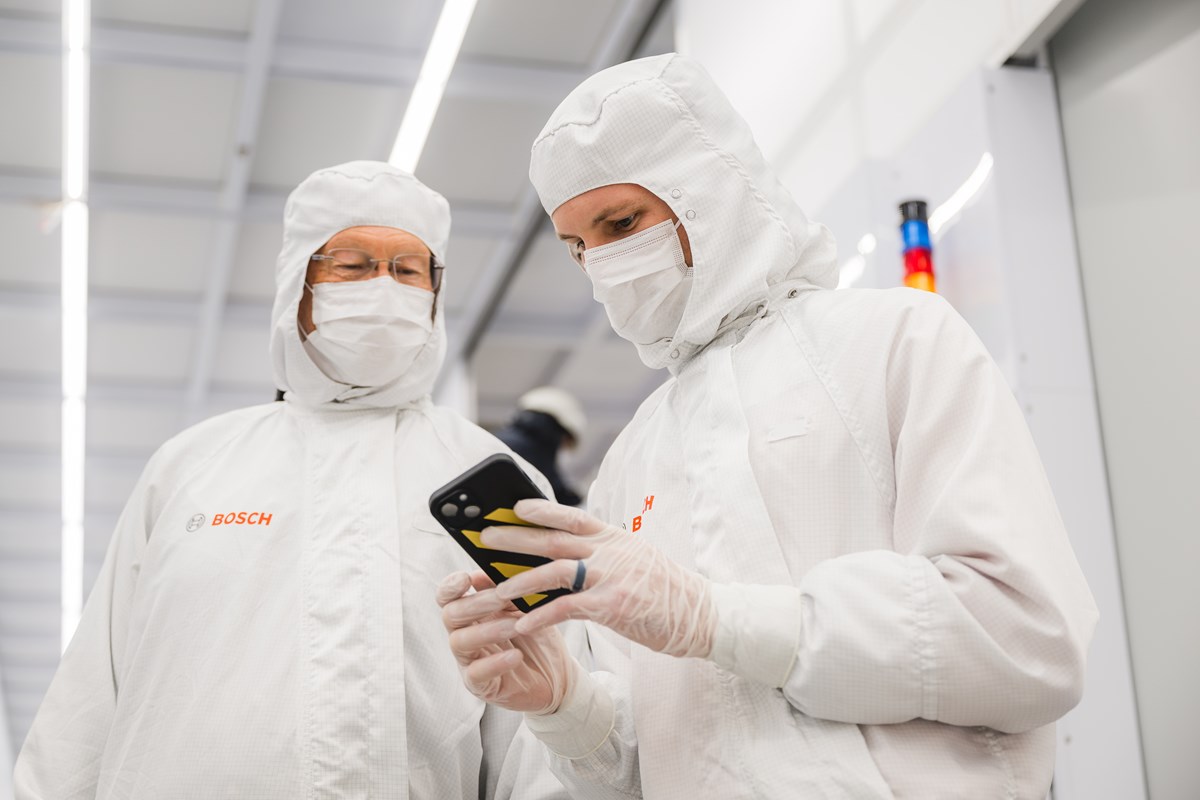 Bosch intends to start U.S. based commercial manufacturing in 2026 – just three years after acquiring the Roseville site.Photo courtesy of Bosch
Sierra College offers both a certificate in mechatronics and an AA or AS degree depending on what the student chooses. Duncan said students could complete the certificate program in 18 months and could make anywhere from $70,000 to $100,000 a year.
“The certificate program has really all of the same mechatronics programs,” Duncan said. “It’s just if you want to get the degree, you also need to get a lot of your general education done and some of the other components in order to get the degree and be able to maybe transfer on.”
Oettle said she feels prepared for the jobs she’s doing now because of going through that and would recommend it to people who want to get a job in this field.
“I’m obviously not coming in as an expert in any field, but I think specifically with the semiconductor industry, it is pretty unique in the manufacturing sense that it does deal with pretty much all systems that we covered in the mechatronics program,” she said. “No matter how much we’d like to talk about AI taking away jobs, the robots will always need somebody to fix them.”
Oettle began her mechatronics journey at Del Oro High school where she had a dual enrollment class through Sierra College.
Sacramento equals semiconductors
Now, GSEC and industry partners have already started building their homegrown workforce and partnering with local institutions in the region.
Marrujo mentioned they’ve had discussions with UC Davis, Sacramento State and the Los Rios Community College District. He said they’ve presented Sac State with a program called Warp 10, which incorporates some of the national lab capabilities that the nation has invested via the Department of Energy, specifically Brookhaven National Labs.
“Instead of having students go all the way to Long Island, New York, and get hands-on experience, our virtual capability allows them to do state-of-the-art kinds of testing that is needed here in Sacramento, while leveraging the same capabilities framework that is available over at Brookhaven,” he said.
Bosch isn’t the only company that has invested in the region. Solidigm, a U.S.-based semiconductor company owned by South Korea-based SK Group, has its headquarters in Sacramento.
Marrujo said the investment these companies are making will have a ripple effect on the region.
“This is why it’s so exciting to be in the Sacramento region because you’re seeing companies want to call Sacramento home, pulling away from states that are the classical states that they would go to, Texas or New York,” he said.
With all of the companies in the region, Marrujo has a simple message: “Sacramento equals semiconductors.”
CapRadio provides a trusted source of news because of you. As a nonprofit organization, donations from people like you sustain the journalism that allows us to discover stories that are important to our audience. If you believe in what we do and support our mission, please donate today.