
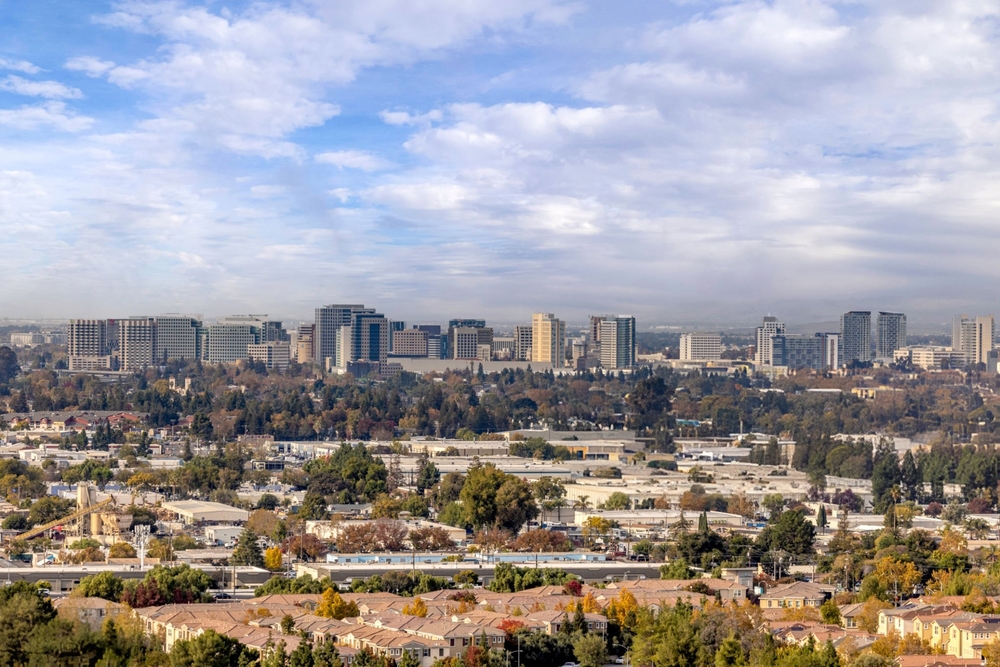
San Jose has spent the last several decades absorbing more new residents than almost any other California city, and the growth hasn’t followed a straight line. It’s come in waves tied directly to the fortunes of the industry that built the region: a surge in the 1980s and 90s as semiconductor and hardware companies expanded, a dip during the dot-com bust in the early 2000s, and then a much larger, sustained wave over the past fifteen years as the city became the residential base for the modern tech workforce.
If you’re one of the people behind the current numbers, that history isn’t just trivia. It’s the reason your apartment search took longer than expected, your moving date got pushed back three weeks because a building was still under construction, and your new neighborhood looks nothing like it did five years ago. Understanding where the growth is concentrated, and why, makes the practical side of moving here a lot less confusing.
Why San Jose keeps growing
San Jose’s population growth is unusual compared to most large American cities because it isn’t driven primarily by birth rate or general urban migration. It’s driven almost entirely by jobs. As the unofficial capital of Silicon Valley, San Jose sits at the center of a regional economy built around a small number of very large employers and a much larger ecosystem of startups, contractors, and suppliers that orbit them. When those companies hire, people move. When they slow down, growth flattens. That relationship has made San Jose’s population curve more volatile than a typical mid-sized American city, but the long-term trend has been consistently upward for over thirty years.
A second factor compounds the first: San Jose has historically had more available land for development than San Francisco, which pushed both companies and workers south and east as the peninsula filled in. What used to be orchards and light industrial land in North San Jose became office parks, and what used to be office parks are increasingly becoming mixed-use residential developments as the city tries to catch up on housing supply.
Where the growth is actually concentrated
Population growth in San Jose isn’t evenly distributed, and that matters for anyone trying to understand what to expect from a specific neighborhood.
North San Jose and the tech corridor
This is ground zero for new housing construction, with high-rise and mid-rise apartment and condo developments replacing older commercial and industrial buildings. It’s the neighborhood with the highest turnover rate in the city, largely because it skews toward renters on one- and two-year leases rather than long-term homeowners.
Downtown San Jose
Downtown has seen a steady wave of new residential towers over the past decade, part of a deliberate city planning push to build density near transit and the Diridon Station area. It’s attracting a different demographic than North San Jose: more young professionals without kids, more short-term renters, and a growing number of people who work in San Francisco but chose San Jose for cost reasons.
Berryessa and Alviso
These areas on the northeast edge of the city have absorbed a lot of newer, more affordable development, partly driven by the extension of BART service to Berryessa. They tend to attract families and first-time buyers who got priced out of the more established neighborhoods closer to the city core.
Established neighborhoods like Willow Glen, Rose Garden, and Almaden Valley
Established neighborhoods like Willow Glen, Rose Garden, and Almaden Valley have seen comparatively little new construction and comparatively slow population change, since they’re largely built out with single-family homes and have stricter zoning that limits new density. Growth here tends to come from turnover rather than new units, meaning it moves at the pace of the resale market.
What growth means for the practical side of moving
A growing city changes the mechanics of relocating in ways that aren’t obvious until you’re in the middle of it.
Booking windows are tighter than they used to be: Moving companies in San Jose see heavy demand clustering around lease turnover season, roughly June through September, when both the local rental market and the broader relocation season from new hires starting jobs overlap. In a city with steady population inflow, that peak season books out further in advance than it would in a flatter market. Anyone planning a summer move should expect to lock in a date at least four to six weeks ahead if they want flexibility on timing.
Newer buildings mean stricter move-in rules: As more of the city’s growth happens in high-density new construction, more movers face freight elevator reservations, loading dock time slots, and certificate-of-insurance requirements that simply don’t exist in older, low-rise buildings. A ten-year-old apartment complex in North San Jose might require a moving company to submit paperwork days in advance and only allow access during a two-hour window. Skip that step, and it’s possible to lose your move-in slot entirely, even with everything else planned correctly.
Street parking and loading access get more competitive: Denser neighborhoods with more residents per block mean more competition for the curb space movers need to load and unload. This is especially true downtown and in North San Jose, where visitor and moving-truck parking permits are sometimes required and need to be arranged with the city in advance rather than assumed.
Traffic patterns shift with growth, which affects timing more than people expect. A route that took twenty minutes five years ago might now take forty during peak hours, which matters when a moving crew is trying to make two jobs fit into one day, or when a family is trying to time a move around school drop-off and pickup at a new address.
The infrastructure ripple effects
Population growth doesn’t just change housing; it changes everything downstream of housing. San Jose Unified and the surrounding school districts have had to manage shifting enrollment as families move into newer developments and away from some of the older neighborhoods, which occasionally means boundary changes that catch new homebuyers off guard if they didn’t check assignment carefully before closing. Traffic infrastructure has struggled to keep pace in some corridors, which is part of why the city has invested heavily in transit expansion, including the BART extension and ongoing work around Diridon Station. Water and utility systems, parks, and public services have all had to scale alongside the population, with mixed results depending on the neighborhood.
None of this is a reason to avoid moving to San Jose. It’s simply useful context: a fast-growing city behaves differently than a stable one, and knowing that in advance makes the logistics of arriving here smoother.
Planning around the growth, not against it
The practical takeaway for anyone relocating to San Jose right now comes down to a few habits that consistently save people time and stress:
Book earlier than feels necessary: If you have any flexibility in your moving date, avoid the peak summer window if you can, or lock in your mover well before you think you need to if you can’t.
Confirm building-specific rules before your date is locked: This applies whether you’re renting a new high-rise or buying into an HOA community. A five-minute phone call to a leasing office or HOA management company can save an entire day of scrambling if you learn there’s a required elevator reservation or a restricted loading window you didn’t know about.
Ask about parking and loading access ahead of time, especially if you’re moving downtown or into North San Jose. Some buildings handle this for you; many don’t, and it becomes the mover’s problem to solve on the spot unless it’s addressed in advance.
Expect that experienced local movers have already seen your exact situation: Local San Jose movers who work the city regularly tend to know which buildings require advance loading dock reservations, which neighborhoods have seasonal parking restrictions, and which streets get impossible to navigate with a full-size truck during certain hours. That kind of local knowledge is the difference between a move that goes according to plan and one that hits three unexpected snags before lunch.
What this means looking ahead
San Jose isn’t slowing down anytime soon. The city’s own planning documents call for continued housing growth over the next decade, concentrated in the same corridors that have absorbed most of the recent growth: North San Jose, Downtown, and the transit-adjacent areas near the new BART stations. That means the patterns described here- tighter booking windows during peak season, stricter move-in logistics in newer buildings, and more competition for street access- aren’t temporary quirks. They’re likely to be a permanent feature of moving into this city for the foreseeable future.
Moving into the middle of a growth wave doesn’t have to be stressful. It just means building in a little more lead time and a little more research than you would in a city with a flatter population curve, and leaning on movers who’ve navigated this exact pattern with hundreds of other families and new hires before you.
Related