
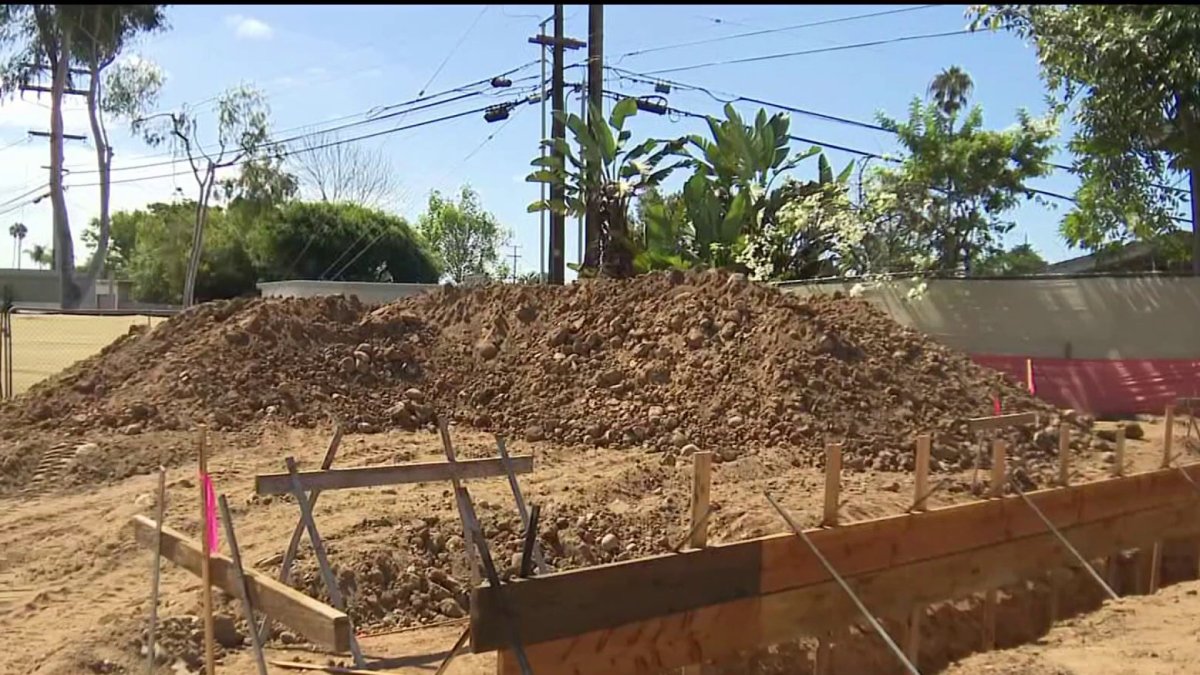
Affordable housing has been a priority in San Diego, but developers say construction costs are through the roof, and it’s making some think twice about breaking ground.
The Building Industry Association of San Diego County says development is currently soft and a number of projects have stalled because the numbers no longer pencil out.
“It’s just one cost on top of one cost on top of another,” said Aimee Faucett, president and CEO of the Building Industry Association of San Diego County. “It is really hard and it’s very frustrating.”
Rammy Cortez, owner of Rammy Urban Infill, develops and consults on small-scale housing projects across San Diego, including a 22-unit project that recently broke ground in Clairemont. He said higher costs are affecting many building materials, including plumbing pipes, concrete and steel.
“I’m involved in over 15 different projects right now so I see in real time the effects of what’s happening in the marketplace,” Cortez said.
“The challenge is the numbers just aren’t making sense today,” Cortez said. “There are a lot of on-ice projects.”
Developers are facing a combination of pressures, including tariffs on building materials such as steel from Mexico and lumber from Canada, rising state and local fees, and increased interest rates.
“Four years ago we had interest rates that are half of what they are today,” Cortez said.
Cortez also pointed to international events and demand for construction materials as factors affecting costs.
“The Strait of Hormuz the war in Iran is putting pressure on plumbing supplies because crude oil is what you make plastic pipes out of,” Cortez said.
“All the data centers across the U.S. are taking all the demand for steel,” Cortez said.
Cortez said costs for other materials, like copper and aluminum, are up 13% over last year. He says, overall, construction costs were 20% lower two years ago.
The changing economics can have a significant effect on housing development because projects are often planned years in advance.
“That’s the most important thing is predictability,” said Faucett, “So that they can plan out their financing, they can plan out the cost. When those things are unpredictable, they can’t build.”
“The numbers stopped making sense because they’re not the numbers and the same factors as two years ago,” Cortez said. “There’s just a lot of changes and uncertainty, the market doesn’t like that, investors don’t like that, lenders don’t like that. It would be really nice to get back to a place where there’s some certainty,” Cortez said.
Cortez said, while many costs can’t be controlled, he is hoping for state and local governments reduce their fees related to housing development and construction.
This story was originally reported for broadcast by NBC San Diego. AI tools helped convert the story to a digital article, and an NBC San Diego journalist edited the article for publication.