
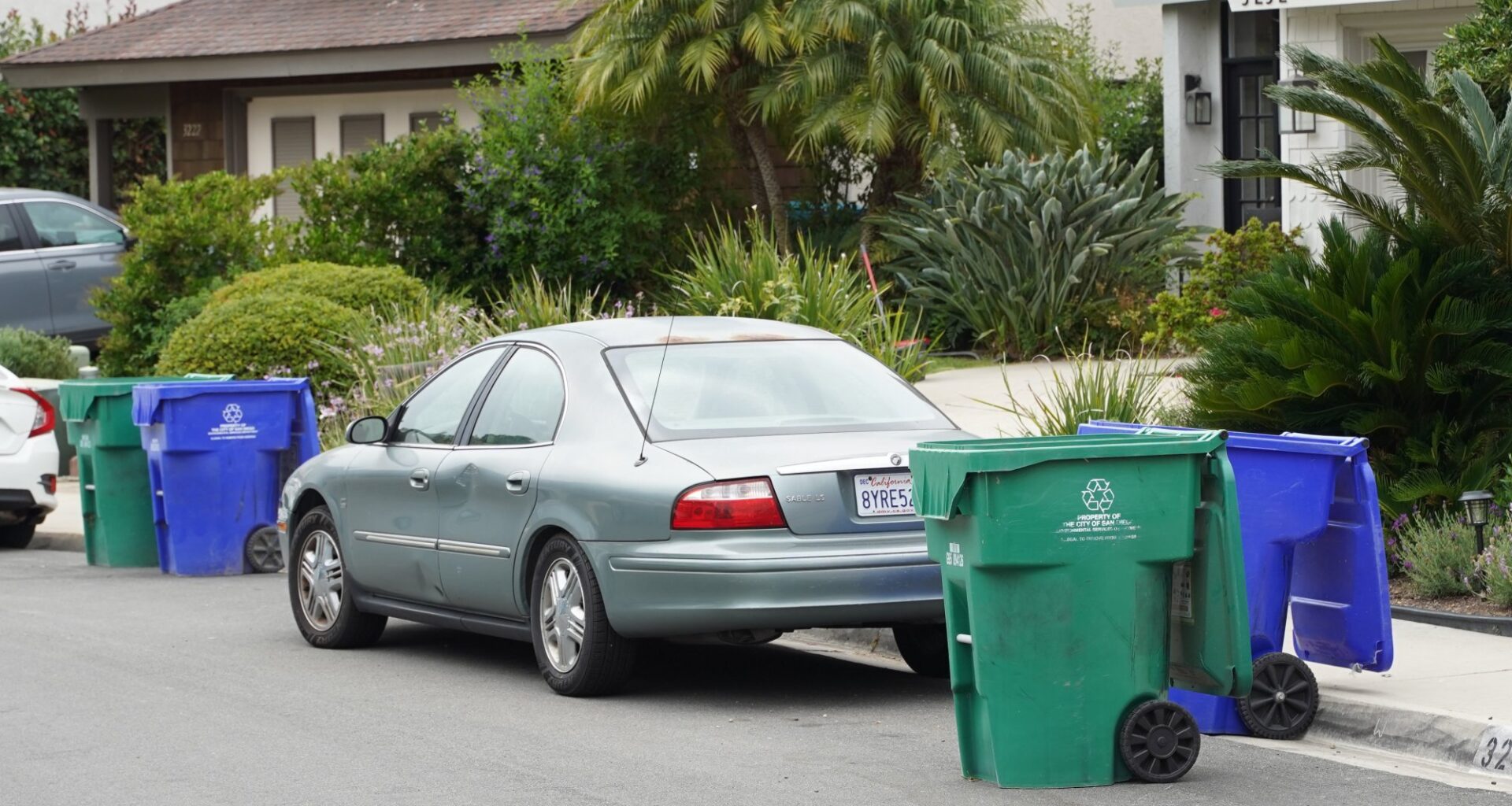
Many thousands of San Diego residents are being dramatically overcharged for trash service on recently arrived property tax bills, thanks to a technical glitch in data that city officials gave to the county tax collector.
City officials say they are scrambling to assess the exact scope of the problem, notify every overcharged customer and figure out how to handle refunds before their property taxes are due Nov. 1.
Angry and frustrated residents are sharing their stories on websites like NextDoor and in interviews. Many say they’ve spent hours on hold while calling the city and county for information.
“This kind of mistake makes life harder for people who don’t have a lot of money — seniors like me who can no longer work, people who are caring for a very sick partner or those in low-paying professions,” said Normal Heights resident Marty Graham, who is being charged $534 instead of $311.
 Marty Graham, Pamela Brock and Larry Halford pose for a photo on Tuesday, Sept. 22, 2026 in San Diego, California. (Meg McLaughlin / The San Diego Union-Tribune)
Others are facing even steeper overcharges, some as much as triple what they owe. One common mistake caused by the glitch is charging customers whose bill should be $534 nearly three times that amount — $1,590.
Trash customers with “impound” mortgage accounts might be particularly affected by any delay in bills getting corrected by the city and county.
That’s because when San Diego began charging for trash service last year, officials decided to use property tax bills in order to avoid spending millions to create a city trash billing department.
When property tax bills arrive each fall, lenders handling impound accounts divide the annual property tax bill into 12 equal installments and add it to monthly mortgage payments.
“The crux of the problem is that these errors ended up on my tax bill, and my mortgage company will insist I pay in full,” Graham said. “Not paying the full amount puts me and other borrowers in default.”
Graham said an analysis by her and some neighbors suggested that roughly one-third of city trash customers could be getting overcharged because of the glitch.
If correct, that would mean nearly 75,000 of the city’s roughly 220,000 trash customers are being overcharged and will need either a corrected tax bill or a refund.
City officials are taking the full blame for the error, telling The San Diego Union-Tribune in a prepared statement that “the error happened in the transmission of the file to the county.”
The city is asking customers not to file a billing dispute but instead wait to be contacted by the city.
“The city is aware of a technical error that resulted in incorrect figures appearing on the Solid Waste Management Fee line item of some customers’ county property online tax statements for fiscal year 2027,” the prepared statement says. “The city will communicate with impacted customers and is working closely with the county to correct the error.”
Because some property bills haven’t yet been mailed, the error could be corrected before some customers get a paper copy of their bill. But the county’s online billing portal reflects the incorrect amounts for customers who have been overcharged.
City officials are urging customers to go to the city’s trash billing website, wasteportal.sandiego.gov, and check what they owe. City officials say these numbers are correct.
Then customers can go to the county tax collector’s website, sdttc.com, and see whether the amounts match up. If they don’t match up, customers don’t need to take any action. The city will contact them to handle refunds.
“This billing issue only impacts the county property tax line item,” the city said in its statement. “Customer accounts in the City’s Residential Waste Collection Services Portal are accurate. Customers are encouraged to create an account, if they haven’t already, to view their trash fee.”
But only about half of the city’s 220,000 customers have created such accounts. Anybody who hasn’t created such an account will need to create one to check.
While property taxes are technically due Nov. 1, they don’t become delinquent until Dec. 10.
North Park resident Bob LaRose, who is being charged $1,026 instead of the correct amount of $324, said the glitch is just the latest controversy over city trash fees, which began last year thanks to a successful 2022 ballot measure that let the city start charging for the service.
Only single-family homes and multifamily properties with four units or fewer are eligible for city service. Other city households must hire private haulers. The effort to determine who is eligible for city service — and to then help ineligible customers secure private service — was rocky.
The recent billing glitch has no connection to a city agreement struck last spring to lower trash fees in fiscal 2028 and 2029 to settle a lawsuit and avoid a proposed ballot measure that could have lowered the fees even further.
LaRose said the whole effort has been a crazy saga. “It’s the game that can’t shoot straight,” he said.