
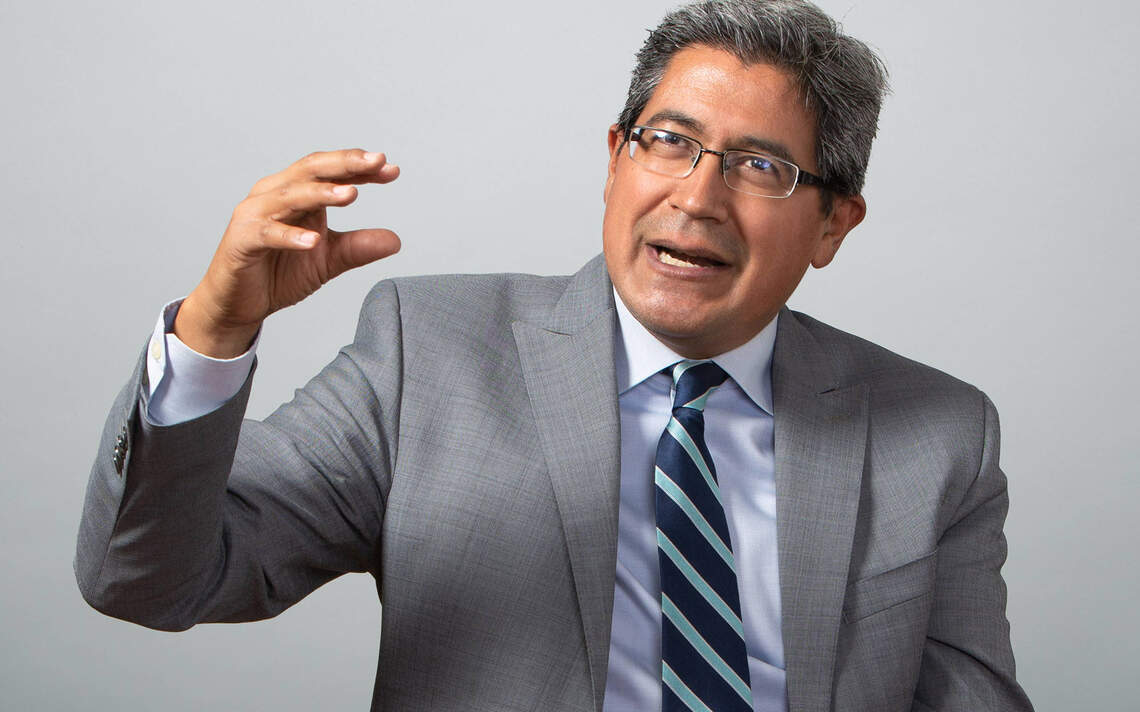
One of the journalists who authored the New York Times investigation that uncovered how civil rights leader Cesar Chavez groomed and abused children and raped women will return to his alma mater next week to discuss his reporting.
Manny Fernandez, California editor-at-large with the New York Times, graduated from Fresno State’s journalism program in 1997, where he wrote for The Collegian student newspaper and left a lasting impression on his instructors and classmates.
Fernandez, who joined the New York Times in 2005, has previously worked for the San Francisco Chronicle and The Washington Post. He interned for The Fresno Bee while in college.
Today, the two-time Pulitzer finalist is considered one of the most prominent journalists to emerge from the Fresno State journalism program.
He will visit with journalism students Wednesday, Sept. 30, and then speak with Jim Boren, former executive editor of The Fresno Bee and director of the Fresno State Institute for Media and Public Trust, about his bombshell investigation into the United Farm Workers co-founder .
“It’s a humbling honor for me to come back to Fresno State,” Fernandez said in an event announcement. “This is where I not only learned the art and craft of journalism but where I fell in love with it, too. I used to sit in the library reading The New York Times, dreaming of one day working there. I am walking proof for students that dreams aren’t moonshots. They’re road maps,” he said.

Dolores Huerta, vice president of the National Farm Workers Association, and Cesar Chavez, the association’s general director are shown in this bee file photo from November 1965 by Carl Crawford. On the occasion of this photo the leaders, along with unidentified farm workers, were asking the executive board of the Community Service Organization to support their strike.
The investigation, co-reported by Sarah Hurtes, a New York Times investigative reporter in Brussels, was based on more than 60 interviews and five years of research and reporting.
The story sent shockwaves across the country. Chavez’s name was quickly removed from dozens of parks, schools, streets and events in his honor. Within days of the story’s publication, Fresno State removed the Cesar Chavez statue from the Fresno State Peace Garden, while the Fresno City Council voted unanimously to change Cesar Chavez Boulevard back to the streets’ original name. The state of California renamed Cesar Chavez Day to Farmworkers Day.
Earlier this month, an 86-year-old woman alleged, in what is believed to be the first lawsuit to follow the investigation, that Chavez raped her while she volunteered with the union in the 1970s.
Fernandez, whose grandparents labored in Central Valley agricultural fields, said growing up in Fresno gave him unique insights into the farmworker movement. In a March interview with The Bee, Fernandez said that he knew there would be “big consequences” to his reporting.
“We didn’t know exactly what would happen. But it’s disturbing. It’s devastating. He was a hero for many people,” Fernandez said. “And I think that this tells us we need to know who our heroes are, whether they’re living or dead.”
This event is free and open to the public.
Manny Fernandez in Conversation: Inside The New York Times’ Cesar Chavez Investigation
Cesar Chavez, is shown in this Fresno Bee file photo from June 10, 1989, followed by Dr. Marion Moses starts up the steps to Safeway Stores Corporate Headquarters in Oakland, CA. Chavez attempted to present petitions signed by 50,000 Safeway customers protesting pesticides used on grapes. (Richard Darby/The Fresno Bee)