
The San Francisco Board of Supervisors on Tuesday voted to ensure that street cleaners who work for city contractors will be paid a prevailing wage, similar to what the city pays its employees for the same work.
At present, a unionized street cleaner working for the Department of Public Works earns up to $46.14 an hour. The contractor Ahsing Solutions, which employs street ambassadors in the Mission District, for example, paid each employee $26,000 over six months, which would amount to roughly $25 an hour, assuming a 40-hour work week.
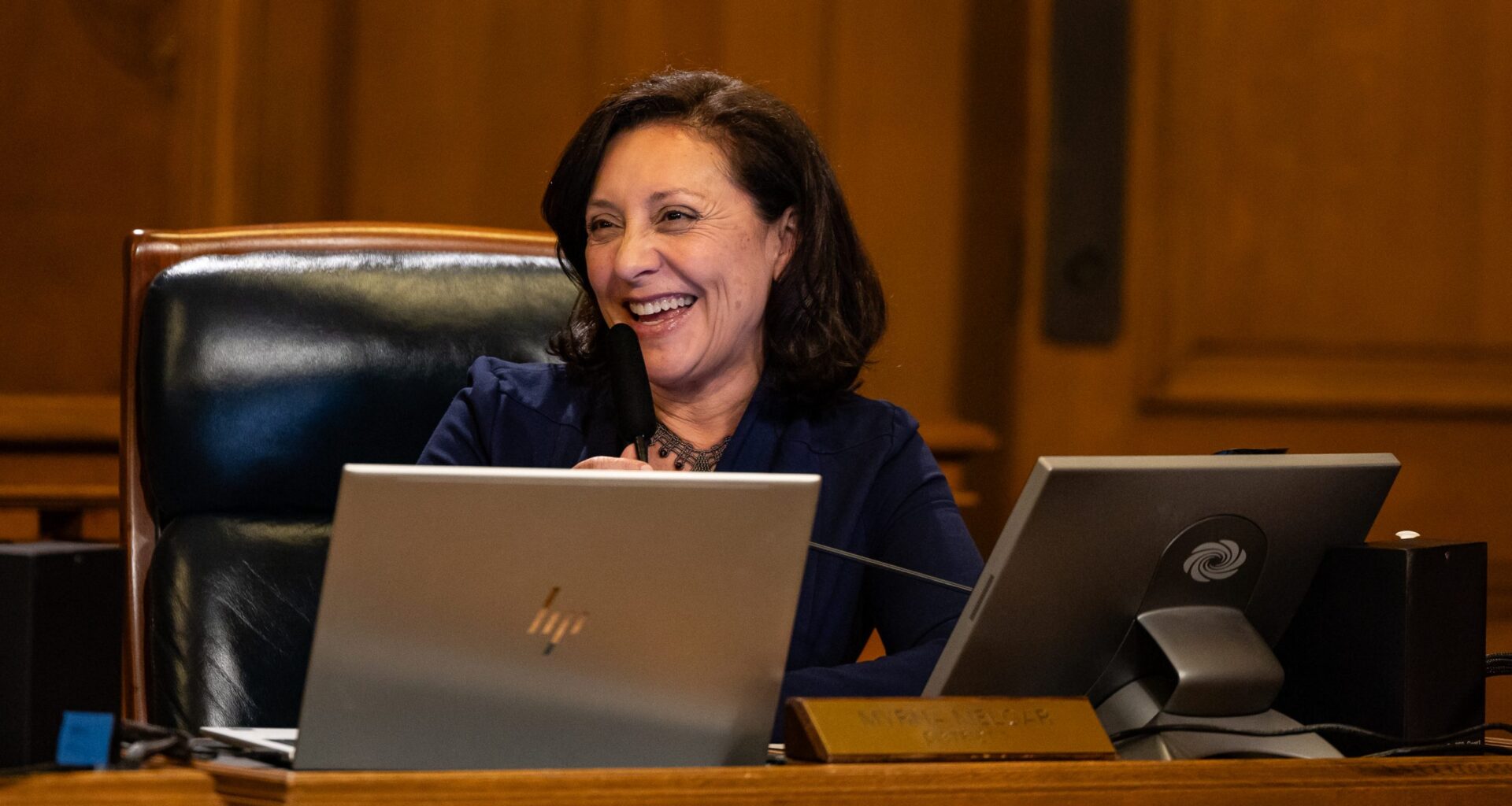
Private contractors can also be costly for the city. In a newsletter from this summer, District 7 Supervisor Myrna Melgar wrote that some of these contractors bill the city $200 an hour to “supervise” street cleaners.
Contracted street cleaners and ambassadors have become a core part of the city’s strategy for tackling street conditions, and they work in the Tenderloin, Mission and SoMa. Recently, the group Urban Alchemy began working in the Outer Richmond, Castro and Hayes Valley.
To remedy the wage gap and ensure street workers’ protection, Melgar introduced the bill, called the the Clean Streets and Fair Pay Act, in January.
“I’ve spent the past 10 months addressing everybody’s concerns,” Melgar said. “The whole point of the legislation is to protect the jobs of the unionized workforce, and not allow anyone in our city to undercut the collective bargaining agreement by paying their workers less for the same job that union workers are doing.”
The bargaining agreement between the city and Laborers International Union Local 261, which represents employees of the Department of Public Works, outlines benefits, compensation and requirements for protective clothing. Melgar said this agreement is about “dignity” for the workers.
Community benefit districts, the private neighborhood groups that operate some of the city’s street ambassador programs, feared the act would threaten their programs. However, Melgar and Theresa Foglio-Ramirez, public sector business agent for Local 261, said that was not the case: Ambassadors are exempt from the ordinance, Melgar said, as long as they are not mostly doing street-cleaning work.
“We don’t want to impact anything that gives the community the ability to beautify their neighborhoods,” Foglio-Ramirez said. “Ambassador programs, they’re ancillary to the work that we do. They’re needed, same with the community benefit districts.”
Instead, Foglio-Ramirez said, the act is about preventing the exploitation of street cleaners who use complex, often dangerous equipment, and giving them career mobility.
“Many times, the workers don’t understand some of the biohazards that they’re dealing with out in the field. Then they don’t have the healthcare either to support them,” she said. “We really saw this as an opportunity to lift up these workers and actually connect them to a career pathway.”
Foglio-Ramirez and Melgar were confident ahead of Tuesday’s meeting. “We’re very hopeful,” she told Mission Local on Monday. “I think it will go into effect.” Melgar echoed her optimism; she believed that there would be “unanimous” approval.
They were correct. The ordinance was passed with unanimous support.
From the audience, longtime union leader Rudy Gonzalez, wearing a blazer and orange T-shirt, gave Melgar two thumbs up.