
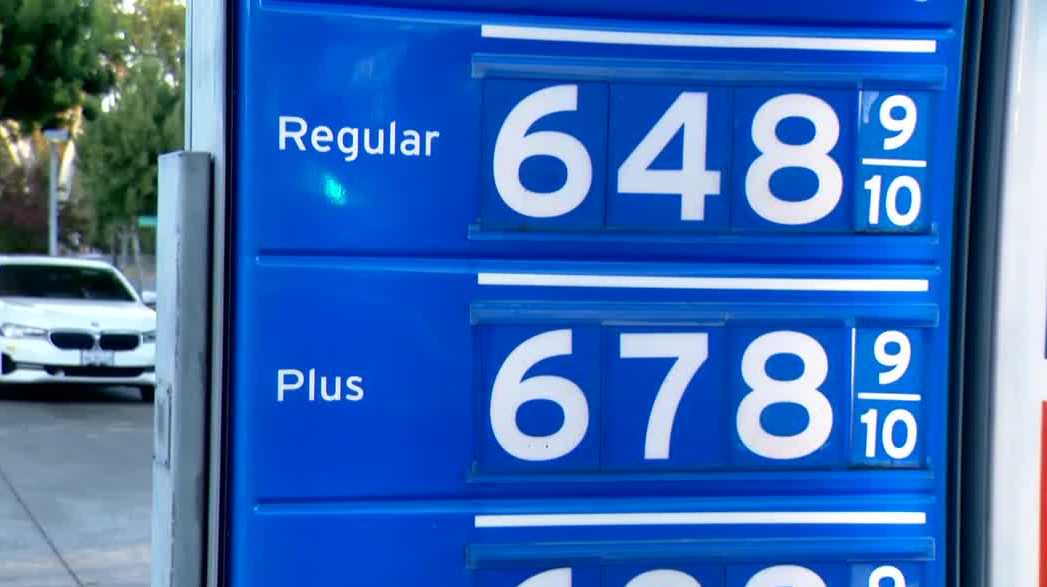
Could E15 bring cheaper gas to California? New law aims to get it to more pumps

California is taking another step toward bringing a higher-ethanol gasoline blend to pumps across the state, as drivers face rising fuel costs amid disruptions to global oil markets from the war with Iran.
Gov. Gavin Newsom signed Senate Bill 795 on Saturday, legislation aimed at accelerating the rollout of E15 gasoline, a blend containing up to 15% ethanol.
E15 was already authorized for sale in California under legislation signed last year. But getting the fuel from legal approval to gas station pumps presented another hurdle: some of the equipment used to dispense gasoline was certified for E10, the 10% ethanol blend commonly sold in California, but not E15.
California Air Resources Board spokesperson Lindsay Buckley told KCRA 3 that stations may need upgrades to their dispensers, signage or storage systems before selling the higher-ethanol blend.
Under the previous process, manufacturers seeking certification for E15-compatible vapor recovery components needed approvals from four other state agencies before CARB could issue its own certification. CARB guidance issued earlier this year said there were no vapor recovery components certified by the agency as E15-compatible at the time. SB 795 is intended to streamline that approval process.
“What the new law did was streamline that approval process in order to support the use of E15 and get that out to stations and to consumers,” Buckley said.
The Newsom administration said the change is intended to give drivers access to another potentially lower-cost fuel option as the war with Iran disrupts global oil markets.
Research cited by the governor’s office from the University of California, Berkeley, and the U.S. Naval Academy estimates introducing E15 could eventually lower gasoline prices by as much as 20 cents per gallon and save Californians up to $2.7 billion annually. The research also notes that bringing E15 to market would require infrastructure modifications, including at retail gas stations.
Colin Murphy, director of fuel policy at the UC Davis Institute of Transportation Studies, told KCRA 3 that increasing the amount of ethanol in gasoline could reduce the amount of petroleum needed.
“If you’re using more ethanol, you’re using less petroleum. So that kind of eases some of the pressure on petroleum supplies,” Murphy said.
Murphy said ethanol is also generally somewhat less expensive than petroleum gasoline, particularly when gasoline prices are high.
But drivers should not expect an immediate drop in prices.
Murphy estimates moving California from a 10% ethanol blend to a 15% ethanol blend would require roughly 600 million to 700 million additional gallons of ethanol.
“You’re probably not going to see a big impact in the near term,” Murphy said. “It’s going to take a lot of time for gas companies to find the 600, 700 million gallons of ethanol they’re going to need to make this transition to get it into the state.”
There is also no guarantee that every gas station will offer E15. Buckley said that while the new law makes it easier to get necessary equipment approved, whether to produce and offer the fuel ultimately remains a business decision for fuel providers.
E15 will also not necessarily work with every vehicle. CARB says drivers should check their vehicle owner’s manual to determine whether their vehicle is compatible with the higher-ethanol blend.
See more coverage of top California stories here | Download our app | Subscribe to our morning newsletter | Find us on YouTube here and subscribe to our channel.