
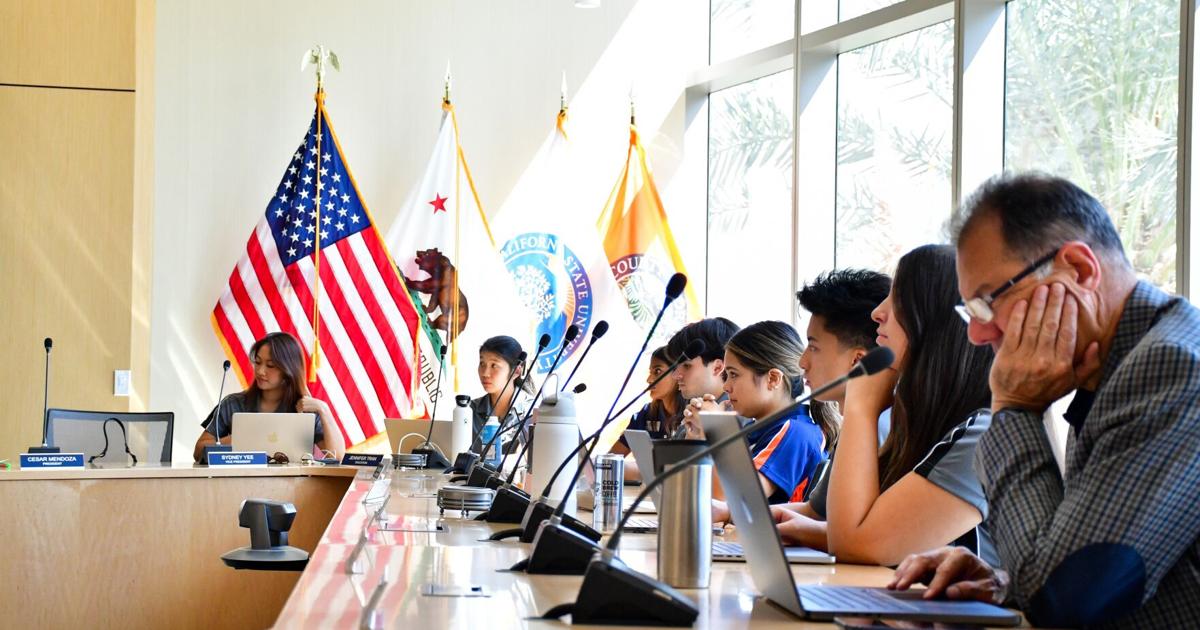
The Associated Students’ Board of Directors unanimously passed a resolution to implement a Counseling and Psychological Services (CAPS) satellite resource space in the Titan Student Union on Tuesday.
The resolution aims to establish a resource center at a designated information desk within the TSU, offering drop-in services to build a low-barrier point of connection with students. The one-year pilot program in collaboration with CAPS will gather and assess student feedback and data to test the satellite location’s effectiveness before deciding whether to implement it as a permanent program.
The resource desk is not meant to replace traditional therapeutic, psychiatric and crisis services, but rather to provide an access point for students to learn about the services CAPS offers and how they can help in times of crisis.
CAPS will be responsible for counselor staffing, setting professional standards, maintaining private student information, referrals to professionals and crisis response during the TSU resource center’s active hours.
ASI will provide the shared space, promotional materials and help with scheduling and logistics for the satellite center. Proper support staff will be working at the resource desk in case a student comes to them in crisis.
In their 2024-2025 annual report, CAPS noted that they served about 5% of the total student body and that 74% of students reported experiencing emotional or mental health concerns.
CAPS currently offers services such as short-term individual, couples and group counseling, psychiatric services, single session therapy, crisis counseling and case management. Sessions for therapy and counseling follow a brief therapy model, and CAPS works to find providers for students who may require long-term therapy or specialized treatment.
CAPS also hosts wellness workshops and offers drop-in support groups for students, as well as the mobile crisis team available to students through its crisis line. All services provided by CAPS are paid through the university’s mandatory student health fee.
The Board of Directors stated that concerns were raised about students not knowing where CAPS is located on campus, and that the satellite location aims to raise awareness of the program and its services.
“The idea is definitely really awesome, like having somebody kind of on standby for people to go and talk to whenever they need, but I honestly don’t know where the CAPS building is,” said fourth-year public health major Neda Rasheed. “Everyone knows where the TSU is, so that’s perfect.”
The resource center is a part of the ASI Student Wellness Initiative, which took effect in March 2025 and began operations the subsequent fall.
The initiative aims to support students’ mental, physical and emotional wellbeing through increasing wellness programs on campus, expanding current resources for students and planning events to increase student wellbeing and health.
The wellness initiative offers a holistic approach to health and wellbeing, separate from what organizations such as CAPS or TitanWell offer. Plans to increase student wellbeing through the Student Wellness Initiative include building a new wellness center, expanding the Student Recreation Center and the TSU, centralizing basic needs programs such as ASI’s Food Pantry and enhancing current ASI programs and events.
Wellness services through the initiative are based in part on 3,306 student responses and data from a campus-wide mental health and wellness needs survey conducted in November of 2022, and have since grown in response to student support and feedback.
“What we’re all working towards is the ASI Student Wellness Initiative by specifically advancing the emotional wellness, financing of the initiative and making mental health resources more accessible and familiar to students,” said ASI Board of Directors Secretary Eugenie Bassilly.
The CAPS resource desk will be a shared space, with proposed operating hours on Tuesdays from 1:30 p.m. to 2:30 p.m., Wednesdays from 11 a.m. to 12 p.m. and Thursdays from 9 a.m. to 10 a.m.. Outside of these designated hours, the space will return to normal TSU operations.