
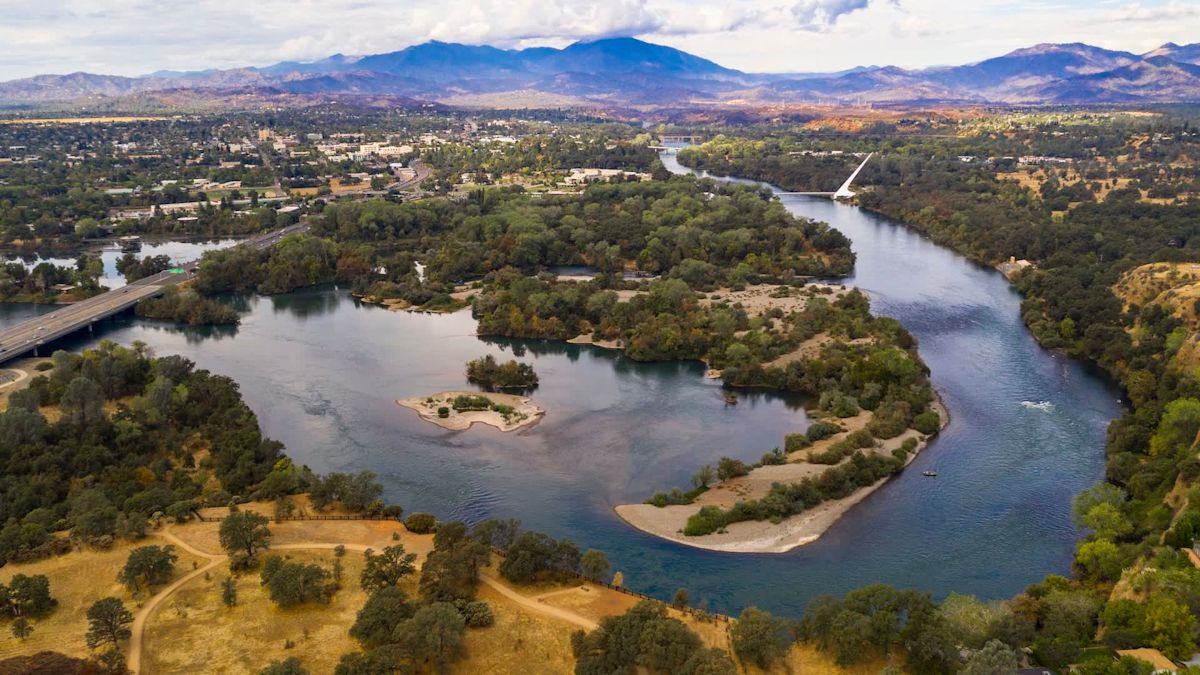
Heat in the Sacramento River has California biologists concerned about the survival of Chinook salmon eggs — a loss that could affect fishing jobs, local economies, and the health of one of California’s most important waterways.
Here’s what to know
The Los Angeles Times reported that state biologists checking salmon nests on September 4 estimated that about 20% of Chinook eggs in the Sacramento River could die — and the river has warmed further since that survey.
The alert adds new strain to a species already fighting to persist in a river system shaped by warming and intensive water management. Cold water is essential for Chinook eggs. Once temperatures rise above 53.5 degrees, many eggs won’t hatch.
Environmental advocates told the Los Angeles Times that federal managers released too much water from Shasta Lake for Central Valley farms, which reduced the cold-water supply in a key spawning stretch below Shasta Dam.
Jon Rosenfield, science director of the nonprofit San Francisco Baykeeper, said, “The fish are not being protected. We know that those eggs are getting cooked.”
Federal officials, however, reject claims that they mishandled operations. In an email, Peter Soeth, spokesperson for the U.S. Bureau of Reclamation, said, “The Bureau of Reclamation is managing Shasta operations under a temperature management plan developed in coordination with state and federal fishery agencies.” He added that the agency is complying with the Endangered Species Act.
Jackie Carpenter, a spokesperson for the State Water Resources Control Board, said the board objected to the federal plan in June over temperature concerns and warned that climate change is shrinking snowpack and limiting the reservoir’s cold-water supply.
More background
For decades, dams have cut salmon off from much of their historic spawning habitat, and rising temperatures have intensified droughts and heated rivers, causing their numbers to decline dramatically.
Fishing crews and the coastal businesses that depend on salmon season are suffering from the loss as regulators shut down commercial fishing from 2023 through 2025 because fall-run Chinook populations were so low.
Barry Nelson, an advisor with the Golden State Salmon Association, blamed past water management for deep losses during the 2020-2022 drought. “The Bureau of Reclamation practically sterilized the Sacramento River,” he said. “They killed virtually all the juvenile salmon.”
Wet winters from 2023 through 2025 helped boost salmon numbers enough for fishing to resume under strict limits. But another year of lethal river temperatures could erase much of that progress.
What’s being done?
San Francisco Baykeeper is among three environmental groups that sued the Trump administration in federal court, arguing that its handling of river temperatures violates the Endangered Species Act.
The outcome could shape how aggressively water is held back in Shasta Lake to protect fish during future spawning seasons.
State officials say they are still monitoring conditions and weighing options to keep temperatures under control. Carpenter said California “raised concerns with the Bureau of Reclamation this spring regarding its approach.”
While the full extent of the damage is not clear yet, some feel it’s early to start pointing fingers.
Greg Gartrell, former manager at the Contra Costa Water District, said, “It’s of concern, but you need more data before you start accusing [the federal government] of operating this way.” Still, he added, “It’s a complicated situation, and we don’t have enough data yet.”
Regardless of who is to blame, salmon populations are suffering the consequences.
“It’s too early to know how bad the mortality is going to be this year, but we’re off to a terrible start,” Nelson said. “We need the state of California to defend salmon. Right now, they’re not.”
Where can I learn more?
Salmon in other parts of the West face many of the same problems. These articles look at drought-stressed rivers, surprising returns in California, and recovery work farther north.
• Across the West, salmon endured spawning in sauna-like water as flows and oxygen fell.
• In a Bay Area creek, endangered coho made a surprisingly strong return.
• In Northern California, Chinook pushed upstream for the first time in 70 years.
• Washington officials are pursuing a comprehensive salmon recovery plan after years of habitat damage.
• In Alaska, fish managers found juvenile salmon inside gutted invasive pike in warming waters.
Get TCD’s free newsletters for easy tips, smart advice, and a chance to earn $5,000 toward home upgrades. To see more stories like this one, change your Google preferences here.