
The Cal State Fullerton Instructionally Related Activities task force plans to publicly present its recommendations for the 2027-28 academic year on Nov. 5, according to Provost Sean Walker at Thursday’s Academic Senate meeting.
According to Walker, the recommendations made by the IRA task force are unlikely to take effect for the 2026-27 cycle if accepted, due to the inability to quell concerns with shared governance in time for new awards. That process will begin by sharing the recommendations with the Academic Senate on Nov. 5.
“We will work as fast and tirelessly as we can. If we can get things done early, we will try,” Walker said.
The IRA committee will also consider a proposal from the task force to extend the deadline for 2027-28 IRA program applications until Oct. 19, giving programs seeking funding time to amend their applications. The committee will vote on the recommendation during their Friday meetings.
Following the proposal of the recommendations, the task force will seek feedback from constituent groups and work with the Student Fee Advisory Committee (SFAC) to determine how to implement them. The SFAC is in charge of advising CSUF President Ronald Rochon regarding the adjustment, consolidation, elimination or establishment of user fees, including the IRA fees that students pay.
Rochon said during the meeting that he would not make any final decisions until agreements about shared governance were reached.
This announcement comes after IRA-funded programs experienced budget reductions for the 2026-27 cycle. The allocation pool totaled $4.2 million, compared to the requested total of $7.8 million. Among the affected programs on campus are the Daily Titan, Moot Court and programs in the School of Music and the Department of Theatre and Dance.
Some programs received one-time gap funding in IRA award amounts for this year to compensate program funding cuts.
Section 89230 of the California Education Code lists the types of activities and experiences IRA is meant to fund, including student publications, forensic, music and theatre programs, which are considered “essential to a quality educational program.”
Representatives from numerous affected programs across campus attended an Academic Senate meeting in April to advocate for additional funding.
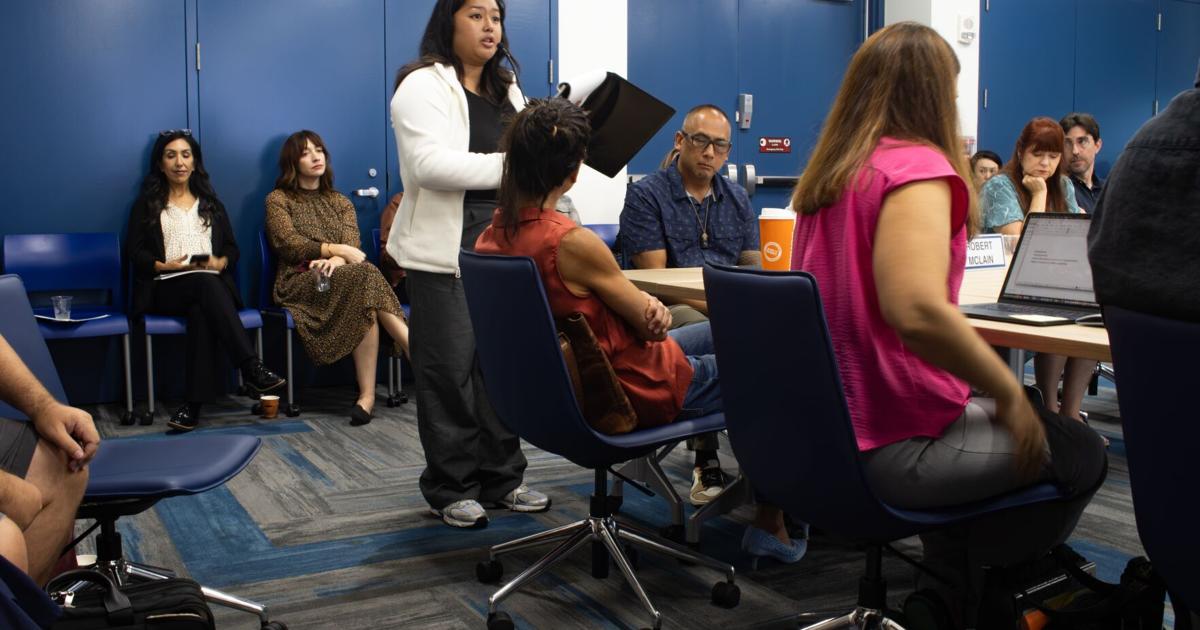
During Thursday’s meeting, students and faculty raised concerns regarding funding and administrative transparency.
“While we’re also concerned with funding, transparency has also been a huge issue in terms of the IRA committee because we’ve been told not to interact with the IRA committee,” said Krizel Guansing, a fourth-year public relations and philosophy major and member of the CSUF Intercollegiate Forensics team and Moot Court, two IRA-funded programs. “When we talk about the students having a voice in these programs, in our funding, we don’t have it.”
Senator Jon Bruschke, who has served on IRA committees for 30 years and drafted campus policy documents, said faculty members are also unclear on current developments.
During the senate meeting, Bruschke yielded his speaking time to Guansing, who asked that Rochon protect academic programs via referendums and noted a lack of response to student meeting requests.
In 2010, CSUF students approved a referendum that allocated 36% of IRA funding annually to Titan Athletics. A similar referendum for programs listed in the education code would treat them like athletics, granting them baseline funding, though the referendum process typically takes more than one year.
Bruschke stated he believes an “academic equity approach,” culminating in a referendum to establish baseline funding, is the solution to preserving the quality of CSUF’s historic IRA programs.
“The IRA is no more than $5 million. It’s less than one half of one percent of the total budget, but the impact that has for our students is enormous,” he said.
The CSUF Academic Senate will meet again on Oct. 8.