
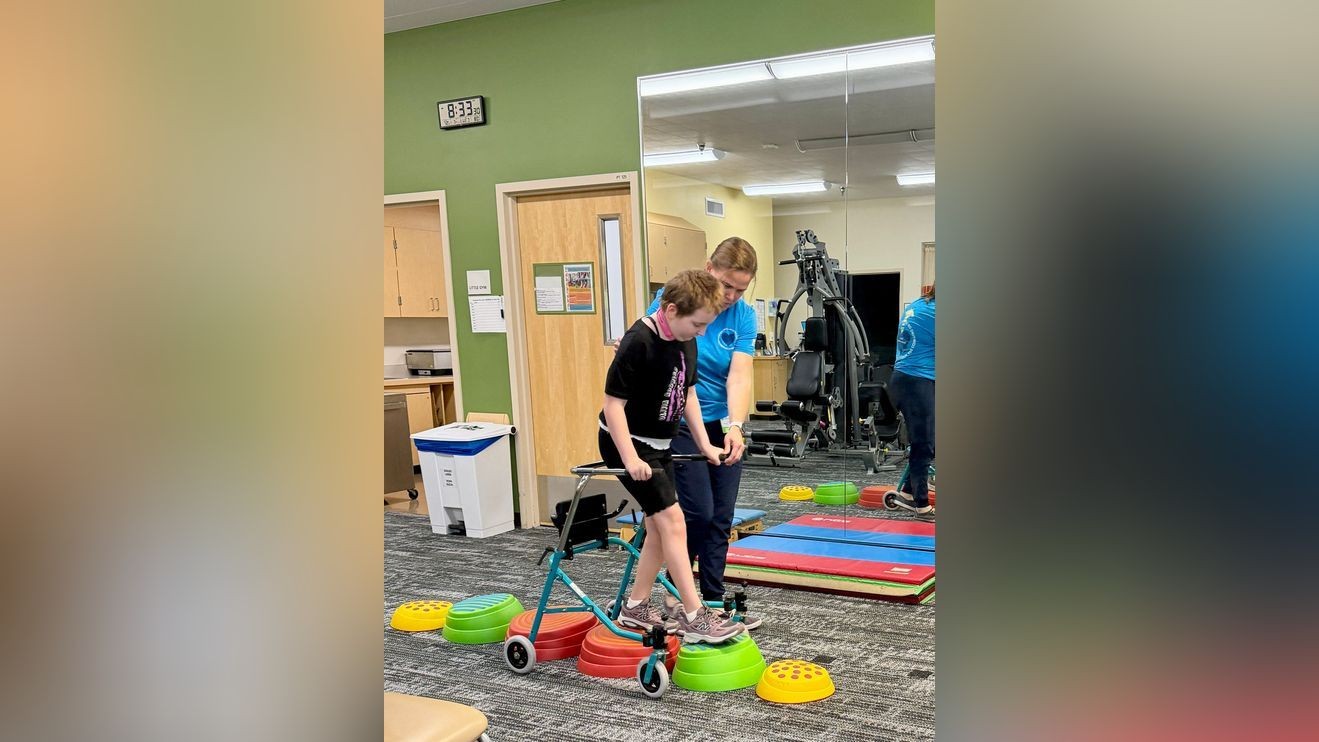
FRESNO, Calif. (FOX26) — A normal school morning turned into a 9 hour brain surgery for 10-year-old Lilly Heater of Fresno.
On Oct. 16, 2025, Lilly went to school healthy. Before classes began, she told a friend her head hurt and collapsed on the playground.
Her mom, Katie Heater, had been at work for only about 20 minutes when the school nurse called.
“All the nurse said was, ‘Something is wrong with Lilly and you need to come,’” her mother recalled. “I was like, ‘What do you mean something is wrong with Lilly?’ And she’s like, ‘We don’t know. You just need to get here.’”
Lilly was rushed to Valley Children’s Hospital, where doctors discovered bleeding in her brain.
She was diagnosed with an Arteriovenous Malformation, or AVM, an abnormal tangle of blood vessels connecting arteries and veins in the brain. An AVM can interfere with normal blood flow, and if one of the abnormal vessels ruptures, it can cause bleeding in the brain.
Lilly’s family said the injury affected her brainstem. She was airlifted to UCSF that same day for emergency surgery.
All I could keep hearing was, ‘Her brain is bleeding and we have to get the pressure off,
her mom recalled.
The surgery lasted nine hours. Her mother said doctors initially could not tell the family how much lasting damage Lilly might have. After surgery, doctors told them they believed they had addressed about 90% of the bleeding.
“That was a miracle,” her mother said.
What are the warning signs of a brain AVM?
Brain AVMs are rare and can be difficult to detect because some people have no symptoms before a rupturen In about half of brain AVMs, bleeding is the first sign, according to the Mayo Clinic.
Possible warning signs can include headaches, seizures, weakness or numbness, vision problems, difficulty speaking, confusion, dizziness and trouble walking. A ruptured AVM can cause a serious brain hemorrhage and requires emergency medical care.
Anyone experiencing a sudden severe headache, seizure, loss of consciousness or sudden neurological symptoms should seek emergency medical attention.
For Lilly, surviving the initial emergency was only the beginning.
She spent 41 days at UCSF before eventually returning to the Central Valley for months of rehabilitation. She had to relearn how to stand, use her hands and walk. Her mother said Lilly’s short-term memory has also been affected.
Nearly a year later, Lilly is back at school. She still uses a wheelchair there but recently received a reverse walker to help her become more independent.
“My mom helps me keep going at physical therapy and my friends keep me going at school,” Lilly said.
The experience also showed Lilly’s family what they say is a lack of local support for Central Valley families navigating AVMs, rehabilitation and long hospital stays.
That inspired them to create Lilly’s Journey, a foundation aimed at helping other families through similar medical crises and providing financial support when possible.
“We thought, why not us?” Lilly’s mother said. “Why can’t we start something to be that support for other people?”
The foundation also plans to give back to Valley Children’s rehabilitation programs, which Lilly’s family credits as an important part of her recovery.
The City of Fresno has proclaimed October 2026 AVM Awareness Month in recognition of Lilly’s journey and the push to bring greater awareness to the condition.
Lilly’s Journey will hold a public event Oct. 17 at NorthPointe Community Church, one day after the anniversary of Lilly’s medical emergency. The event will include vendors, food trucks and a silent auction.
For other children facing a frightening diagnosis and a long recovery, Lilly has a simple message:
“You’ll get better,” she said. “It’s a long journey, but you’ll get better.”