
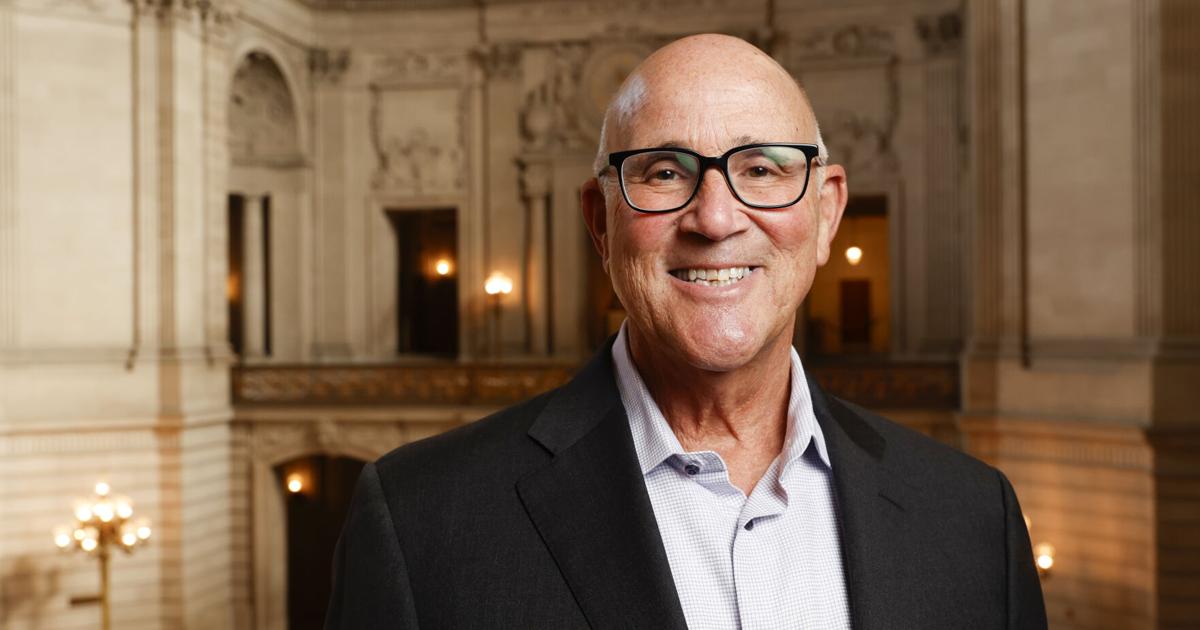
Longtime Bay Area Council President and CEO Jim Wunderman is leaving his position at the end of the year to become head of public affairs for California Forever, the billionaire-backed firm that has proposed turning a small Solano County town 60 miles northeast of San Francisco into a modern metropolis.
For nearly 22 years, Wunderman has led the Council, an influential employer group with about 375 members that advocates on economic, transportation, housing and environmental issues affecting Northern California.
Wunderman sat for an interview to discuss his time at the Council and his reasons for joining California Forever, which has submitted an application to the small town of Suisun City calling for that municipality to annex unincorporated county land that could accommodate initial development of up to 65,217 new homes for 150,000 people over a 20-year period and 400,000 people at eventual buildout. Also part of the plan is a manufacturing park and a shipyard.
The following conversation has been edited for length and clarity.
Why are you going to work for California Forever? I think California Forever is the most exciting thing I’ve seen in the Bay Area, I don’t know, maybe ever, or at least in modern times, because I think it actually gets to the problem at hand that we have, or a couple of really big issues that we have, attainable, affordable, market housing for people, for families, for the future..

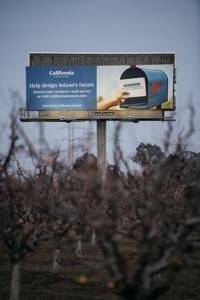
California Forever pulled a proposed ballot measure in 2024, but the initiative to turn a small Solano County town 60 miles northeast of San Francisco into a modern metropolis is moving forward with an application to annex unincorporated county land.
Aaron Wojack © 2023 The New York Times Company
We talk about it incessantly. We don’t produce it, and we can’t. And then to have jobs that are middle-wage jobs, six-figure jobs, that people can be trained to do — so we’ve got way more opportunity for young people in Solano County, but also in the in the greater region so they don’t have to have these incredible commutes — is just a really big opportunity.
Then there’s the shipyard, which really got me excited about it, because I’m the chair of the ferry system (Water Emergency Transportation Authority), and I keep talking incessantly about needing, wanting to build our vessels in the Bay Area. For a really long time before California Forever was conceived, I was talking about the fact that we’ve grown into a bigger region, a mega-region. When I found out about California Forever a couple of years ago, it’s like, wow, these people are actually doing this. Solano County is the geographical center of that mega-region, and in some ways a blocker.
So how does it fit in with mega-regionalism, and what do you mean when you said that Solano County was a “blocker?” Solano has had virtually no growth. In all the time I’ve been at the Bay Area Council, it has been very marginal. It’s just not the thriving place I think Solano ought to be. Because Solano is highly undeveloped, it is an opportunity to apply the learnings we’ve had over time, where we can create a project like California Forever, which maintains agriculture in the county, which brings recreational opportunities that don’t exist today, and join them with a compact new city with urban-level densities and a manufacturing center that’s been missing in California. Our manufacturing sector has been shrinking. This is a way to bring it back. And so there’s just a lot of benefits, and to put that in the geographic center of the region, where that can then begin to benefit the Bay Area, Sacramento region, the Central Valley, Delta, Stockton. This is a big-scale project. It’s not just going to be felt in Solano County.
So you see the economic benefits being widespread? Absolutely. The core of it will certainly be in Solano, but I’m sure this is going to go well beyond Solano. Solano County kind of sits at the edge of the Bay Area, or maybe in the eastern area, kind of sits at the edge of the Sacramento region. If you’re in Dixon and maybe Vacaville, you feel a little bit more like you’re part of Sacramento. This is going to put Solano right in the middle. And I’ve been saying this for a long time, because I teach at UC Davis, why not be in the center [of] one very potent region, rather than being at the edge of two?
The new Suisun City annexation plan replaced a controversial proposal that would have gone to the ballot to build a standalone city. What will be your top priority regarding messaging for the project going forward? The project has to sell itself based on the fundamentals. People should look at the plan and see if that accomplishes the kinds of things that we value in urban planning. It’s a different idea to actually go out into the greenfield and build.
A lot of folks said, “We shouldn’t do that.” Well, if we don’t do that, we’ll never accomplish our housing goals. It’s just not going to happen in infill (Editor’s note: The Bay Area Council has supported legislation to encourage infill development). We can build something that makes sense in the Bay Area, instead of concentrating all the jobs in one place and concentrating all the housing in another place, which is what we’ve been doing, driven by market forces, because the jobs want to be where the other jobs are, and the housing wants to be where people can afford the home.
And so [with California Forever], people can afford the home and the jobs can happen because it’s well-planned and makes sense for the times that we’re in. People are going to have to support this on its merits, not because somebody’s jamming something through.
The tides are turning, and people are getting excited about this. Maybe folks thought this was going to be a bunch of McMansions out in the middle of Solano County. But this is building the way building ought to be, and we’re going to create a city that’s going to be something we can all be really proud of — bikeable and walkable and usable and workable. It’s really exciting.

Windmills tower over farmland in Solano County on Dec. 26, 2023.
Aaron Wojack © 2025 The New York Times Company
Why build a metropolis on farmland? Is that contributing to urban sprawl? I don’t think it should be called sprawl. I think it should be called a new compact urban place. I talked about building new cities in our region years ago, well before California Forever, because I believe that that’s what we need to do. We just didn’t do the right job of planning this region, which should have been more concentrated. I think when the Bay Area Council was formed (in 1945), there were 70-something cities in the Bay Area, and now there’s 101. We thought about more concentration, and we ended up with more cities doing their own thing. And that was really where the sprawl happened with a lack of regionalist approach.

Neighborhood business owners are planning festive reasons for visitors to stick around long after they leave the ice

Most comprehensive report yet confirms wide disparities and the importance of networks
Beya Alcaraz, District 4’s newest supervisor, lacks experience in local politics but not community connections, according to the mayor
In a large part, the Bay Area is pretty built out. A lot of it’s reserved for open space. And the communities have sort of reached their border lines. So I don’t think we’re going to create many more new cities in the Bay Area at this point, because there’s not that much more room to do that. So I think we’re going to see California Forever become the model for what we actually can do, and do really well, how a city should actually be designed in congruence with the environment. This is going to be a super green city with a super low greenhouse-gas contribution.
Manufacturing and shipbuilding have been in decline in the Bay Area for a long time. What makes you think that that can turn around and become a significant contributor to this new development? There is a mandate coming from Washington that is definitely bipartisan in nature to get back in the business of producing vessels here in the United States. And the West Coast is really short of shipbuilding capacity, so it makes sense in an area with deep water ports, and this particular site.
The scale of this makes it possible to do major shipbuilding here, and we believe the impetus to do this, which was lacking years ago, is present today, but we need to get going. Time is fleeting, and decisions are going to get made about where to locate this capacity in America, and we’d like to be part of that.

Former U.S. Secretary of State Hillary Clinton, center, talks with Jim Wunderman, President and CEO of the Bay Area Council, left, and Jim Steyer after speaking at an event in Oakland in 2014.
AP Photo
What are some big lessons that you will bring to California Forever from your time at the Bay Area Council? We’re a regionalist organization, so I see this as fitting the regional and mega-regional cause. I don’t think this project exists just within the realm of doing something in Solano County. It is addressing the region’s top need, which is housing, number one. If we can solve that problem in the Bay Area, the Bay Area is really going to do a lot better. It’s going to look like a greater opportunity for businesses to come here and stay and grow.
I’ve been pushing for bringing manufacturing here to California. We really need to get focused on this, but you need to have a project, and you need to have companies that want to come in, and you have to offer those companies the opportunity. I will bring that to California Forever, to try to make those connections between Sacramento and Washington and the regional governments here to facilitate this happening.
The same is true on the shipbuilding. This isn’t just going to happen because it’s a good idea. It’s going to take a lot of coordination and a lot of urgent facilitation and a lot of influence. We’re in competition here in California with other states. I feel very good about what this region brings and the advantages of this place, and I can talk about it, and I can cheer-lead about it.
What’s your estimation of the health of the Bay Area economy? San Francisco’s downtown has been in the doldrums. Do you think business will come back there? The Bay Area economy is hurting. Our recovery has been behind the state and behind the country, and we’ve actually lost our footing in the last year.
The fact that we have this high-tech economy, which has been in some contraction, at least job-wise, is not helping us. Some good news, a higher percentage of venture capital is pouring into the Bay Area than ever before. It’s kind of unimaginable. Artificial intelligence is what everybody talks about, and we are the unquestioned center of artificial intelligence in this country, if not in the world. We’re seeing it affect itself in leasing deals in downtown San Francisco. And there’s certainly some growth around the region, but there’s also just still a lot of challenges. It’s too expensive.
We haven’t solved the housing problem, and we took some reputational damage from the pandemic that we’re still recovering from. I think it’s time we doubled down on promoting this region. I think it’s time for economic development. This region just hasn’t been engaged in economic development like most regions. Maybe we didn’t think we needed to. We need to be reaching out to the companies here and finding out what they need to stay and grow here. We need to reach out to companies in other parts of this country and globally, to bring them into the Bay Area.
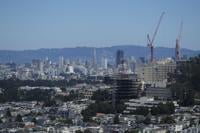
San Francisco will have more cranes in front of its skyline, as were seen on Aug. 20, 2025, when construction costs start to fall, outgoing Bay Area Council CEO Jim Wunderman argued.
Jeff Chiu/Associated Press
There have been two recent proposals put forth for ballot initiatives to raise The City’s Overpaid Executive tax. What is your reaction? How do you define insanity? This is so damaging, as we’re trying to get our footing back and we’re trying to reinstate confidence that San Francisco is a city that values business and values companies and values people coming here, and this just throws a wrench in the works. It puts the business community into a defensive posture rather than a proactive posture. We should all be working together now to make San Francisco the headquarters city it’s meant to be.
There’s reality to the way business operates in the world, and it’s a competitive space, and you just can’t do this and expect success to come. What will happen is companies will shift their people and their investments to other places, maybe right outside the limits of San Francisco. We finally made some progress on this, and I think we’re headed in the right direction, and we got some reforms in place, and we need to keep thinking about how to get to the next level of that instead of this craziness.
What are the biggest priorities you would like to see the Council address after you leave? On housing. we need to address the cost. The reason housing is not being built is it costs too much to build a unit that’s marketable. And a lot of that cost is in local exactions, just the amount of money as a developer you have to pay that doesn’t go into producing the unit that you’re going to put to market. Then there’s the building codes. We well over-coded in California. We require so many things of builders. We need to update how we do construction. We need to move toward more manufactured housing and bring down costs. If we could bring down the cost [15%], 20% you’re going to start to see a lot of cranes in the air.
We need to pass this [possible 2026 regional sales tax measure to fund transit] because the consequences of not doing so, I think are, really, really profound. I’d like to see us become more regionalistic in how we approach public safety. You’ve got all of these police departments, sheriff’s departments, there’s a lot of separation. And then there’s the technology that goes along with this. The technology could make it just so much easier for us to be able to identify and catch the people around many crimes, to the point where they won’t commit them anymore because they know they’re going to get caught.