
By Jim Newton, CalMatters
This commentary was originally published by CalMatters. Sign up for their newsletters.
In Los Angeles, Karen Bass and Nithya Raman have both vowed that they would stress affordability if elected to serve as the city’s next mayor. Given their agreement, Los Angeles surely will be less expensive soon, no matter who wins, right?
Probably not. Neither candidate has produced a plan that would reduce the price of anything, at least anytime soon. That’s not because they don’t care. Both Bass, the incumbent mayor, and Raman, a city council member, have records of attempting to hold down increases in the price of housing. Each has ideas about how to do so over the next four years.
Beyond that, they have very little to offer that would quickly or significantly decrease the cost of living in America’s second-largest city.
L.A. is a very expensive place to live. The average apartment goes for about $2,600 a month. Average utility costs add another $500 or so to a household’s expenses. Throw in car payments, parking, insurance and gas (since most Angelenos drive cars), along with groceries (since all of them eat), and the basic cost of living inside the city quickly soars to roughly $6,000 a month. That’s before anything discretionary or fun — and if you don’t have children.
It’s no wonder that Los Angeles voters rank the cost of living at or near the top of their list of concerns.
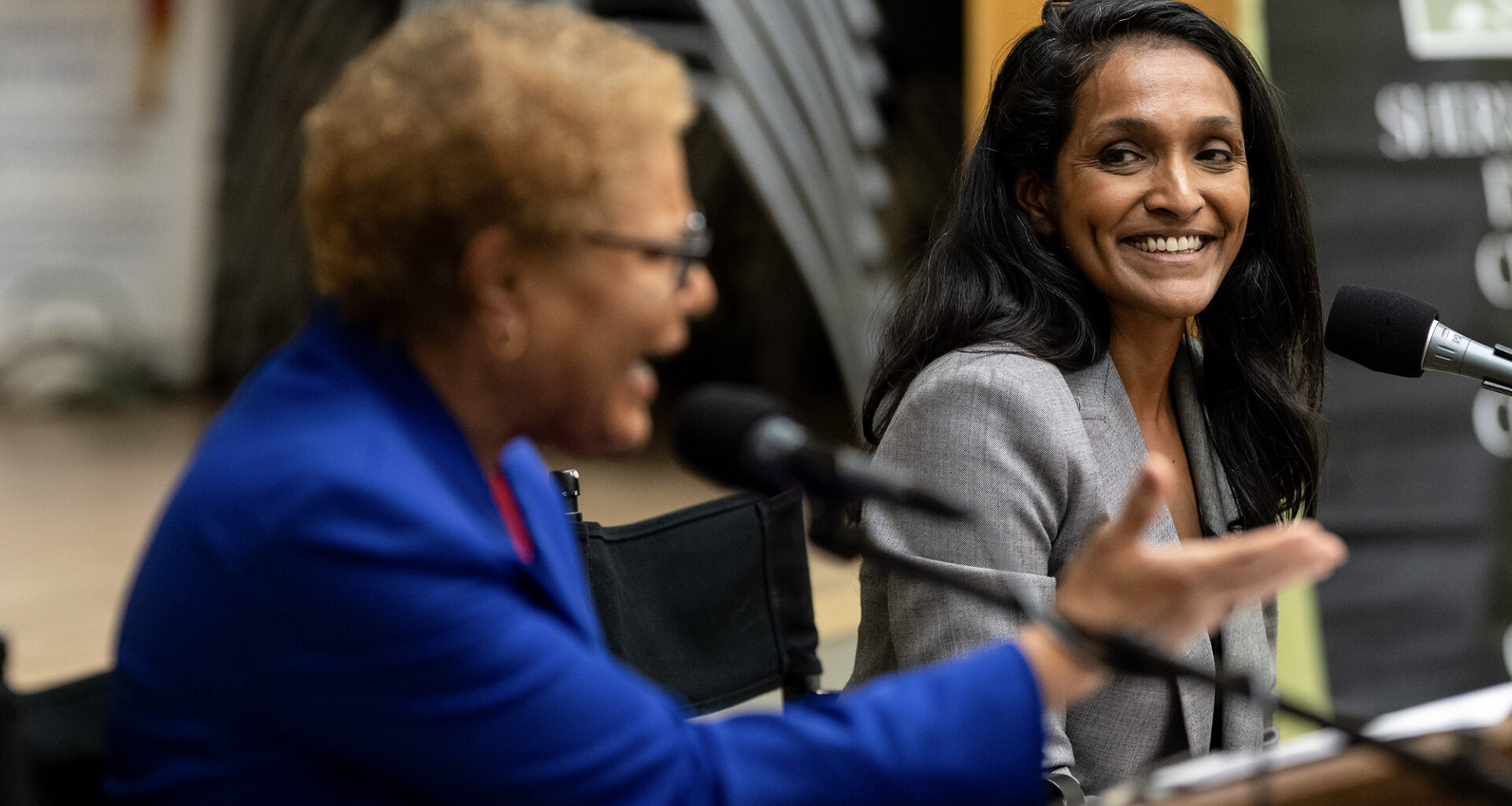
In a mayoral forum this week, Raman and Bass each acknowledged the importance of affordability to Angelenos. Raman called it the “single driving (force) that is reshaping Los Angeles” by pushing out working people. Bass recalled growing up in L.A. when it was a place that working people could afford, and she lamented the city’s transformation into one of the nation’s most expensive places to live.
But when it came to fixing that problem, what was most obvious were the limits of the mayoralty — or of the imagination of the candidates. Raman promised to create an office devoted to expediting housing. Bass said she’s already cut red tape and would do even more in the second term. Both said they would reduce regulations that interfere with market-rate and affordable housing construction.
To be fair, affordability is not a natural topic for mayors, but it’s an inescapable issue in this election cycle, which includes a closely contested race for mayor along with a cakewalk in the governor’s race and a potential referendum on President Donald Trump.
Candidates like to address what’s bothering people, and prices are on the nation’s mind. Costs keep rising, and the issue of affordability is driving much of the energy in the midterms. That makes perfect sense, since national policies are behind much of the inflation that’s hurting consumers.
President Trump’s impetuous war in Iran has roiled global oil markets and resulted in skyrocketing prices for gasoline and diesel, with cascading effects: Groceries are more expensive as the cost of fertilizer increases; prices for all kinds of goods go up when the cost of moving them from producers to consumers increases.
Some candidates, even for major local offices, have tackled affordability head on and to winning effect. In New York City, most notably, Mayor Zohran Mamdani won by proposing a host of measures intended to curb the cost of living. Since taking office, Mamdani has frozen rents, recommended making buses free and moved forward with plans for creating five city-run grocery stores, among other affordability measures.
They may not all come to fruition, but he is visibly responding to his electorate.
What they offer won’t bring relief soon
None of that is in the works for residents of Los Angeles, regardless of who prevails in November. Here, the two candidates for mayor echo the importance of affordability, but they have settled for far less ambitious solutions. Asked about affordability during their forum Tuesday, neither Bass nor Raman even floated making buses free, opening city-run grocery stores or using the mayor’s authority over the utilities department to, for example, shake up the board or expand savings programs.
The intertwining of the Raman and Bass records also complicates matters. Raman, a democratic socialist in the mold of Mamdani, is rightly recognized for pioneering the city’s overhaul of its rent control structure, but Bass signed that bill into law, so she claims some credit, too. Under that rent stabilization ordinance, annual increases are capped at 4% or at 90% of the rate of inflation, whichever is lower.
As she campaigns for mayor, Raman touts her work on rent control and promises to continue and extend her defense of renters, though her plans would, at best, slow rent increases, not freeze rents, much less roll them back. Beyond that, the heart of her vision for reducing housing costs is to liberate construction by supporting greater density — an idea viewed warily by many homeowners — and reducing regulatory impediments.
A genuine boost in supply could drive down prices and rents, but market pressures tend to be long-term and unpredictable. If Raman is elected, no one should expect rents to drop right away.
Bass’ affordability plans are similarly long-term, though she can point to some direct action in her tenure. In addition to signing rent stabilization, Bass redirected the Mayor’s Fund to protecting renters, and it has supplied thousands of families with rental assistance and guidance in the face of possible eviction.
Her support for affordable housing also has helped put more units in the pipeline, and the city has added more than 10,200 during her tenure. It’s an uptick from her predecessors but a trickle of new housing in a city that needs a flood to have a meaningful impact on rents. Bass defends that number, noting that it comes despite the Trump administration’s chaotic tariffs and economic mismanagement.
But it states the obvious to note that if rent control as championed by Raman or eviction protection as practiced by Bass were enough to solve the problem, it would be solved. Instead, the cost of living in Los Angeles remains out of reach for many working people, even after three years of Bass serving as mayor and five years of Raman serving on the council.
More of the same — or even an expansion of the same programs — seems unlikely to deliver quick relief to those hoping this election might bring it.
Affordability is unlikely to determine the outcome of this campaign, though Raman probably suffers on this issue more than Bass does, if only because expectations of a democratic socialist are higher in this area than for the more traditionally Democratic Bass. At their forum Tuesday night, Bass was much more warmly received, and the audience, a predominantly Jewish crowd at the Skirball Center on L.A.’s Westside, was openly skeptical of Raman’s affiliation with the Democratic Socialists of America.
Rather than embrace her connection to the DSA and highlight the organization’s commitment to making Los Angeles more affordable for working people, Raman seemed to distance herself from it, especially its support for divestment from companies that do business with Israel.
“I have been vocal about places where I’ve disagreed with the DSA on a range of issues,” she said to grumbles from the audience. “I’ve proven myself to be an independent voice during my time on the council.”
She has, and she deserves credit for that. But that independence won’t make Los Angeles more affordable. It will take innovation, creativity and a willingness to try new formulas.
So far, neither candidate has offered much to suggest that relief is coming soon.
This article was originally published on CalMatters and was republished under the Creative Commons Attribution-NonCommercial-NoDerivatives license.