
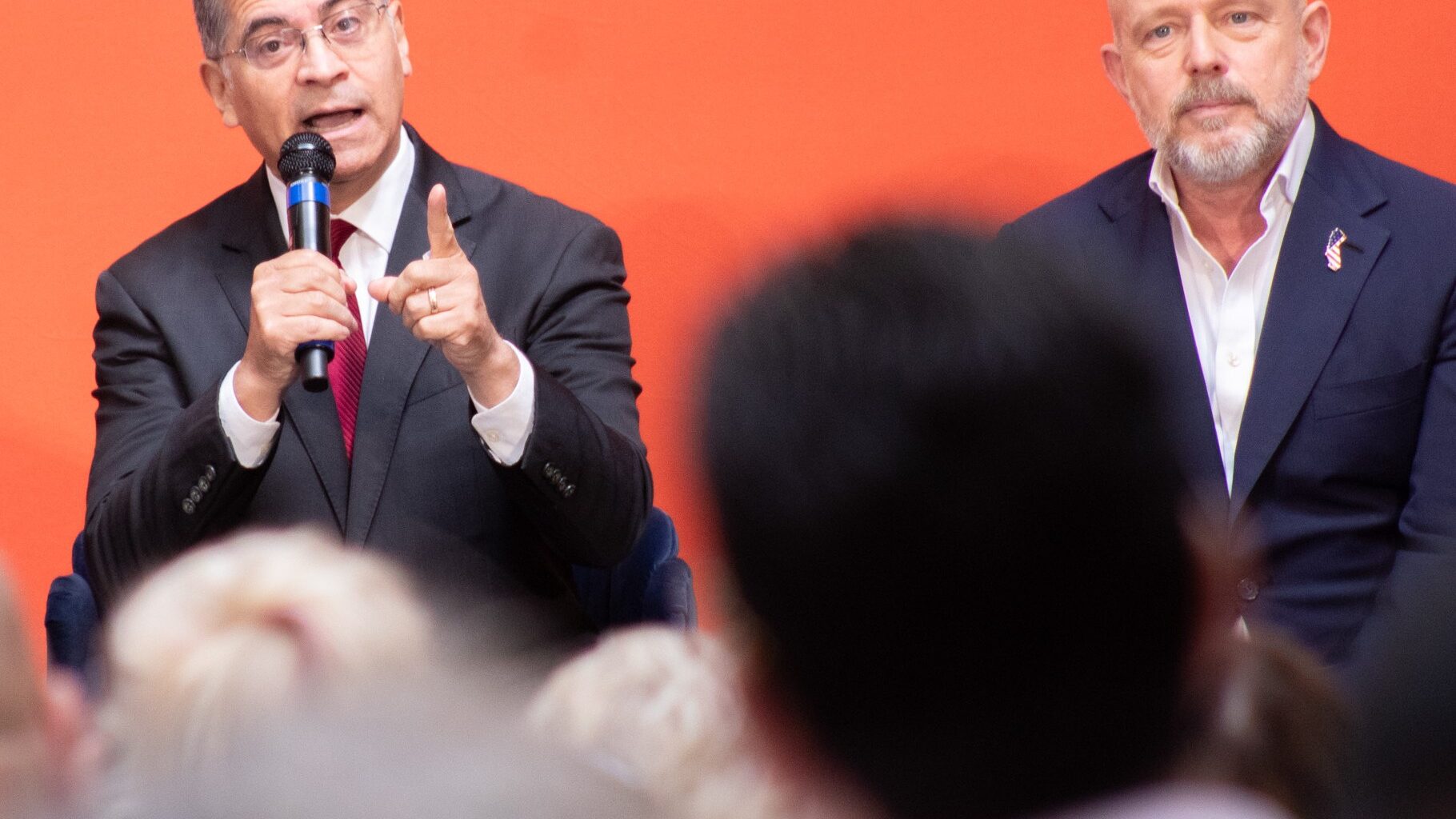
With less than five weeks to go before the midterms, a debate between the candidates looking to become California’s next governor finally happened.
Republican Steve Hilton and Democrat Xavier Becerra took part in an hour-long debate Wednesday night hosted by CNN in Burbank. It was the sole scheduled debate between the candidates, and is likely the only one to take place before Election Day next month.
Hilton and Becerra were asked a range of questions by moderators Jake Tapper and Dana Bash on issues ranging from housing and homelessness, to AI and measles.
Hilton cast himself as a force for change, faulting Democrats for California’s major issues and crises. Becerra focused on his state and national political experience, and attacked Hilton for his support of President Donald Trump and his policies. Both candidates did not shy away from criticizing one another, often falling along familiar attack lines.
No California media outlets were present during the televised debate, the first time both candidates have shared a stage since the primary.
In the months following the June elections Hilton has made regular media appearances, while Becerra’s campaign has kept a significantly lower profile, rarely speaking with reporters or holding public events.
CapRadio Statehouse Politics Reporter Gerardo Zavala sat down with Insight Host Vicki Gonzalez to analyze Hilton and Becerra’s responses, and whether the debate might shift the minds of California voters.
This interview has been edited for length and clarity.
Interview highlights
How was the CNN debate formatted? How were the candidates asked questions?
It felt a bit lopsided. The moderators were asking very pointed questions, so we didn’t always get to hear both sides [on] how a candidate would approach a specific issue.
What stood out to you about how both Hilton and Becerra talked about the issues mentioned by the moderators?
I think we saw some similar trends that have been going on since Becerra took a lead in the race. He was very noncommittal when it came to most issues, including addressing high energy costs and regulating AI data centers. Political experts I’ve spoken to say that’s likely because Becerra wants to play it safe; he has a significant advantage in the polls over Hilton and he’s been playing it safe since the primaries in June, largely staying out of the spotlight and ignoring interviews. We may have heard more from him last night than we have since the primaries, but I would say he was still playing it safe.
Meanwhile Hilton — when he wasn’t criticizing Becerra — did at least try to lay out specifics on some of his ideas, like lowering energy costs by increasing in-state oil production. Whether that’s a sound plan is another discussion, but he did at least have a plan that we could analyze, which is not something we can say for most issues when it comes to Becerra.
How did the candidates characterize and talk to each other?
The best word I could think of is “poorly.” The debate was very combative, and a lot of the time they weren’t really answering the moderators’ questions — they were attacking each other’s records, or statements they’ve made.
Becerra’s central argument was that Hilton has ties to President Trump on issues like immigration, AI, energy, and voting, and [he] went as far as accusing Hilton of saying Trump’s ICE immigration policies and raids were “perfect,” and that he said every farmer worker in California should be deported. Hilton denied that, and our newsroom could not find evidence that [he] made any of those statements.
Hilton also aimed to tie Becerra to years of Democratic Party control in California, which he said is responsible for a lot of the state’s issues. So overall, it was much more about characterizing the other candidate than laying out a detailed plan on how they’d like to change California for the better.
This debate was put on by CNN, and there were no California media outlets present at the debate. Were there any major issues in the state that weren’t mentioned by the moderators or the candidates, since CNN is a national outlet appealing to a national audience?
That is a great point. There were no questions, for example, about skyrocketing insurance costs, and the threat of wildfires — two issues looming in the minds of many Californians, especially after the Palisades fire last year that destroyed thousands of homes.
The impact of climate change was largely also glossed over, and there were no questions on emergency preparedness, which is relevant right now given that Governor Newsom just issued a state of emergency regarding the super El Nino that we’re going to experience this year.
There was also no mention [by moderators] of other controversial topics here in California like water usage, droughts, or agriculture issues. CNN moderators also did not ask about some of the most serious criticisms against Becerra, including [issues with] migrant children [when he was Secretary of Health and Human Services in the Biden Administration.] The only reason that was brought up was because Hilton used it as a criticism against Becerra.
What is lost when state or even local media isn’t able to participate or help shape questions?
I think this is a really important time to note the difference between both candidates, and how they respond to media inquiries. For the most part I’ve been able to get Hilton on the phone relatively quickly, and he’s been willing to go on the record on tough questions. However the same cannot be said about Becerra, who again is the frontrunner — Hilton even commented on it at the start of the debate.
CapRadio and several of our public media partners have not been able to secure interviews regarding the election with Becerra since the primary. I should note I was able to lock him down for a five-minute call earlier last month, but that had to do entirely with his response to proposed changes to the census that would exclude undocumented immigrants from the count. He was attorney general when the Trump administration first tried implementing similar changes, so he talked to me about that and what he would do as governor if elected. But that’s all that we had time to discuss.
But when it comes to accountability, his avoidance of speaking with California-based news outlets makes it difficult to let voters know what he plans to do to address state-specific issues including the skyrocketing insurance costs and the threat of wildfires.
Could this debate change any minds?
That’s hard to say, but Becerra has such a large advantage in most polls that it’d be difficult to see this debate changing [much]. If anything this was an opportunity for both candidates to vie for the remaining undecided voters, but polls suggest even that wouldn’t make much of a difference.
A Public Policy Institute of California poll found only 2% of those surveyed were undecided, while a Berkeley/IGS poll found that 9% were undecided.