
Key Takeaways
A Kelvin wave is a massive, slow-moving movement of warm water that can travel thousands of miles across the Pacific.
The wave could temporarily raise sea levels along the California coast by about 6 to 12 inches, potentially for months.
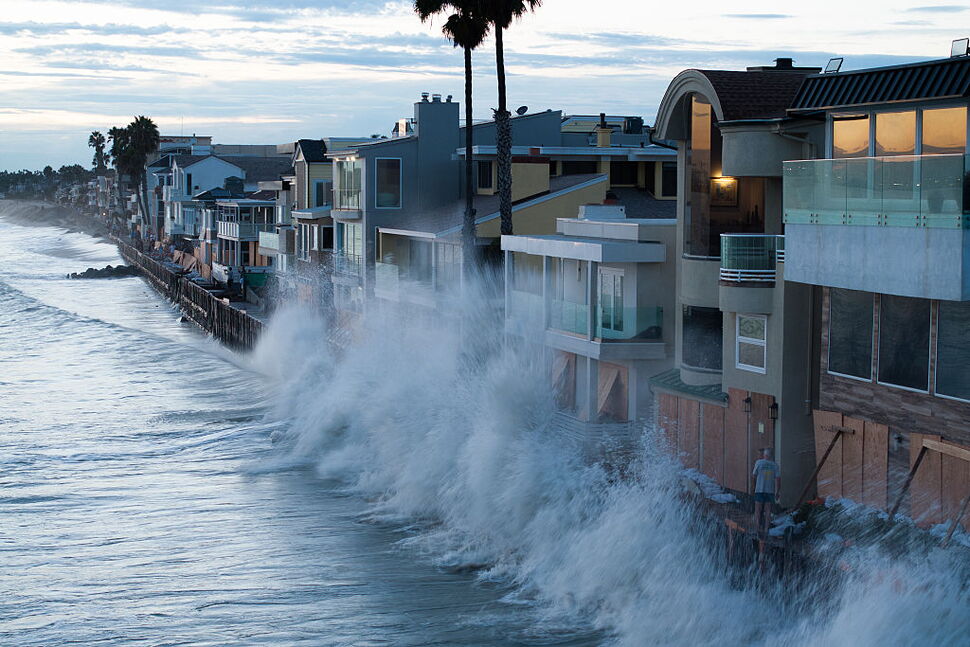
Higher water levels could make coastal flooding, erosion and landslides more severe when combined with high tides, large waves and storms.
California is bracing for the arrival of an unusual ocean phenomenon that could raise coastal sea levels by as much as a foot as a strong El Nino develops in the Pacific.
The phenomenon, known as a Kelvin wave, is not a wave that surfers will see crashing onto the beach. Instead, it is a massive movement of warm water beneath the ocean surface that can travel thousands of miles. As it reaches the West Coast, it can temporarily raise sea levels and add to the risks already posed by storms, high tides and coastal erosion.
The timing is significant because California has already experienced substantial coastal erosion and damage this year, while forecasters expect El Nino conditions to strengthen through the fall and winter.
What Is a Kelvin Wave?
Kelvin waves are planetary-scale ocean waves that are vastly different from the tides seen at the shore.
“Kelvin waves are a massive warm water wave that forms along the equator in the western Pacific in response to trade wind slackening,” said William Sweet, an oceanographer with the National Oceanic and Atmospheric Administration’s National Ocean Service.
The waves can stretch thousands of miles and move at roughly 5 mph, carrying warm water through the upper part of the ocean. Unlike ordinary wind-driven waves, Kelvin waves are broad and relatively flat, so they do not break when they reach shore. NOAA describes them as more like a slow sloshing of water than a conventional beach wave.
They also are not tsunamis. Tsunamis are caused by sudden disturbances such as underwater earthquakes or landslides and can travel across the ocean at hundreds of miles per hour.
How Does El Nino Create One?
The current Kelvin wave is connected to El Nino, a climate pattern involving unusually warm ocean temperatures in the tropical Pacific.
During El Nino, the trade winds that normally push warm surface water westward across the equatorial Pacific weaken or periodically reverse. That allows warm water that has accumulated in the western Pacific to move eastward as a Kelvin wave.
“During an El Nino event there can be several Kelvin waves which form, often as a series of successive waves that occur over the span of many months,” Sweet told U.S. News in an email. “They take about 2-3 months to cross the Pacific Ocean before heading poleward.”
When the wave reaches the Americas, part of it travels north along the West Coast as a coastally trapped Kelvin wave. NOAA said waves generated earlier this year have already reached California, but their effects are expected to be greater this fall and winter.
How Much Could Sea Levels Rise?
The Kelvin wave could temporarily raise sea levels along the California coast by roughly 6 to 12 inches.
The types of Kelvin wave that will be impacting the West Coast this fall and winter are coastally trapped Kelvin waves that are hundreds of miles in scale that move northward at about 5-10 mph, Sweet said, adding that they elevate sea levels on the order of about a foot or so.
The increase is temporary, not a permanent addition to long-term sea-level rise. But even several inches can matter when water levels are already elevated.
Why Could This Increase Flooding?
The biggest concern is what happens when elevated sea levels coincide with other coastal hazards.
“Those elevated sea levels, when combined with passing weather or storms, can substantially increase flood risk and risk for things like beach erosion,” NOAA researcher Dillon Amaya told the Los Angeles Times.
Sweet said strong El Nino events can bring a combination of elevated sea levels, powerful ocean swells and heavy rainfall. Together, those conditions can produce high-tide flooding, beach and dune erosion, bluff failures and landslides.
Areas along Southern California, including Orange, Los Angeles and San Diego counties, have experienced coastal damage during previous strong El Nino events. Central Coast counties, including Ventura, Santa Barbara, Santa Cruz and Monterey, have also faced flooding and bluff failures, while northern coastal counties have experienced flooding and landslides.
What Should Californians Watch For?
The Kelvin wave itself is not a storm and does not mean flooding will occur every day. The greater concern is when the elevated water levels overlap with high tides, large swells or major storms.
California Gov. Gavin Newsom declared a state of emergency in September to prepare for potential El Nino impacts, warning that the phenomenon could increase the risk of heavy rain, flooding, debris flows and mudslides.
For residents near the coast, Sweet recommends paying particular attention to high-tide and storm forecasts, especially in low-lying communities and areas already affected by erosion.
The Kelvin wave is one piece of a larger El Nino pattern. Its effects will depend on how strong the event becomes and how it interacts with storms and existing coastal conditions over the coming months.