
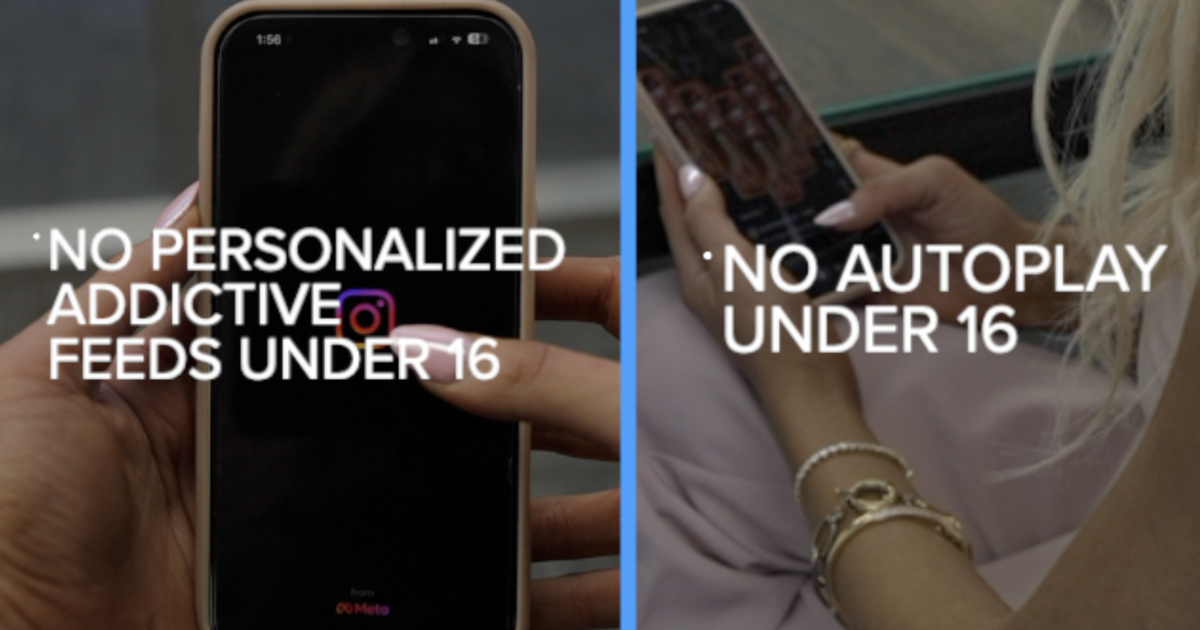
BAKERSFIELD, Calif. (KERO) — California has enacted what experts call the nation’s strongest law protecting children from social media addiction. Gov. Gavin Newsom signed Assembly Bill 1709; a bipartisan measure authored by Assemblymember Josh Lowenthal; that strips platforms of autoplay and algorithmically personalized feeds for users under 16.
For one Bakersfield family, the dangers of those features weren’t abstract. Citlali Soto, a student at Independence High School, said Instagram and TikTok once consumed three to four hours of her day.
“You didn’t know what was coming next, so I was just looking forward to — what’s next? What am I gonna see next? Who’s gonna like my post next?” Soto said.
When she was about 12 or 13, her father, Javier Soto, made the call — social media was gone. Five years later, she has no interest in going back.
“I have no desire to return to social media. I think my life is perfect as is,” Soto said.
Her father said the new law could have changed the difficult decision he once made for his family.
“It would make me feel safer about social media,” Javier Soto said.
What the law does — and doesn’t do
AB 1709 prohibits covered platforms from offering what it defines as “addictive features” to users under 16. That includes two of the most powerful tools keeping young users scrolling: autoplay and personalized algorithmic feeds.
Under autoplay, one video rolls automatically into the next — removing any moment of deliberate choice. A personalized feed uses everything a platform knows about a user — what they’ve watched, clicked on, and engaged with — to serve content engineered to keep them on the app as long as possible.
Research associates three or more hours of daily social media use with adverse mental health outcomes including anxiety, depression, self-harm and eating disorders. Teens currently average four to five hours per day.
Critically, the law does not ban minors from social media altogether. Teens can still have accounts and actively search for or choose content — they just won’t have those addictive features activated.
“We’re not stopping the content. We’re just preventing the problematic habitual use of these platforms,” Marc Berkman, chair of the Organization for Social Media Safety, which sponsored the bill, said.
Berkman added that excessive use carries risks beyond mental health, including exposure to cyberbullying, drug trafficking, extortion and sexual exploitation.
How apps will know a user’s age
Beginning in 2027, California’s age-assurance system will require apps to request an age-bracket signal through a secure connection from the device’s operating system or covered app store. If a user is under 16, the addictive features stay off — without requiring the user to manually input any personal information.
AB 1709 also establishes an e-safety commission to ensure age verification keeps pace with evolving technology. Berkman acknowledged it won’t be perfect immediately but said the impact will still be significant.
“If we’re 30, 40, 50% effective, that is millions of children in California that are now protected,” Berkman said.
AB 1709 is set to take effect Jan. 1, though legal challenges from the tech industry could delay implementation. Berkman said his organization is optimistic the law will survive any court challenge.
Berkman stressed that while the law is a major step forward, it is not a complete solution — and urged parents to continue setting family rules around social media use and checking safety settings on children’s devices. Additional resources are available here.
While California now has the strongest laws to protect children from social media, experts say parents are still the most important guardians in keeping their children safe.
Stay in Touch with Us Anytime, Anywhere: