
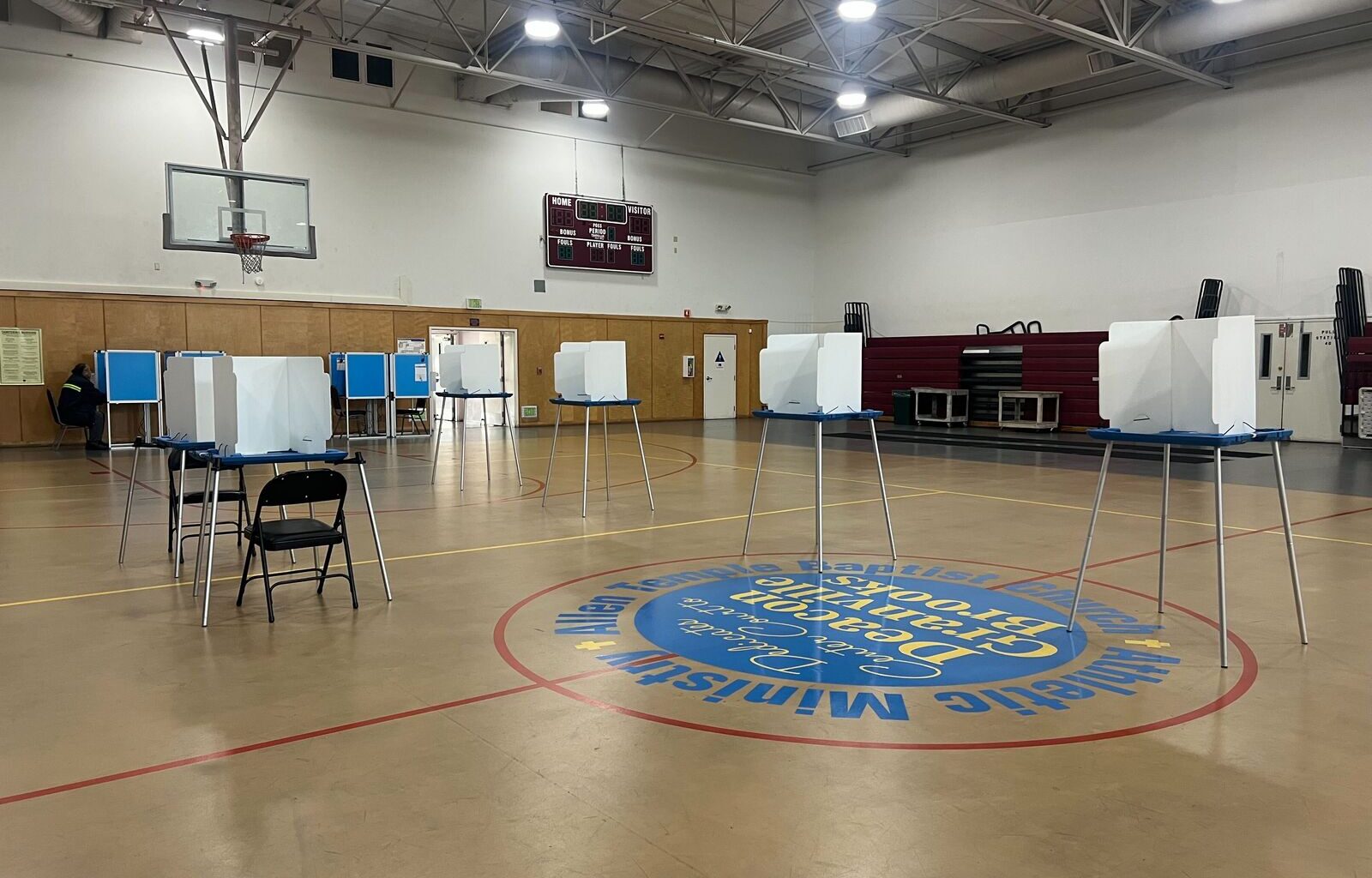
Most election years, crowds of candidates compete for a handful of seats on the Oakland City Council and for the job of Oakland mayor.
But outside of the heated competition for seats on the Oakland Unified School District board, November 2026 is far less contested than previous elections.
District 4 Councilmember Janani Ramachandran is running unopposed, as is the city auditor, Michael Houston. In District 6, Council President Kevin Jenkins is running against a single opponent, Nancy Sidebotham, a perennial candidate who has previously said she runs for office not to win but to have a platform to get her message out.
Barbara Lee, who is completing the term of recalled mayor Sheng Thao, is running for reelection against three opponents — six fewer than in 2025. Unlike last year, none of Lee’s challengers have raised the kind of money past winning candidates have to fund their campaigns, nor do they sport many endorsements from powerful unions, business groups, or influential public figures who can help turn out the vote.
District 2 Councilmember Charlene Wang is facing a competitor, Nate Adams, who has raised tens of thousands of dollars and has endorsements from some East Bay elected officials and organizations, including unions. But Wang still has significantly more money than Adams, and she has endorsements from far more political organizations and people.
In total, nine people are running for a council seat or mayor this year. The last time these same seats were up for election, in 2022, there were 18 candidates. In the most recent general election, in 2024, there were a whopping 26 people seeking office in these races.
Many of the challenges in Oakland that drew waves of candidates in recent years are all still around. There is widespread frustration with crime, illegal dumping, homelessness, and lack of affordable housing. And as in past elections, many residents — fairly and unfairly — blame their elected leaders for their woes.
So why aren’t more people running?
Money may be a barrier
 Getting your message across in an election costs money. Credit: Natalie Orenstein/The Oaklandside
Pecolia Manigo, executive director of Oakland Rising Action, a progressive advocacy group, has spoken with a lot of people who were exploring running this year. According to Manigo, there were a couple of consistent reasons they shared for not joining the ticket, and money was the big one.
“People are feeling very defeated about the amount of money involved in Oakland politics,” Manigo said. “People are concerned about going into debt, they’re concerned about losing, and what that would do financially for them.”
All of the Oakland incumbents have stacked war chests. As of the end of September, Jenkins had over $123,000 in his campaign committee account; Ramachandran, who is running unopposed, had over $114,000. Wang had over $76,000 as of mid-September.
Wang is the only candidate with a well-financed challenger, and she has been spending more heavily on campaigning. Since January, Wang has raised nearly $124,000. Lee, who has three opponents, has more than $163,000 at her disposal.
These sums aren’t out of line with recent elections, but they are still daunting for potential challengers.
Last year, the council voted to temporarily increase how much individuals and organizations can give to candidates. They did this because they had decided to pause the Democracy Dollars program, which would have given qualifying residents vouchers to make campaign contributions to candidates of their choosing.
Approved by voters in 2022, Democracy Dollars was billed as a way to help level the playing field of Oakland politics, where, historically, residents in wealthier neighborhoods have had lopsided influence in elections. But in 2023, Oakland plunged into a budget crisis, and the city council decided it could not afford to pay for Democracy Dollars and postponed the rollout of the initiative.
Oakland candidates can still avail themselves of Oakland’s Limited Public Financing program, which provides small sums of cash to candidates. But it’s easy to run through the money: as an example, Manigo – who ran for the OUSD board in 2022 – said it can cost $15,000 to buy mailers for one council district.
Warren Logan, who ran for City Council in 2024, said councilmember salaries can also be discouraging, especially for younger people who might have student loan debt or lower savings. Councilmembers make about $114,000; when Logan ran, it was a bit lower.
“If you are a talented young person looking to make an impact in your community and make the rent, running for office is probably one of the last things they should consider,” he said.
Progressives say would-be candidates may be too demoralized to run
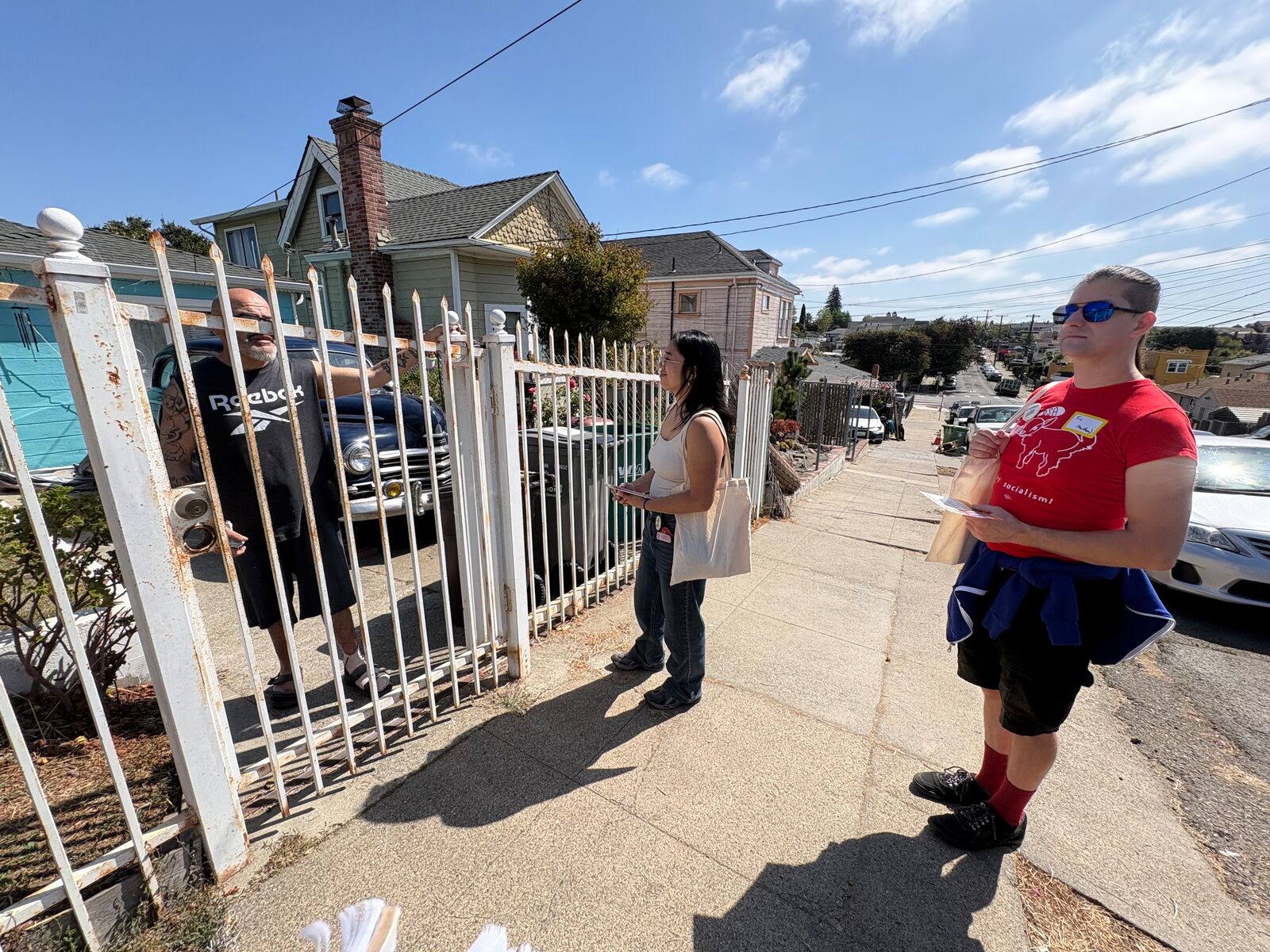 The Democratic Socialists of America are running a candidate, Nate Adams, and campaigning for him in D2. But other progressive groups are less visible in this election than usual.
Oakland’s budget crisis and federal cuts have meant that city leaders have fewer resources to work with.
Pamela Drake, a longtime progressive politico in Oakland, is of the view that the busy Oakland ballots of the past were more surprising than the slimmer candidate list this year; and that a sparser election is to be expected in a small and challenged city.
“I think it’s interesting that we’ve had so many people run in local politics,” said Drake, who’s active in the Wellstone Democratic Renewal Club. “You can accomplish so little of what you set out to do, and now we have less money than we ever had to do it.”
Running for office might feel like a worthless task when many good ideas end up dying during budget negotiations, she said.
The council and the mayor both want more police, she noted as an example. But they put millions into training academies and still end up with far fewer cops than their stated goal.
Manigo said some would-be candidates are also discouraged by the current composition of the council, which has lost its progressive bloc.
“There are some real concerns that folks who want to run for council have about what agenda is driving the council,” Manigo said.
As an example, she pointed to the council’s 7-1 vote to approve a contract with the controversial surveillance company Flock Safety, despite scores of residents who showed up urging them to not do it.
Seth Olyer, head of Oakland’s firefighter union, also said a general lack of trust in government has led to a lot of people sitting out this election.
“I’ve heard some folks who would be potential candidates, or talked about it in the past, that it feels like the luster is kind of gone right now,” Olyer told The Oaklandside. “I don’t know if it’s national politics rubbing off on the local level, I don’t know if it’s vibes — I’m not quite sure.”
Oakland’s unions usually play a major role in city elections, both in terms of fundraising for and endorsing candidates for office. Earlier this year, unions spent heavily to support the failed parcel tax, Measure E. While endorsements have begun trickling in, labor groups have been less noticeable in campaigns this cycle.
Olyer said his union, Local 55, hasn’t actively tried to recruit anyone to run this year. This is partly because the firefighters are generally satisfied with the support they’ve received from the incumbents. But it’s also a bandwidth issue.
“We’ve just been so focused on trying to make improvements in the fire department with regard to staffing and contract negotiations and everything else,” Olyer said. “There just hasn’t been time to get out there and plant the seeds and grow a candidate.”
Olyer said he told the candidates that Local 55 isn’t endorsing anyone until there’s some movement on the union’s contract, which expired in July. But Olyer said he’s impressed with Lee, whom he likened to an “Energizer Bunny.” According to Olyer, Jenkins has been very supportive of the fire department, as has Ramachandran. Olyer said he didn’t have anything to share about Wang.
As for the mayor, Drake thinks Lee has effectively convinced the city’s opposing political factions that she’s on their side. While she’s associated with progressive causes, the mayor is actually “running from the center,” Drake suggested. Indeed, Lee took care to place both a labor leader and a business leader at the helm of her transition team last spring, promoting a message of “unity.”
“So why would you try to run someone from either angle?” Drake said.
Groups that supported the recalls say the incumbents are all right
 Incumbents (clockwise from left) Charlene Wang, Janani Ramachandran, Kevin Jenkins, and Barbara Lee all secured endorsements from Empower Oakland this year. Credit: Roselyn Romero, Florence Middleton, Dorean Raye, Jungho Kim
The advocacy groups Empower Oakland and Revitalize East Bay spent hundreds of thousands of dollars in the past two elections in Oakland, focusing on recalling former District Attorney Pamela Price and former Mayor Sheng Thao, and supporting candidates for council, school board and mayor. This cycle, Empower is mainly focusing on the school board races. The group has endorsed all of the incumbents running for city council and mayor.
Isaac Abid, a real estate developer who is involved in both groups, didn’t have much to say about the candidates running for council, aside from noting that Jenkins and Ramachandran don’t govern “from an ideological slant,” which he sees as an important feature of their performance.
He told The Oaklandside that Lee has been a very competent leader “at a time when the city is coming out of a lot of incompetence,” which may account for her low number of opponents.
Lee has also made a point of working with the business community. She participated in a ribbon-cutting for a business development district that Abid and his wife Puja Abid launched last year in the Uptown neighborhood; and her office supports a downtown development corporation Puja Abid created to drive investments in the struggling downtown. Abid’s company, Lakeside Group, owns multiple properties in the area.
Abid also said that the mayor asked Revitalize to participate in the discussions about charter reform; his organization and Empower both support Lee’s proposed “strong mayor” system, on the ballot as Measure EE.
These groups don’t align with Lee on some important issues, though. Notably, Empower opposed the Measure E parcel tax (not to be confused with Measure EE), which Lee was counting on to raise money for various city services. And Abid gave money to a committee that fought the initiative.
Logan, who serves on Empower’s endorsement committee and the Alameda County Democratic Central Committee, said he’s generally pleased with the performance of the three council incumbents up for reelection this year and hears similarly from their constituents.
That the incumbents have a lot of fans is one straightforward explanation for why they didn’t attract many challengers. Josh Chase, who owns the cannabis business Oakanna, is one of them. Chase endorsed Ramachandran when she ran for the district in 2022. In a recent interview, Chase told The Oaklandside he hasn’t followed Ramachandran’s legislation, but he’s impressed by how she communicates with residents in her district and promotes local businesses.
“I see a lot of her social media content,” Chase said. “I feel like she cares, and that’s the most important thing.”
In Logan’s view, Oakland is in a political “holding pattern,” with strategists and voters waiting to see what the mayor and the largely aligned council will do before shaking things up again. If voters approve Measure EE, adjusting the city charter to make the mayor more powerful, Lee will have a chance to carry out her agenda with more force than she’s been afforded during this first, shortened term.
“Effectively, we’re all hoping this rockstar of a woman can fix some of the most intractable issues that other mayors and other city councilmembers have not been able to address,” Logan said. “I wonder how much that has caused outside money, or even inside money, to say, ‘Well, let’s give her a chance to figure this all out.’”
If Measure EE, on charter reform, passes, Logan, who works in public affairs and lobbying, hopes more types of people will feel moved and able to run for council.
“I felt that I had to weigh my ability both to run the city and also be good at policy,” Logan said about his 2024 campaign. “What the strong-mayor position is saying is: council isn’t running the city; the mayor is. Your job, dear council, is to provide guardrails and oversight and policy.”
The measure would set a new process for determining councilmembers’ salaries, likely raising them. This, Logan said, could also encourage more candidates.
Drake opposes Measure EE, saying that concentrating power in the mayor’s office is “a move toward authoritarianism.”
Across the ballot, she thinks Oakland is setting its sights too short by not preparing people to run in the future.
“That’s the sad part — we don’t have a bench,” Drake said. “How many years can we go out looking for a celebrity elder person retiring from public office to come and run for mayor? From Elihu [Harris] to Jerry [Brown] to Ron [Dellums] to Barbara [Lee].”
School board races are the exception
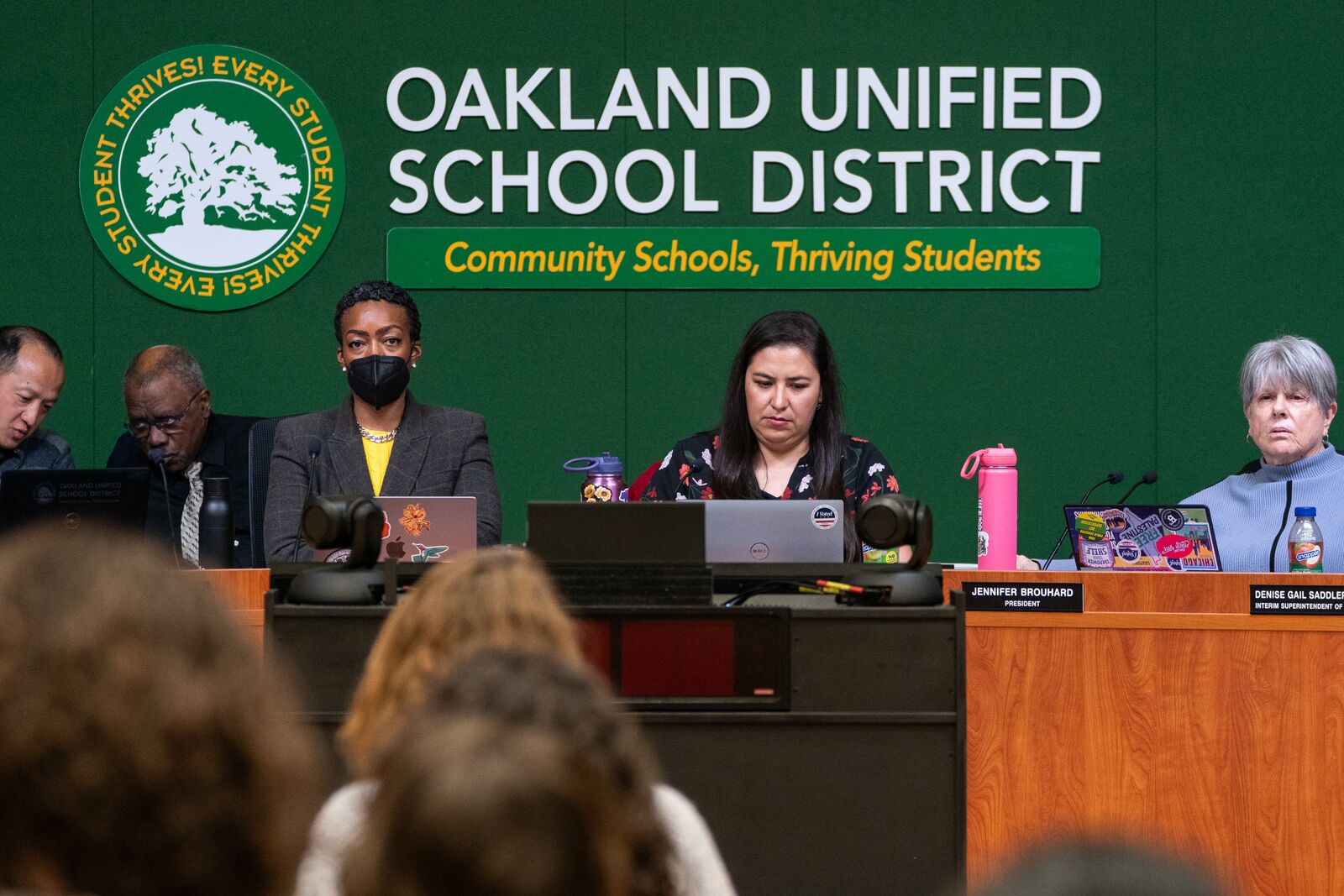 Money and endorsements are flowing into school board races at a quicker clip than the City Hall campaigns. Credit: Jungho Kim for The Oaklandside
While the city’s election is relatively quiet this year, the school district’s is more dramatic: Each of the incumbents in districts 2, 4, and 6 is running again and has drawn challengers.
In the District 2 race, the incumbent and current school board president Jennifer Brouhard faces Arielle Fleisher. In District 4, two candidates, Kathryn Camp and Sylvia Williams, are challenging Director Mike Hutchinson. And in District 6, Alexandra Williams and LeAna Powell have lined up to face incumbent and board vice-president Valarie Bachelor.
Parents have emerged as a politically active group this year, with three OUSD parents appearing on the ballot and the emergence of a new independent expenditure committee called Oakland Parents for Quality Education PAC. Empower Oakland has donated small sums of money to several candidates, Fleisher, Camp, Hutchinson, Fleisher, Williams, and Powell, in the school board races. Several organizations that have received funding from Revitalize East Bay are also hosting a school board candidate forum.
The Oakland Education Association, the district’s teachers union, has spent thousands independently backing two of the incumbents, Brouhard and Bachelor, according to campaign finance records. Individual members of unions representing teachers and other school employees have also made contributions directly to candidates.
Logan said groups like Empower saw an opportunity to effect change on the school board because there are problems with academic achievement and equity that are “very easy to understand” — and a political body, the school board, that he views as directly responsible for many of them.
Drake supports some of the school board incumbents but said they haven’t been good at telling the stories of their successes. Opposing groups could “sense weaknesses,” she said, and seized an opportunity to run.
“*” indicates required fields