
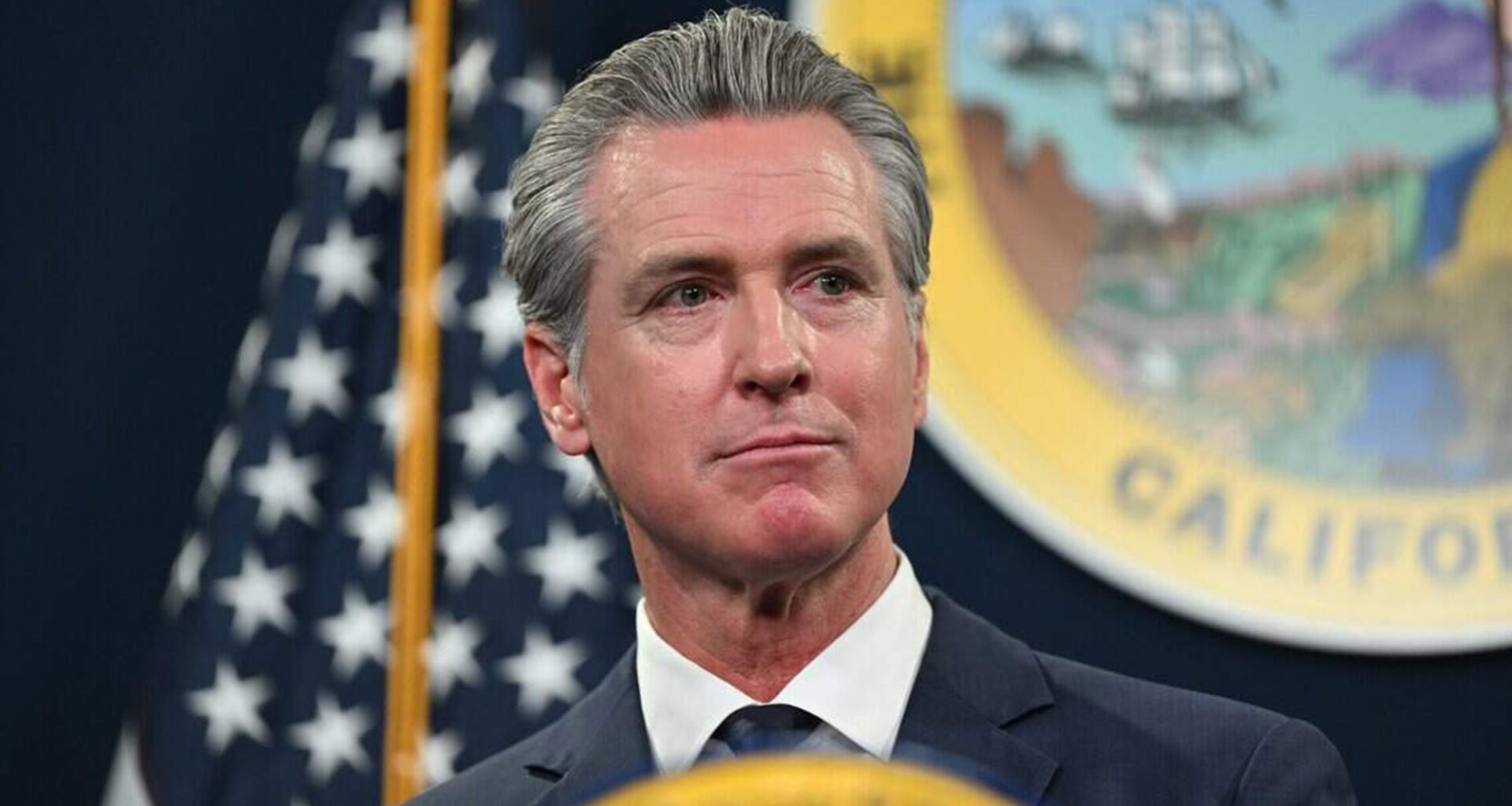
Gov. Gavin Newsom had a lot of decisions to make in 2026.
No, we’re not talking about what’s next for the termed-out governor who is largely considered to be a possible presidential contender in 2028. But, rather, whether to approve the 1,160 bills the California Legislature sent him this year.
Those bills ranged from providing more training opportunities for people to recognize opioid overdoses and administer naloxone to considering forced marriage as grounds for seeking a domestic violence restraining order. There’s legislation requiring high school coaches to complete mental health training to better help their players, and another creating a first-in-the-nation state seal to identify non-ultraprocessed foods.
Of the bills sent to Newsom in 2026, he signed 1,040, meaning he vetoed just 10.3% of them, according to veteran Sacramento lobbyist Chris Micheli’s tally.
During his eight years in office, Newsom vetoed 13.5% of the bills that landed on his desk, according to Micheli. That’s fairly on par with former Gov. Jerry Brown, also a Democrat, Micheli’s research found, but a bit less than Republican Gov. Arnold Schwarzenegger, who clocked in with a 26.5% veto rate.
But back to Newsom, and the final slate of bills before him in his last year as California’s governor. Here’s a brief look at a handful of the ones he signed ahead of the Sept. 30 deadline.
Getting up to speed on math
Younger students struggling with math will be identified earlier and connected to support faster because of a new law that requires annual math tests to help educators identify these students before academic gaps among classmates grow further.
SB 1067 requires that schools begin testing their kindergartners’, first graders’ and second graders’ math skills annually, starting with the 2028-29 school year. Students identified as needing extra math help through these tests will receive “evidence-based interventions” to help them get back on track, according to bill author Sen. Akilah Weber Pierson, D-San Diego.
The California Department of Education must post online by July 31 the criteria and guidance for selecting appropriate math tests for students, and by the end of January 2028, it will publish a list of approved tests for local education agencies to select from.
Labeling healthy food
California is the first state to pass a law creating an official state seal to identify non-ultraprocessed foods.
AB 2244, authored by Assemblymember Jesse Gabriel, D-Encino, paves the way for manufacturers to voluntarily undergo evaluation that their products meet the state’s definition for non-ultraprocessed foods. Those who meet the standards may affix a “Non-Ultraprocessed Certified” state seal on the front of their food packaging to help shoppers easily identify which food products are healthier. The concept is modeled after the “USDA Organic” labeling program.
The California Department of Public Health will accredit the entities approved by the state to certify the food products by June 1, 2029.
Large grocery stores will also have to prominently display items with the “Non-Ultraprocessed Certified” seal to make it easier for shoppers to find the products.
Ultra-processed foods are high in saturated fat, added sugar or sodium and contain additives such as flavorings, colorings, emulsifiers or thickening agents. They’re often filled with harmful additives to enhance the taste, texture, appearance or shelf life of a product and can, as in the case of soda, be addictive.
Research has linked these foods to cancer, cardiovascular disease, Type 2 diabetes, metabolic disorders, obesity and other health concerns.
Keeping access to autism behavioral health treatments
Starting Jan. 1, Californians with autism who have been prescribed a behavioral healthcare treatment plan by a provider will no longer lose access to that treatment simply because they miss an appointment.
Families now could lose out on their already-approved treatment if they miss an appointment, even if it’s due to unavoidable circumstances.
But the new law, from Assemblymember Tri Ta, R-Westminster, prohibits health plans and insurers from placing restrictions on patients and their families from using those approved treatment hours, so long as accessing treatment is reasonably consistent with the treatment plan and guidelines.
The law also allows healthcare plans to conduct utilization reviews of the services and treatment provided, when appropriate.
Identifying ‘forever chemicals’
Gabriel was not the only Los Angeles County lawmaker to have a food-related bill signed by Newsom this legislative session.
Assemblymember Nick Schultz, D-Burbank, authored AB 1603, which requires the California Department of Pesticide Regulation to disclose online if a pesticide contains perfluoroalkyl and polyfluoroalkyl substances.
Otherwise known as PFAS, these are considered toxic “forever chemicals” because they take decades, if not hundreds of years or more, to break down. That slow process results in a build-up of the substances in the environment and inside our bodies.
PFAS exposure can increase cholesterol levels or the risk of obesity, decrease fertility and impact development, including causing low birth weight, bone variations or behavioral changes, and have been linked to other health issues, according to environmental experts and advocates.
Schultz initially proposed banning PFAS pesticides from being used on crops grown in California over time. But the bill was amended during the legislative approval process before reaching Newsom’s desk.
Now, it only requires the Department of Pesticide Regulation to indicate PFAS-containing pesticides in a database on its website by Jan. 1, 2028, or by the time its pesticide use reporting database includes 2026 data, whichever comes first. The department must also publish a list of all registered pesticides with PFAS ingredients by Jan. 1, 2028, and provide this list to each county in the state.
Coaching mental health
Coaches already receive training to help their players if they are injured physically. Now, they will also have to undergo behavioral and mental health training every two years to help them recognize and respond to students who may be struggling mentally.
Newsom actually signed multiple bills that addressed mental health training for coaches: AB 1665 from Assemblymember Blanca Pacheco, D-Downey, and AB 1626 from Gabriel, the Encino Democrat. There is also AB 1985 from Assemblymember Jacqui Irwin, D-Thousand Oaks, which requires mental health training for Cal State and community college coaches and requests it of UC coaches.
The idea is for coaches to be able to better spot signs of anxiety, depression, eating disorders, substance abuse and suicidal ideation and then connect students to support and resources, the bill sponsors said.
Gabriel’s bill also saw support from Golden State Warriors basketball player Stephen Curry, who said these policies “help create a strong foundation for coaching practices that can make a lasting impact in an athlete’s life.”
Providing security for faith-based communities
The Safe Worship Zone Act, authored by Assemblymember Rebecca Bauer-Kahan, a Democrat from the Bay Area, aims to protect congregants at a synagogue, church, mosque, temple or other religious place of worship from being harassed by protesters.
AB 2664 makes it illegal, within 100 feet of an entrance or exit of a house of worship, for a protester to get within 8 feet of another person entering or leaving the building without their consent to hand out literature, display a sign, engage in oral protest, obstruct their movement or harass or intimidate them.
A first-time offender could be fined up to $1,000, face up to six months of jail time or both. Each subsequent violation could result in a fine of up to $5,000, a jail sentence of up to one year or both.
“For too long, too many people have been asked to accept fear as part of practicing their faith. … AB 2664 says we cannot accept that as normal, and it should never become the norm. This bill creates a safe bubble zone around houses of worship so people of all faiths can worship with the dignity, peace, and security they deserve,” Bauer-Kahan said.
The bill was introduced partly in response to an incident at Wilshire Boulevard Temple in Los Angeles in December when protesters reportedly blocked people from entering the building and later entered the facility themselves, disrupting an event while shouting antisemitic remarks, destroying property and assaulting a security guard, according to Jewish community leaders.
Protecting those in forced or child marriages
Billed by supporters as landmark legislation, Newsom also approved AB 2534, which recognizes forced marriage as a form of domestic violence, giving grounds for a victim to petition a court for a domestic violence restraining order.
The bill from Assemblymember Ash Kalra, D-San Jose, defines forced marriage as “as a spousal relationship in which one or both parties do not or cannot consent and one or both parties are compelled, through force, fraud, coercion, duress, abuse of power, or coercive control, to enter, attempt to enter, or maintain, a marriage, regardless of whether the marriage is legally valid.”
Forced marriage is already a crime, the bill analysis noted, but victims can still find themselves in it without protective measures — and at times, the perpetrator acts not alone but with the help of family or community members.
The new law gives courts “clear authority to intervene before someone is forced onto a plane, before their passport is confiscated, before they are pulled out of school, and before they are forced to sign away their childhood,” according to the Tahirih Justice Center, a national nonprofit that serves immigrant survivors of gender-based violence.
Newsom also signed legislation from Assemblymember Gail Pellerin, D-Santa Cruz, that bans child marriage in California. The bill does away with the ability for minors to enter into a marriage or domestic partnership with parental consent and sets the minimum age for such relationships at 18.
According to Newsom’s office, only 17 states have banned child marriage outright.
Training to recognize opioid overdoses
Those required to undergo CPR training because of their jobs will also now receive online training on how to use naloxone in an attempt to stop opioid overdoses.
Many overdoses occur in public places where CPR-certified people are already present, according to Assemblymember Matt Haney, D-San Francisco. The idea is that by increasing the number of people who can recognize an opioid overdose and know how to administer naloxone, which can help restore breathing to someone suffering an overdose, the response time to give critical aid will be reduced.
The bill received near-unanimous support in the statehouse.
Protecting special needs trusts
Proposition 19, approved by California voters in 2020, gave older adults at least 55 years old, disabled and wildfire victims the ability to carry low property tax assessments with them when they moved.
But a new law now clarifies that severely disabled people who have inherited homes held in a Special Needs Trust are also protected under Proposition 19. There was uncertainty with that measure, according to Sen. Kelly Seyarto, R-Murrieta, over whether it included Special Needs Trusts, which are a specific type of trust that allows disabled people to maintain eligibility for public assistance benefits, like Medicaid or Supplemental Security Income, even if they had assets that would make them otherwise ineligible.
“Families caring for a loved one with a severe disability already have a lot to consider when planning for their future,” Seyarto said of SB 974, calling it a “common-sense clarification.”
“They should not have to worry that doing the responsible thing could result in an unintended tax consequence,” he said.