
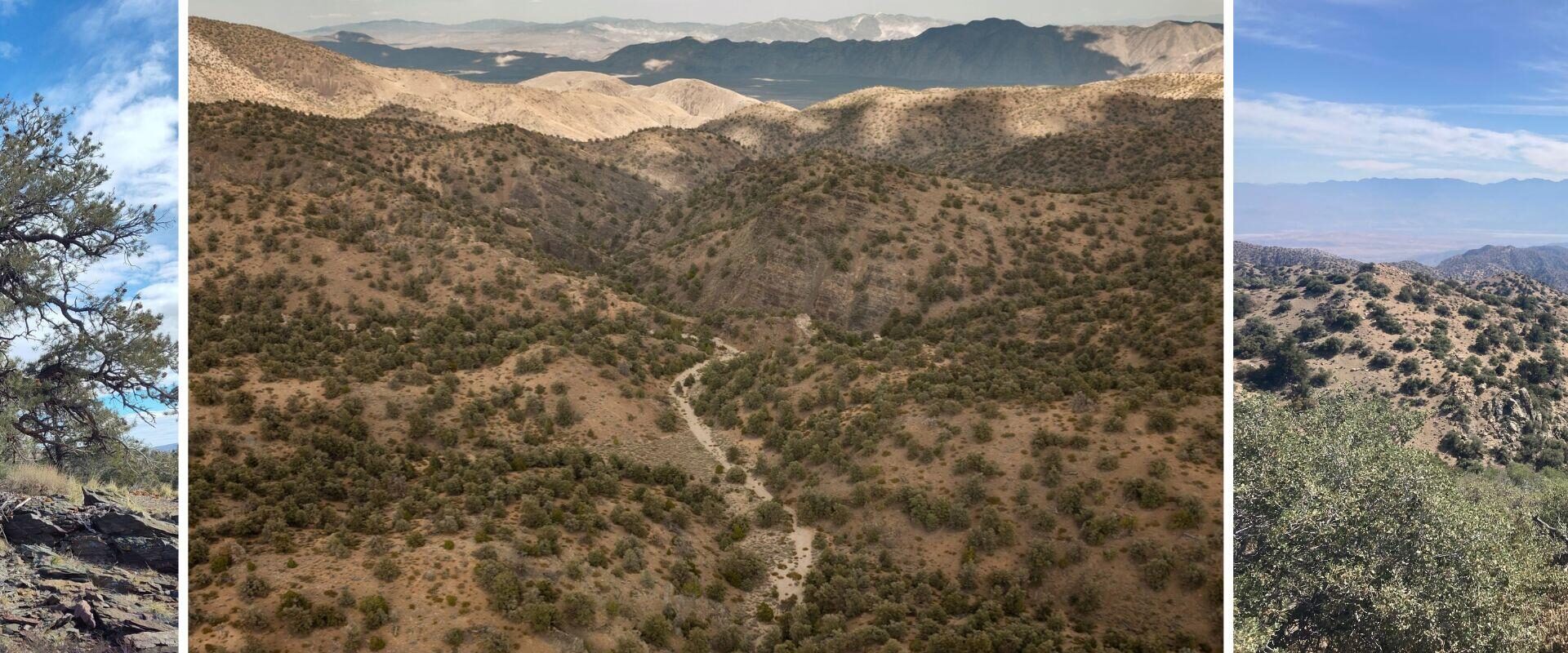
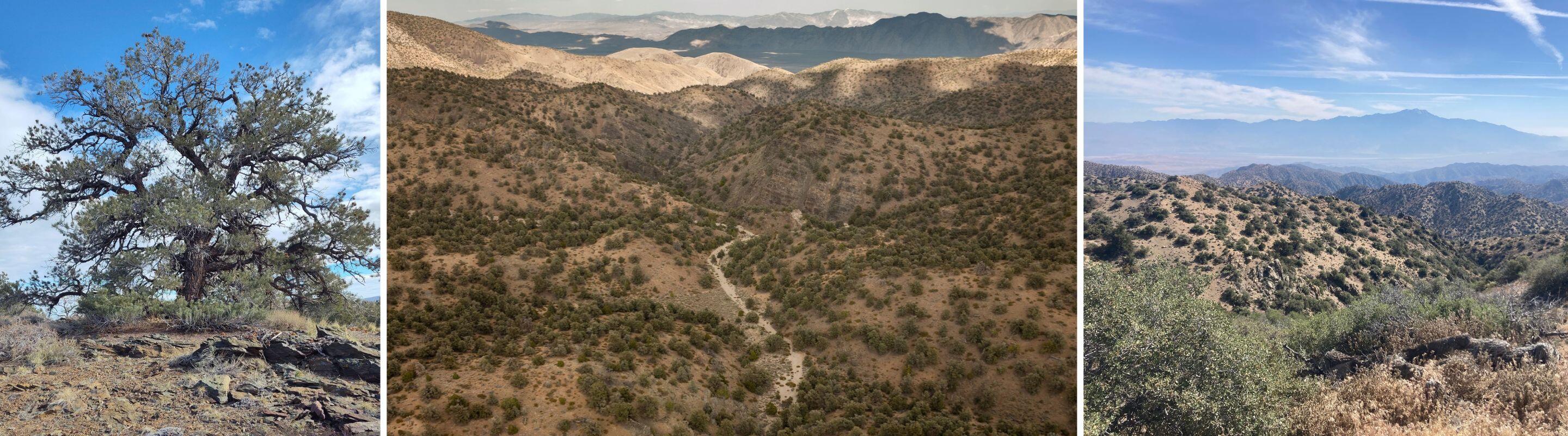
A collaborative, three-year project involving tribal nations, federal agencies, volunteers, and university researchers is informing stewardship of culturally important pinyon-juniper woodland ecosystems across the Eastern Sierra. Photos by Maggie Riley and Jan Rhoades (left), Andrew Brodhead/Stanford University (center), and Yarrow Syskine (right).
Across California’s Eastern Sierra, pinyon pines and juniper trees spread across the mid-elevation slopes of the American West. These hardy, short-statured trees are one of the most widespread vegetation types on federal lands, covering more than 100 million acres across ten western states.
Over the past decade, members of the Bishop Paiute, Big Pine Paiute, and Washoe Tribes—whose ancestors have tended these woodlands since time immemorial—have watched a troubling trend. One member of the Big Pine Paiute Tribe said that at Westgard Pass, the woodland looked as if fire had passed through, but there had been no fire. The needles were thin and browning, and the trees looked unhealthy and poor.
“Pinyon and juniper trees tend to occur at lower elevations than other types of forests,” explained Miranda Redmond, an associate professor in UC Berkeley’s Department of Environmental Science, Policy, and Management (ESPM). “They occupy some of the hottest and driest environments where trees can survive, so without these woodlands, our forested landscapes would be much smaller.”
For the last three years, Redmond has led the Pinyon Community Climate Action (PiCCA) Network, a collaborative project involving federal agencies, tribal nations, non-governmental organizations, and researchers from Stanford University. Funded by the California Climate Action Initiative, the project draws on Indigenous knowledge and Western science to understand how a changing climate is reshaping these woodlands and how communities can care for them.
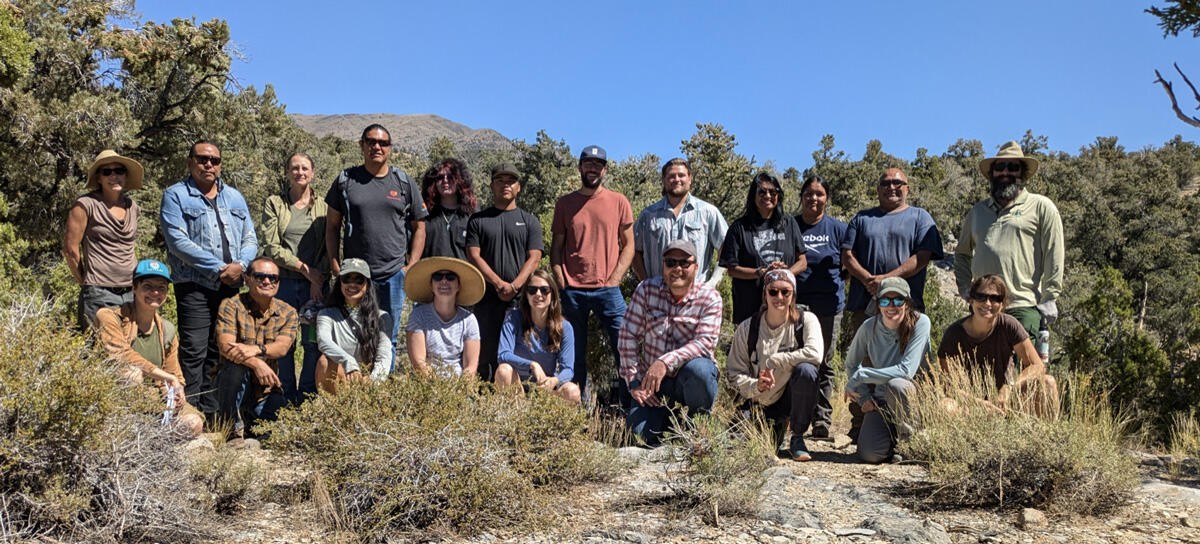
The Pinyon Community Climate Action (PiCCA) Network. Courtesy photo.
This week, project partners published the first study based on PiCCA research in People and Nature. More than 20 co-authors from 17 different organizations contributed to the publication. Diana Macias, a University of California President’s Postdoctoral Fellow in Redmond’s lab, served as the study’s lead author.
Drawing on data collected during Indigenous-led woodland monitoring and a household survey of Eastern Sierra residents, the study confirmed what tribal members had observed on the ground. Most trees appeared healthy, but three areas—all in places where tribal partners had already identified decline—had a high proportion of unhealthy trees.
The study also points to more than one path toward stewardship, running not only through formal education and climate knowledge but also through a personal connection to the land.
A contentious history
Pinyon-juniper woodlands grow in some of the hottest and driest places in the West. Their range runs from the Eastern Sierra and parts of Southern California east across Nevada, Utah, Colorado, New Mexico, and Arizona. Water is scarce, so they grow slowly.
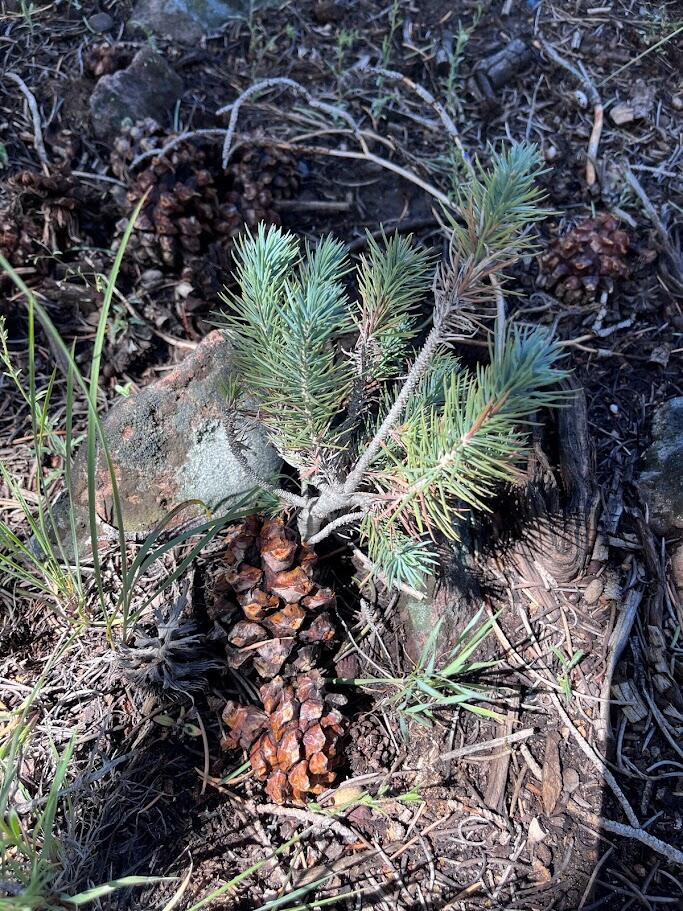
Pinyon seedling in Masonic Mountain. Photo by Diana Macias
“They are mosaics,” noted Macias, who said woodlands across the West vary in species mixes and densities. In California alone, pinyon-juniper ecosystems cover more than 3 million acres and provide habitat for bird and mammal species like pinyon jays and bobcats. Pine nuts harvested from pinyon trees are among the most culturally significant food resources in the United States, and in many areas, provide a critical income stream for Tribal communities.
Redmond points out that these landscapes hold the largest amount of mature and old-growth forest remaining in the United States. But she adds that their management has a contentious history: during the mid-to-late 19th century, Euro-American settlers harvested many pinyon-juniper forests to produce charcoal for mining operations, as well as for fuel and other purposes. More recently, land managers in some regions have focused more on restoring neighboring sagebrush and grassland ecosystems than on the woodlands, often to improve habitat for Bi-State sage-grouse. In some cases, this has meant removing pinyon and juniper trees in woodlands with strong cultural importance to tribes.
“In theory, some thinning may be warranted to promote woodland health,” Macias said, “but in practice that removal may have unintended consequences.” One potential consequence is that cheatgrass and other invasive grasses can spread in some cleared areas and change the fire cycle. Another is the loss of important habitat for pinyon jays and other wildlife.
“When you pair that with the loss of seed sources, death of older pinyon trees, and the declines in regeneration, you end up with woodlands that may not be able to replace themselves,” she added.
Within areas of Inyo National Forest, the number of dead pinyon pines jumped from fewer than 2,000 in 2021 to more than 70,000 in 2022, according to the Forest Service’s 2022–2023 monitoring report. Most tree deaths were concentrated in areas that are important for recreation and cultural use.
“There’s a big knowledge gap in terms of how we should steward these woodlands, especially in the context of global change and invasive species,” Redmond said. “No one wants to see older trees being cut, and at the same time, we also don’t know what the best path forward is to help ensure their perpetuity.”
Centering Indigenous knowledge
U.S. land management policies and decisions largely eschew Traditional Ecological Knowledge, the understanding Indigenous peoples have built over generations of living on and caring for the land, in favor of Western science. Redmond and Macias said that previous evaluations by other researchers found that ignoring it can lead to management outcomes that are “suboptimal, culturally misaligned, or ecologically ineffective.”
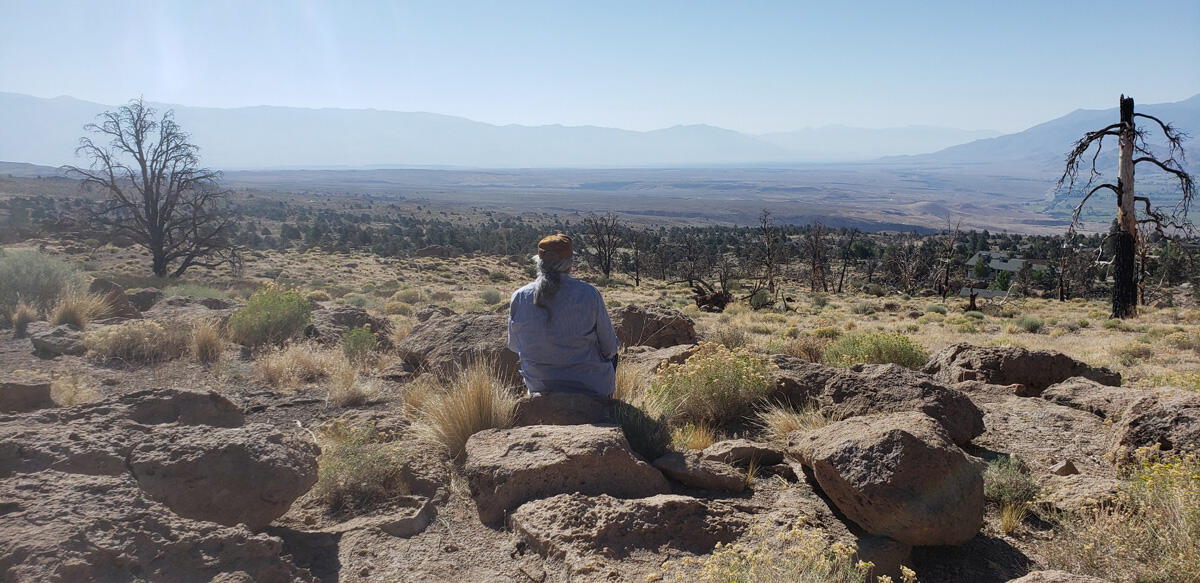
Monty Bengochia near Swall Meadows looking down at Round Valley and the Owens Valley. Photo by Heather Stone.
Tribal members who have stewarded the same groves for generations saw the losses firsthand and began organizing their own monitoring, even as land managers were slower to respond. Monty Bengochia—former tribal historic preservation officer, tribal Environmental Protection Agency board member, and tribal council member for the Bishop Paiute Tribe—collaborated with tribal and land managers to create the Tribal Citizen Wunupu (Pinyon Pine Nut Tree) Survey in 2018 to track changes in pinyon grove health and pine nut harvests. That work continues under Thomas Gustie, the current environmental director for the Bishop Paiute Tribe and a co-author of the study.
The PiCCA Network met quarterly from October 2023 to May 2026 to co-develop a study grounded in Indigenous sovereignty. Their efforts built on the Wunupu survey, cultivating community-based networks that uplift Tribal-led initiatives and solutions, and coordinating community monitoring days to identify areas of declining woodland health for future stewardship and reforestation. Members of the Bishop Paiute and Big Pine Paiute Tribes led monitoring, supported by volunteers from Friends of the Inyo and students from Palisade Glacier High School, through a mix of open community days and Tribal-member-only days.
At each grove, monitors estimated each tree’s age from its crown and bark, recorded its health by the share of brown or dead needles, and noted stress indicators like foliage disease or the presence of dwarf mistletoe, a parasitic plant that grows on pine trees. They also estimated its cone production by counting as many green cones as they could in 30 seconds.
PiCCA-supported monitoring efforts between 2024 and 2025 found that cone production varied widely across sites, ranging from zero to as many as 60 cones per tree. Trees in poor condition produced 50% fewer cones than healthy trees, corroborating what tribal partners and local stewards had observed. Survey results also showed that older, mature trees produced about 60% more cones than younger trees, highlighting the importance of maintaining existing stands alongside reforesting.
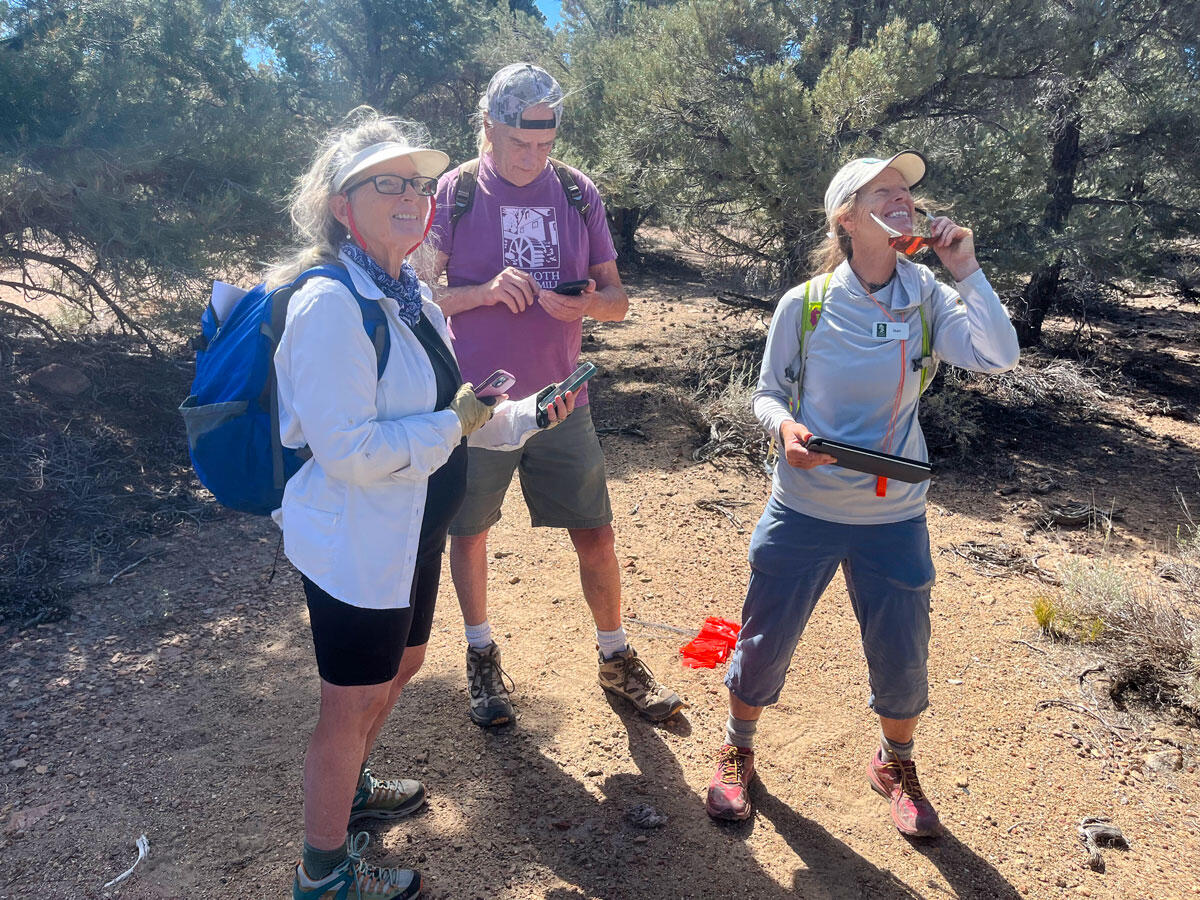
Trail ambassadors with Friends of the Inyo participate in a community woodland monitoring field day. Photo by Diana Macias.
More than 80% of surveyed trees looked healthy, but researchers identified three areas with a high share of unhealthy trees. These included groves in Westgard Pass, which matched places where tribal partners had already reported decline. “It aligns exactly with traditional ecological knowledge, in that it supports those on-the-ground observations of areas that have been experiencing decline over the past 10 years,” Macias said.
Redmond said PiCCA built its data infrastructure around tribal sovereignty. Each tribal environmental department collects, stores, and controls its own data, and chooses what to share with others. Berkeley researchers only hold data gathered by other students and community volunteers. Furthermore, locations made publicly available, such as in the People and Nature study, are aggregated and shifted so no individual grove can be pinpointed.
Tracing pathways to care
The researchers also wanted to understand how people across the region relate to the woodlands, information Macias said can help tribal and federal land managers understand what matters to the people who live there. About 90% of the Eastern Sierra is publicly managed, and any landscape-scale work requires agencies and tribes to cooperate across jurisdictional boundaries, Macias said
A separate regional household survey led by Stanford researchers Paul Burow and Gabrielle Wong-Parodi as part of the PiCCA project sought to determine how more than 700 residents in three Eastern Sierra counties relate to the woodlands. When shown a photo, 69% of respondents correctly identified pinyon-juniper woodland. Macias and team found that political ideology and how climate-informed people considered themselves best predicted how much residents reported caring for the environment.
Among residents who considered themselves least informed about climate change, those who recognized the woodlands reported a stronger sense of responsibility for the environment. “It’s a small difference, but it suggests that local, place-based familiarity may be one way to cultivate care,” Macias added.
Surprisingly, the study showed the opposite with education. Respondents with a four-year degree or higher were the best at picking out the woodlands from a photo, yet they scored lowest on cultural connection to and personal responsibility for the land. That held even after the researchers controlled for gender, politics, and how long people had lived in the area.
“People come to care for the land in many ways, whether through school or through knowledge passed down in families and communities,” Macias said. Among the project’s tribal partners, she has seen that knowledge shared across generations. “There’s a lot of embedded knowledge in going out to the land together and doing activities together.”
Redmond added that their results suggest that people don’t need formal training in climate science to feel that pull. “Getting people back onto the land leads to this feeling of connection and, subsequently, responsibility to care for the land.”
From data to stewardship
Macias said the study makes two arguments. First, decision-makers should integrate the care and management practices that tribes have used on these landscapes for thousands of years, with tribes sharing authority over management decisions. Second, for the broader public, a sense of responsibility for the woodlands can begin with participation, such as joining community-based monitoring.
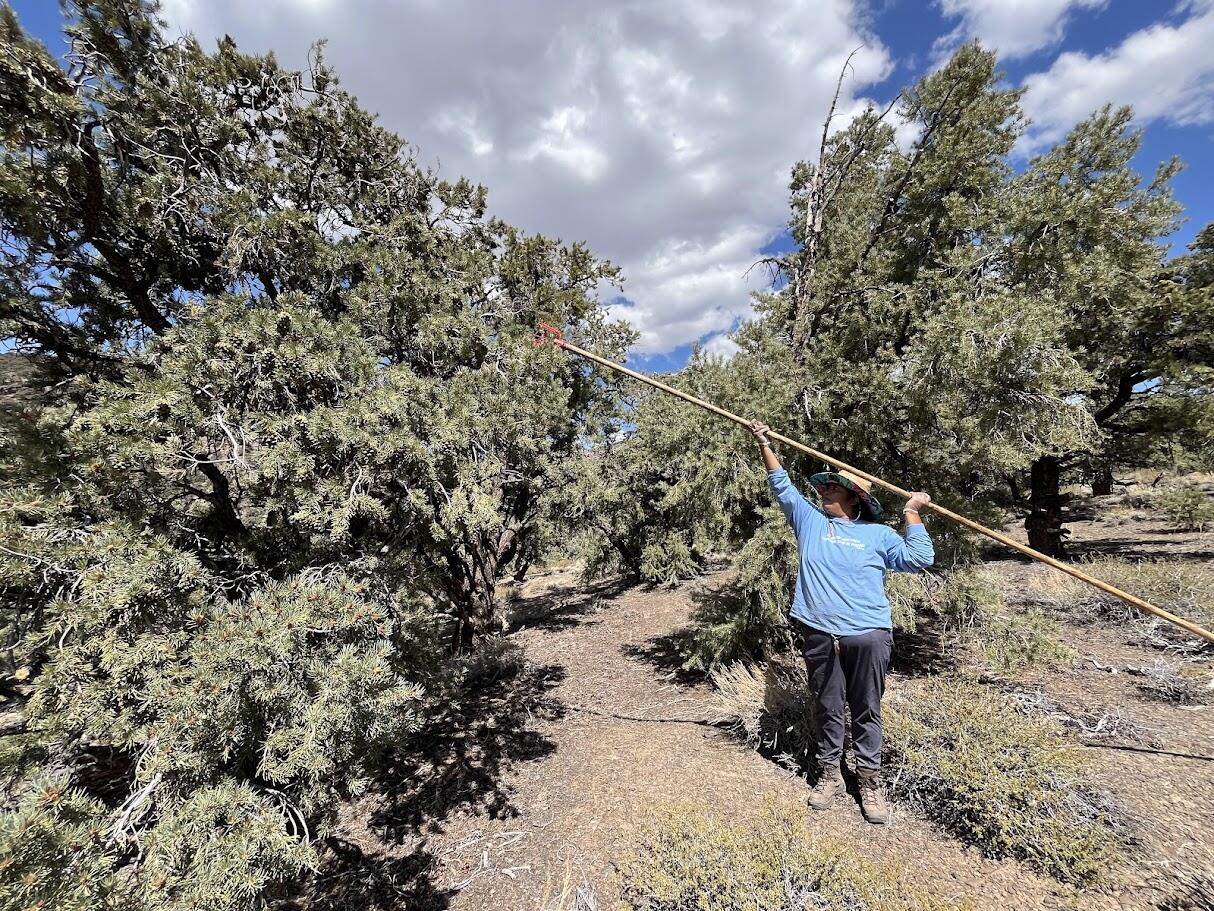
Ana Bacoch picks pine nuts in the White Mountains of Inyo National Forest. Photo by Diana Macias
That kind of care is already underway. The Big Pine Paiute Tribe of the Owens Valley used project funding to hire Ana Bacoch as a pinyon woodland specialist, who paired monitoring efforts with cultural programming. Families joined the crews on certain monitoring days, and data collection made room for storytelling and sharing memories of camping or hunting in familiar groves. In 2025, tribal members learned to make an Eho, a traditional pine nut harvesting pole, at a workshop. That fall, they used them to gather pine nuts for a Tuba Nuga (pine nut dance) and learned how to cook Ikibe (pine nut mush).
“We wanted to wake the mountains back up and show them they are appreciated. They are wanted. Their resources are still valuable to us…,” Danelle Gutierrez, tribal historic preservation officer for the Big Pine Paiute Tribe, told the researchers. “And to wake up that spirit among the people. To get our people back up in the lands, get the song going, get the language going for them to build memories.”
Land managers from Inyo National Forest and the Bureau of Land Management’s Bishop Field Office were also critical to this effort, and plan to use the woodland monitoring data to inform pinyon pine restoration efforts and conduct follow-up assessments with forest health specialists to determine specific causes of woodland decline.
In the Westgard Pass area, the Big Pine Paiute Tribe is reforesting land that was excavated a little over a decade ago for satellite arrays used in a university research project. The tribe’s pinyon woodland specialist is planning and carrying out the restoration, and PiCCA crews surveyed the site beforehand. Redmond said their work shows the importance of financial and institutional support in community-engaged research. PiCCA’s funding has since ended, and the team is seeking support to continue its work with tribal partners.
Macias sees proof of their success in the groves, where families and community members kept visiting and checking in on pinyon groves long after the training sessions ended. “It’s not just about data,” co-author Thomas Gustie said. “It’s about the relationships people have with the land and with each other.”
The authors dedicate this study to Bengochia, who passed in 2022, to honor his legacy of environmental care and stewardship and to recognize his contributions to making woodland monitoring a reality.
Read More