
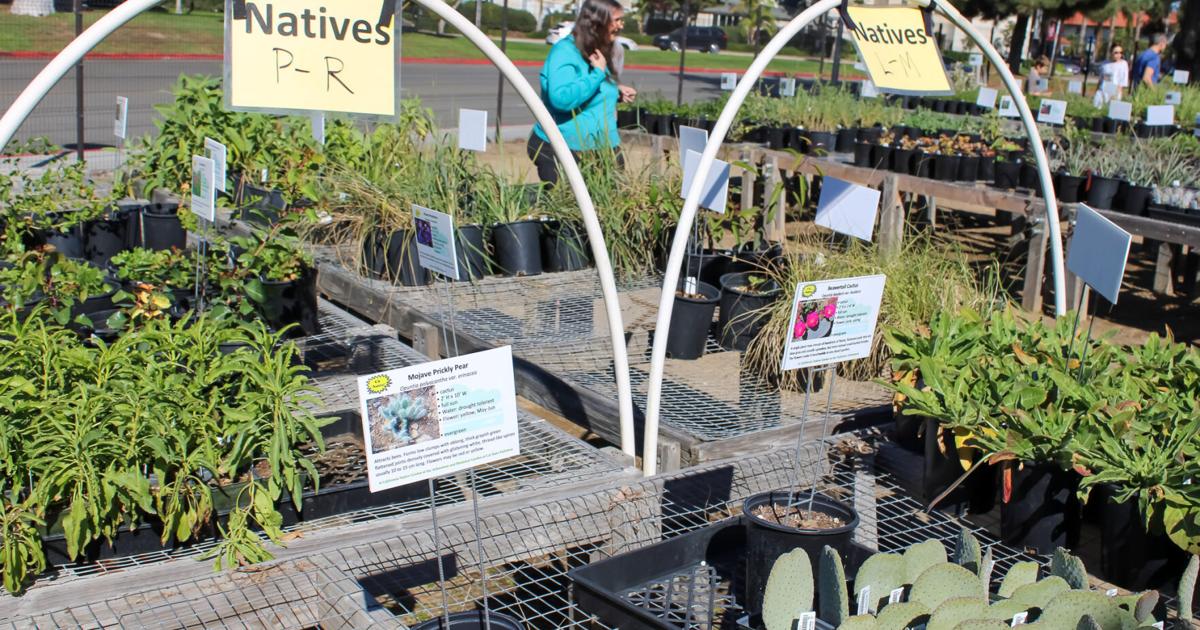
Eager shoppers waited at the Cal State Fullerton Arboretum this weekend for the much anticipated annual California Native Plant sale. The line out of the front gate was extensive as a crowd gathered early, awaiting the Friday afternoon opening.
Patron Christine Campbell described it as the “perfect weather to be shopping outside,” as she filled her cart with California white roses and buckwheat plants. Campbell took the trip over from Thousand Oaks to spend the day with her mother, having heard about the event online.
Aisles of California native plants were filled with customers wheeling around wagons available at the entrance. Additionally, the arboretum sold some seasonal fruit pickings by the welcome booth, such as persimmons.
The Living Collections Curator at the Fullerton Arboretum Greg Pongetti said all of the proceeds from the sale go directly back to the arboretum, with many customers such as Campbell and her mother looking to “support a local cause.”
Patron Amanda Gaskin has had her California-native yard for about five years now, noting that she replaced the grass on her home’s hillside to fill it with native plants. Water companies across SoCal offer rebates for saving water, including ditching the grass yards for turf or in Gaskin’s case, a “beautiful native garden.”
Gaskin said along with the numerous benefits to having a native yard, she became interested in attracting native birdlife. The Gooseberry plant she placed in her cart has a red “trumpet-shaped” flower, which attracts hummingbirds.
Most of the workers at the event consisted of volunteers and staff who answered questions and provided information around every corner. Additionally, the sections had title cards for each of the plants that detailed their watering and sunlight needs, making it easy on those new to these plant varieties.
Adam Srouji, a fifth-year biology major and one of the interns working for the arboretum in the Engaging Environmental Experiences program, manned a booth to the side of the plant sale. These internship opportunities offered through the arboretum are extensive, ranging from caring for the fruit fields to climate impact assessments and caring for the Heritage House on campus.
Srouji had examples of his team’s work in composting and stated this process helps the on-site growing as compost can provide plants with necessary nutrients such as nitrogen, potassium and phosphorus.
He also described the team’s upcoming composting workshop, “Composting for the Environment and You,” which will teach attendees how to start composting, detailing the things they can compost and the different tools needed.
The plants found at the sale were born from fostering the plant from its seed or “cutting propagation,” which Pongetti described as when they “cut a little stem off and root that and then grow that into a potted plant.” The plants can take between six months to some of the larger trees about two years to be ready for the sale. The work for the sale starts early.
“We’re actually doing a lot of our seed sowing and things of the native plants that’ll be ready for the next year’s sale right now,” Pongetti said.
While the once-filled aisles of the sale quickly began to disappear in shopping carts, the sale ended Sunday, Nov. 9. While there might not be many left, Pongetti added that the remaining plants will go up for sale on the Arboretum website for those not able to make it in person.
Follow-up sales at the arboretum will be held on the first weekend of December and the second weekend of January.