
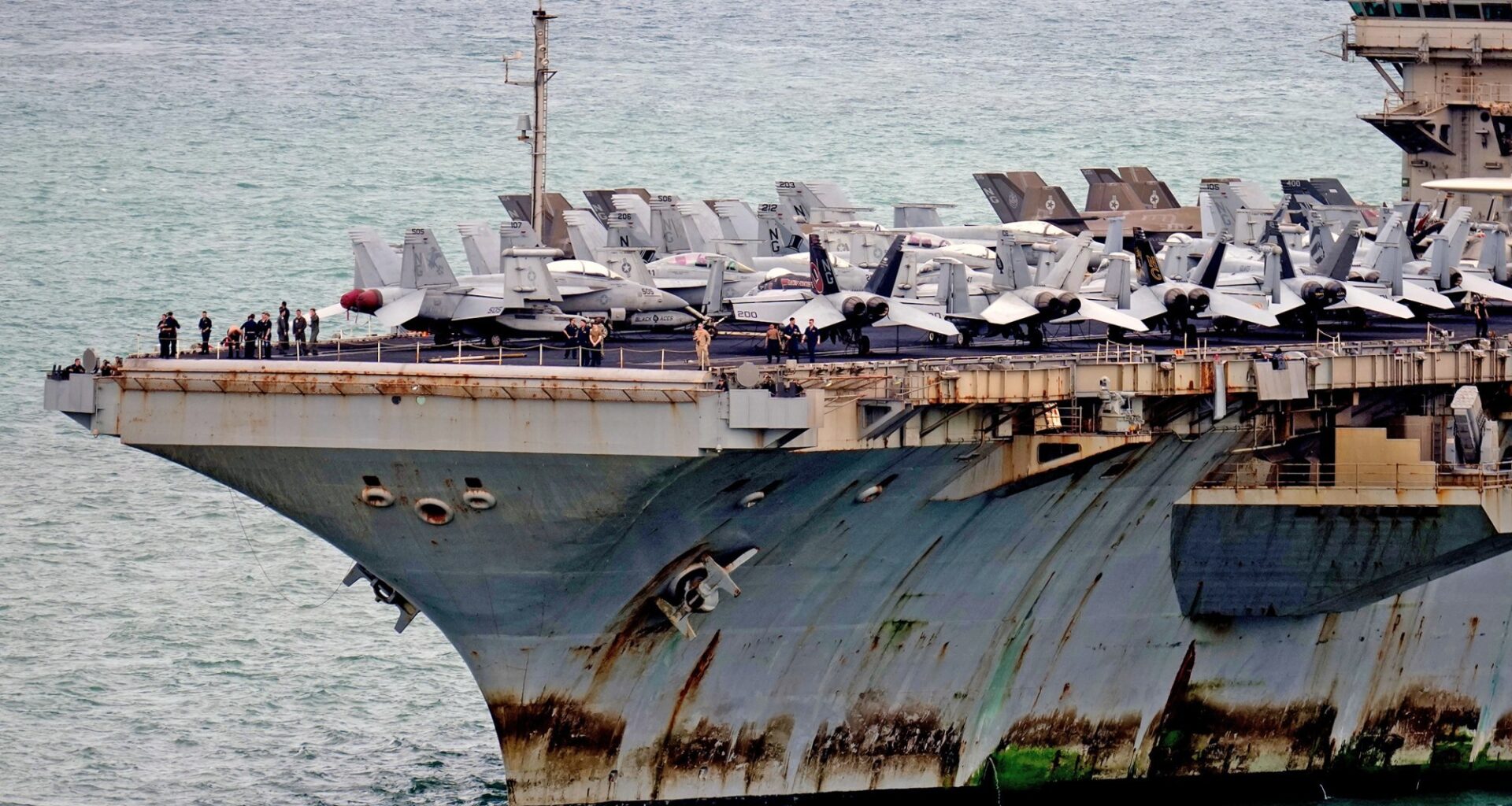
A joyous homecoming awaits the carrier USS Abraham Lincoln, which is about to return to San Diego after one of the longest and most grueling deployments since naval guns fell quiet at the end of World War II.
When they get home on Thursday, the ship’s crew also can expect to be flooded with questions about the headline-grabbing problems that plagued the nearly 11-month mission.
There were shortages of food and other goods due to a damaged supply chain. The carrier went 265 straight days without a port call because there wasn’t a secure pier available in the combat zone. Reports also surfaced that many crew members were having mental health issues, including some who attempted suicide.
The Lincoln was also delayed in returning home because it had to wait for a relief ship to arrive.
The crew will be greeted by a powerful new supporter when it reaches Naval Air Station North Island.
Vice Adm. Marc Miguez took command of the San Diego-based 3rd Fleet in late July and has found much to admire about the Lincoln, a ship that costs about $1.5 million a day to operate at sea.
He told the Union-Tribune that the Lincoln and its escort ships withstood attacks from Iran that were more far-reaching than most people knew. Miguez also defended the Lincoln’s decision to forgo port calls, saying it was the right thing to do militarily. He challenged reports about the severity of the supply chain problem. And he said the crew’s morale is much higher than it has been depicted, largely because sailors are proud of the role they played in the conflict.
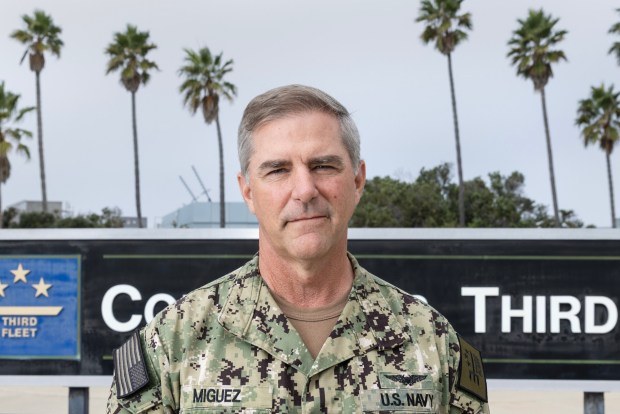 San Diego, CA – Vice Admiral Marc Miguez on Thursday, Oct. 1, 2026, at the headquarters of the United States Navy Third Fleet in San Diego, CA. (Luke Johnson / The San Diego Union-Tribune)
Miguez, a former naval flight officer, has deep experience with such difficult and chaotic missions.
In 2023 and 2024, he led the USS Eisenhower Carrier Strike Group on what began as a routine deployment expected to last six to seven months. Things quickly changed. The group was sent to the Middle East to protect international shipping lanes that were under attack by Iranian-backed Houthi forces in Yemen. Quickly, the “Ike,” as the ship is called, was in the midst of one of the fiercest running sea battles that American warships had encountered since World War II. The mission ended up lasting nine months.
The Eisenhower’s fights with the Houthis received far more news coverage than the Lincoln group’s combat, obscuring some important points.
“I don’t have the exact number, but they were under attack, probably more, I would say, than I was under attack with the Eisenhower,” Miguez said.
“The threats that they were exposed to were probably more of a higher capacity that the Iranians were throwing at them.”
He also said it appeared that Iran was getting information on how to target the Lincoln carrier group, making the situation more dangerous.
Early on, Iran announced that it had struck the Lincoln with missiles and drones, a claim that spread quickly on social media. The Pentagon pushed back, saying no such thing happened.
Still, there were white-knuckle moments for the U.S. warships, particularly when it appeared that a missile was coming their way.
“You have to make an assessment: Is that targeting me or is that targeting something I’m defending?” Miguez said.
The Lincoln was primarily protected by the destroyers USS Frank E. Petersen Jr. and USS Michael Murphy, as well as the San Diego-based USS Spruance, which is still on patrol.
The intensity for the crew of the Lincoln and its escorts only grew as living conditions deteriorated, with reports that many were suffering from exhaustion and mental health issues, and possibly suicidal ideation.
U.S. Rep. Sara Jacobs of San Diego visited the Lincoln far offshore on Sept. 7 to investigate the matter. The Democratic Congress member later issued a statement saying that sailors and Marines told her about “struggles to wash clothes, get medicine and health care, and eat enough food.”
“The blame lies squarely with President Trump who knowingly launched a war without the required planning and strategy needed. He put these service members in the position where the conditions were so horrific that some attempted suicide.”
President Donald Trump had earlier said that the Lincoln’s deployment “was not nearly long enough.”
Family members of the Lincoln crew raised the issue with Acting Navy Secretary Hung Cao on Aug. 6 during an emotional town hall meeting at North Island. The following week, Cao seemed to downplay the matter in a statement, saying “the media are trying to paint our warriors as victims.”
U.S. Sen. Kristen Gillibrand of New York pressured Cao for more information. He replied in a Sept. 22 letter, saying, “There have been a total of eight suicide attempts across the strike group — this number includes the Lincoln crew and Sailors from the carrier air wing, strike group and destroyer squadron staff, escorting destroyers and all embarked aviation squadrons.”
Miguez told the Union-Tribune that, “I don’t know the facts behind these eight (suicide) attempts … But I do know that when we make an encounter with a sailor we … write it down and log it because we want to track that sailor through the mental health treatment process and try to get them back in the green.”
He said that a review of the matter will be part of an extensive debrief the Lincoln will conduct after the deployment ends.
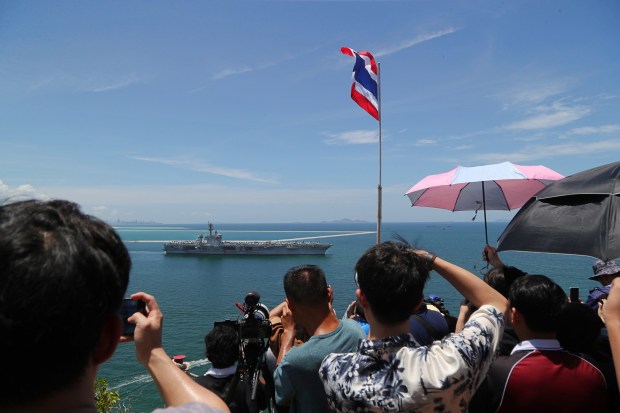 The USS Abraham Lincoln aircraft carrier departs Laem Chabang Port on Sept. 6, 2026, in Si Racha, Thailand. Nearly 5,000 sailors and Marines aboard the carrier took shore leave in nearby Pattaya. (Thananuwat Srirasant/Getty Images)
Miguez also told the Union-Tribune that the Lincoln group quickly found a way to deal with delays in getting supplies. Iran had destroyed a key U.S. logistics and supply center in Bahrain, forcing ships to use depots that were located much farther away.
I was “sitting right next to the (chief of naval operations), sitting right next to the secretary of the Navy,” he said. “It was of high importance to fix those logistical challenges that are basically quality-of-life things that were reported (and) were taken care of.”
The Lincoln wasn’t without advantages while dealing with all of these problems.
“I know where Kadena Airfield is in Japan,” Miguez said. “And I know where it’s going to be tomorrow. What I don’t know is where the USS Abraham Lincoln’s going to be an hour from now. That’s the versatility that our naval force provides.
“It’s extremely hard to hit a moving target at sea.”
For the moment, that’s a back-seat issue. Miguez is focused on comforting the Lincoln’s crew as they file off the ship. He is also focused on the health and security of the carrier USS Theodore Roosevelt, which left San Diego for the Middle East on Sept. 27.
“All these sailors went through something,” said Robert Thomas, a UC San Diego lecturer and retired vice admiral who served as commander of the Navy’s 7th Fleet.
“But they’re going to recover from this.”