
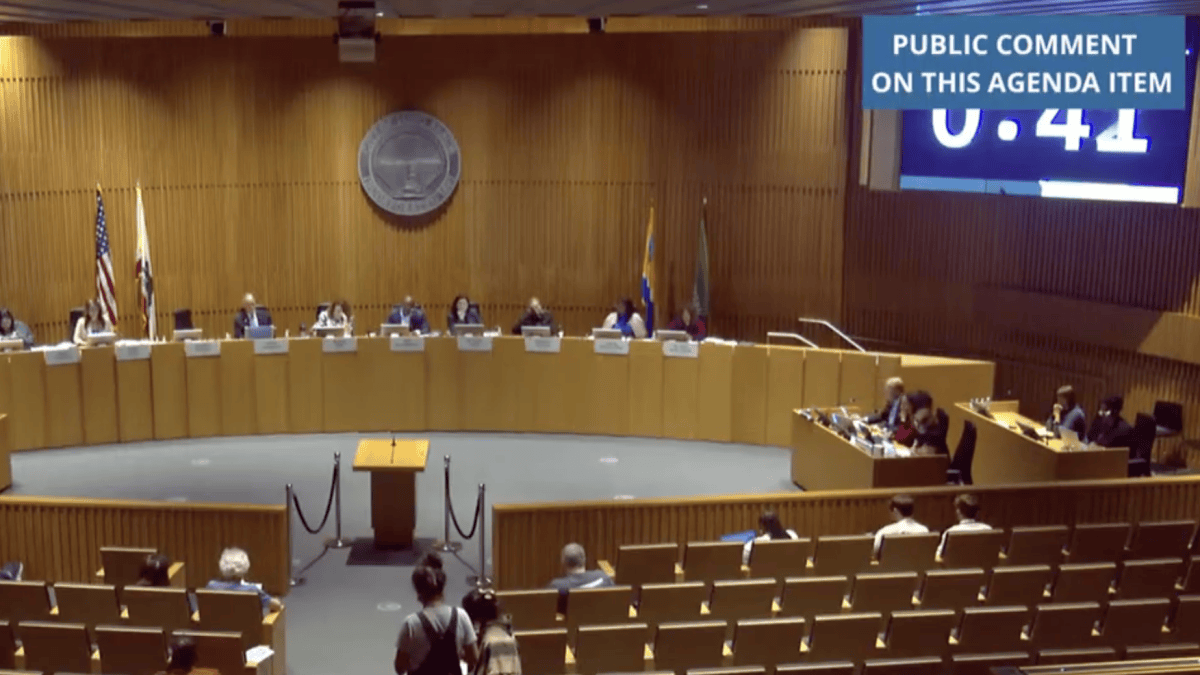
Opposition is growing over a Long Beach City Council plan that would limit when residents can speak at council meetings.
City Councilmember Megan Kerr announed Friday in her weekly district email she no longer supports the ordinance change. A new petition has gathered nearly 300 of signatures in just days. Residents have turned out at Council meetings to oppose the changes.
Councilwoman Cindy Allen is publicly urging concerned residents to show up at City Hall before the Council takes its next vote. Former Councilwoman Rae Gabelich is also urging residents and neighborhood leaders to fill the Council chamber next Tuesday.
At the heart of the fight is a simple question: How much opportunity should residents have to speak directly to the people they elected?
The Long Beach City Council normally meets three Tuesdays a month.
Those meetings are among the few regular opportunities for residents from across the city to stand before the full Council, on the public record, and tell elected leaders what they think.
Now, seven councilmembers have voted to move forward with a plan that would change how that happens.
Councilmembers Mary Zendejas, Daryl Supernaw, Megan Kerr, Suely Saro, Roberto Uranga, Tunua Thrash-Ntuk and Joni Ricks-Oddie voted to move the proposal forward in September. Councilwomen Cindy Allen and Kristina Duggan voted no.
Under the proposed rules, most public comment would be moved into one period near the beginning of the meeting and could be capped at 90 minutes. Residents generally would no longer be able to wait for an individual agenda item to come up, hear the discussion and then address councilmembers about that issue before they vote.
Public hearings would remain separate.
Supporters say the change would save money and allow residents to speak earlier instead of waiting hours at City Hall.
Opponents say the question is bigger than meeting efficiency. They say elected officials are there to hear from the people they represent, even when what those people have to say is critical, repetitive or uncomfortable.
“This is our opportunity to talk to them”
Long Beach resident Leslie Goldman says that is why she decided to start a petition opposing the changes.
“I’ve never done one,” Goldman told NBC4. “And eventually I just thought, this is too big, I’ve got to try.”
Goldman says residents have long complained that council members fail to return calls or emails.
“Our real — our only opportunity is to go to council meeting,” Goldman said, and tell councilmembers, “I wanna tell you what’s going on in my neighborhood.”
Under the current system, residents can also speak as individual agenda items come before the Council.
Goldman says they can hear what city staff says, hear councilmembers debate the issue and then make their case before the Council votes.
She says the proposed system breaks that connection. Someone could speak near the beginning of a meeting about an issue councilmembers don’t discuss until hours later.
“Are the council members going to remember what people said” hours earlier, Goldman asked.
She said separating those comments from the actual decision “squashes our ability to participate in local government.”
Why change public comment now?
Part of the answer is money and a new state law intended to expand public access.
California Senate Bill 707 requires cities like Long Beach to provide a way for residents to participate remotely in public meetings, but it’s not funded by the state. Long Beach began offering that option this summer and the additional access comes with an additional cost.
City Clerk Monique De La Garza told councilmembers that implementing SB 707 is expected to cost Long Beach about $487,000 this fiscal year — roughly $150,000 more than the city budgeted. The additional cost includes employees needed to manage remote participation, along with Spanish and Khmer interpreters who may have to remain on duty as meetings stretch into the evening.
De La Garza told councilmembers that can result in “a huge amount of overtime throughout the fiscal year.”
City officials say moving most public comment to one period near the beginning of the meeting could allow some of those employees to leave earlier. The city estimates that could free up roughly $150,000 — about the same amount it says implementation of SB 707 is running over budget.
But SB 707 does not require Long Beach to eliminate most public comment on individual agenda items. That is a separate policy decision being considered by the City Council.
Could Long Beach save the money another way?
NBC4 asked the City Clerk a different question.
If overtime is part of the problem, could the city reduce those costs by changing employee schedules on Council meeting days instead of changing when residents can speak?
“Any alternative scheduling arrangement must comply with employees’ Memoranda of Understanding (MOUs), the Fair Labor Standards Act (FLSA), and the negotiated 5/40 work schedule,” De La Garza said in a statement to NBC4.
She said there is also the work those employees perform during the day.
The Clerk’s Office has 16 full-time employees and one part-time employee. Its public counter is open from 7:30 a.m. to 4:30 p.m., providing services including passports, civil ceremonies, domestic partnerships and accepting damage claims and legal documents.
The office also supports more than 35 boards, commissions and other meeting bodies throughout the week.
“Because staff must be available to provide these services during regular business hours, while also meeting Council and other meeting responsibilities, adjusting employees’ schedules on Council meeting days is not currently feasible without potentially reducing public service or affecting the Office’s operational effectiveness,” De La Garza said.
She said the city has not stopped looking for other ways to save money.
“The Office continues to evaluate efficiencies that comply with applicable requirements and do not compromise public service or increase overall City costs,” De La Garza said.
The state law at the center of the debate was authored by State Sen. María Elena Durazo. In a statement to NBC4, Durazo emphasized that her law was intended to expand access — but also pointed out that decisions about how public comment is structured remain largely in the hands of local governments.
“SB 707 was about ensuring every Californian, regardless of work schedule, disability, or distance, can participate in local government by phone or video,” Durazo said. “The Brown Act has long allowed local governments to structure public comment well before SB 707 existed.”
Durazo did not directly say whether she supports or opposes the specific changes being considered in Long Beach.
“I encourage local leaders across California to foster open, inclusive, and meaningful public participation,” she said.
Goldman said SB 707 “does not require you to move our comments to the beginning of the meeting or to change our time limit.”
Supporters say people shouldn’t have to wait all night
Cost is not the only argument supporters make.
Mayor Rex Richardson and Councilwoman Suely Saro argued during the Council debate that moving public comment to a set time near the beginning of meetings could make it easier for residents who cannot spend hours waiting for an agenda item to come up.
“Having a dedicated time certain for public comment, some families would certainly appreciate that,” Richardson said.
Saro said she was thinking about residents who may not be able to stay at City Hall late into the night.
“I don’t ever see my residents staying here later at night in order to make sure their comments are made, because they want to make it in the beginning and they want to be heard and then they leave,” Saro said. “And I want to make sure I respect their time, they know their time is certain when they speak.”
Five other councilmembers — Mary Zendejas, Daryl Supernaw, Megan Kerr, Roberto Uranga and Joni Ricks-Oddie — joined Saro and Tunua Thrash-Ntuk in voting to move the proposal forward.
But opponents point out the Council already has another option: agenda items can be taken out of order.
That means if councilmembers know an item has drawn young people who have school, elderly residents, working people, families or others who cannot wait several hours, the Council has the ability to move that item higher on the agenda and hear it earlier.
Goldman points to that existing flexibility in questioning why the city needs to eliminate most item-by-item public comment.
There is also a new option. SB 707 allows residents who cannot remain at City Hall to participate remotely.
Opponents question why making it easier for some residents to speak earlier requires taking away the opportunity for others to address councilmembers when individual agenda items actually come up.
“A slap in the face”
The opposition is no longer coming only from residents. Former Councilwoman Rae Gabelich, who served from 2004 to 2012, is urging people to fill City Hall before the next vote.
Gabelich says she has been speaking before the Council as a resident and advocate since 1985. She said publicly separating public testimony from individual agenda items “a slap in the face.”
She also described the proposal as “an insult and a threat to democracy as we have known it.”
Gabelich says she believes public comment is not simply about getting a few minutes with a microphone, she said publicly it is about when elected leaders hear what residents have to say.
Long Beach has been here before
There is another piece of City Hall history that raises questions about the current debate.
In 2011, then-Councilman Robert Garcia, who later became mayor and is now a member of Congress, joined Councilwoman Gerrie Schipske in pushing an Open Government Initiative.
Their proposal declared: “Public input is an invaluable part of the political process, particularly at the local level.” Their goal at the time was to give residents more ways to participate.
They proposed allowing online public comment on all City Council agenda items so people unable to attend a meeting could still make their voices heard.
NBC4 asked Garcia what he thinks of today’s proposal and whether limiting most public comment to one period is consistent with the open-government principles he advocated while serving on the Council. We also asked whether he still believes residents should have an opportunity to comment on individual agenda items.
Garcia’s office did not respond by NBC4’s deadline.
Who gets to be heard?
A similar proposal failed in June after residents turned out against it. It returned in September.
This time, Councilmembers Mary Zendejas, Daryl Supernaw, Megan Kerr, Suely Saro, Roberto Uranga, Tunua Thrash-Ntuk and Joni Ricks-Oddie voted to move it forward. Councilwomen Cindy Allen and Kristina Duggan voted no.
The ordinance is scheduled to return Oct. 6 as Item 29 on the City Council agenda. That would be the ordinance’s first reading. If approved, it would return at the next regular Council meeting for a final reading.
But for Goldman, the debate is not really about Zoom, overtime or how quickly elected officials can get through an agenda. It’s about whether residents feel their government is listening to them.
She says many already don’t.
“We feel left behind, we feel ignored, we feel disrespected,” Goldman said.
She acknowledges elected officials may get tired of hearing complaints.
“If you don’t want us to complain, then listen to us and do better,” Goldman said.
The City Council normally meets three Tuesdays a month. For some residents, those meetings are the one place where they know their elected representatives are sitting in front of them and listening on the public record.
The question before the Council now is how much of that opportunity residents will continue to have.