
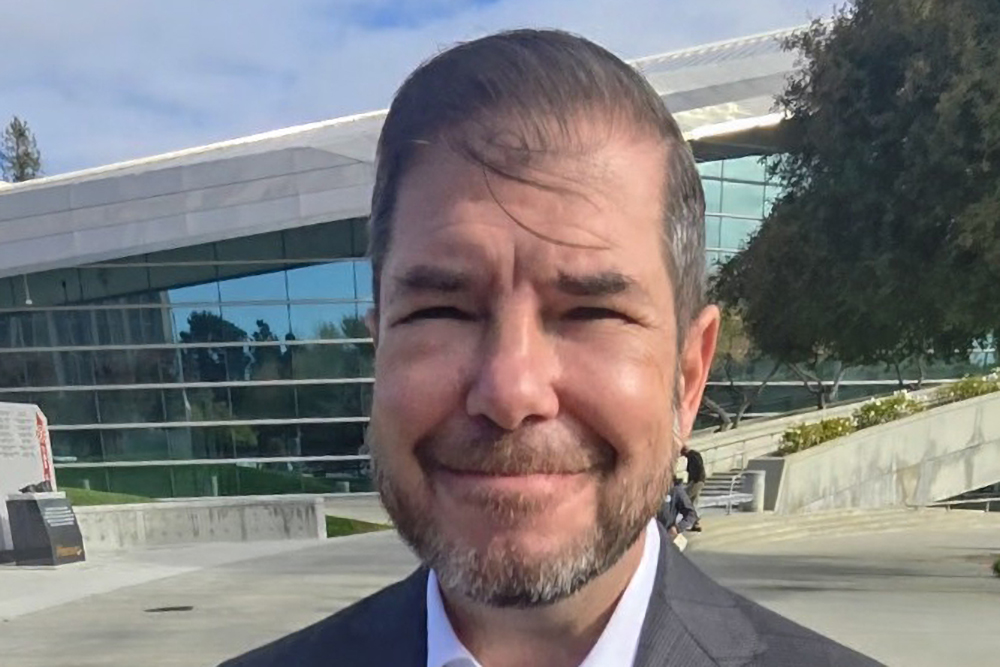
 Dr. Joaquín Arambula. Photo by Bob McCloskey
The Alliance recently sent out a questionnaire on housing and homelessness to all 2026 Fresno City Council candidates; Robert Fuentes and Naindeep Singh in District 1, Joaquín Arambula and Keshia Thomas in District 3 and Nav Gurm and Ariana Martinez Lott in District 7.
We received one response, from current District 31 assemblymember and District 3 candidate Dr. Joaquín Arambula.
Dr. Joaquín Arambula on Housing and Homelessness
Alliance: On the availability of affordable housing, 46 percent of U.S. renter households are cost-burdened, paying more than 30 percent of their income on rent. Nearly one-quarter are severely cost-burdened and pay at least half their income on rent. In Fresno, many renters pay more than half of their monthly income on rent. The lack of supply, especially for those with the lowest incomes, has only made this problem worse. What would you do to encourage the production of more affordable housing in Fresno? Do you support rent stabilization (rent control)? Will you support further funding for eviction protection? Will you support funding for rental assistance?
Dr. Arambula: Fresno’s affordability crisis requires both more housing and stronger renter protections. Building enough housing takes years even when everything goes right, so renters need relief now.
Production — build affordable housing faster and at lower cost. I will push to streamline density bonus and ADU (Accessory Dwelling Unit) approvals and expand incentives so affordable and mixed-income projects clear permitting faster. I will also push to streamline permitting approvals at City Hall, to reduce the time and cost of producing new units. I would look into dedicating ongoing city housing funds to leverage Low-Income Housing Tax Credits. Fresno’s own housing strategy shows what’s possible when the city puts real money behind production.
Eviction protection funding — Very few Fresno tenants facing eviction have lawyers, while most landlords do. I support continued funding of advice and legal assistance so tenants’ ability to remain housed does not depend on their income.
The lack of affordable housing is a huge problem for many households in Fresno. Families are paying too much of their scarce income for housing. I would encourage the production of more affordable housing in our city, especially in my district.
Alliance: On mobility and discrimination, many low-income families face barriers to moving to high-opportunity areas, including discrimination based on source of income and lack of access to housing assistance. What actions would you take to encourage mobility and stop the sources of income discrimination?
Dr. Arambula: I oppose discrimination and believe everyone should have access to high-opportunity areas. We must also improve Fresno’s urban core so residents need not leave for better schools or safer streets.
Source of Income Discrimination—In 2020, I supported SB 329, which bars landlords from rejecting tenants who use housing vouchers or other public rental assistance. I would urge the Fair Housing Council of the San joaquín Valley to routinely test local listings for “No Section 8” discrimination and refer confirmed violations to the state Civil Rights Department.
Build on Voucher Incentive Program—Fresno Housing reports that landlord signing incentives, damage-repair funds and vacancy-loss payments significantly increased the number of voucher holders who were able to find housing. We should consider permanently funding these incentives, especially in higher-opportunity neighborhoods where voucher acceptance is lowest.
Use City land-use tools to open opportunity areas, not just subsidize access—Through zoning, density bonuses and affordable housing requirements, I will prioritize siting a meaningful share of new affordable and voucher-accepting units in higher-resource areas of Fresno, rather than concentrating them in high-poverty districts — so mobility isn’t solely the individual burden of a family finding a willing landlord
Alliance: On achieving racial equity, because of centuries of structural racism and ongoing discrimination in the housing market, people of color are far more likely than white Americans to face evictions and experience homelessness in the United States today. This is especially true in Fresno, where the Black population is 6.8 per cent of the population, yet, are 15 per cent of the homeless population. What is your plan to remedy these injustices and promote housing stability for communities of color?
Dr. Arambula: I will actively seek enforcement of all laws and regulations prohibiting discrimination. I am aware of past injustices, as well as redlining and prohibitions on owning homes in certain neighborhoods. I am committed to support efforts to provide a level playing field for everyone, regardless of language, religion or ethnicity.
Alliance: On homelessness, on any given night, more than 3,000 people are experiencing homelessness in Fresno, sleeping outside or in an emergency shelter or transitional housing program. What will you do to end homelessness?
Do you support a housing first approach? Do you support the concept and construction of tiny home villages?
Will you exert pressure on Fresno County officials to expand and improve mental health and drug rehabilitation treatment programs for those experiencing homelessness?
Do you support interim solutions such as the establishment of safe camps and safe lots?
Will you support ending the criminalization of those experiencing homelessness by ending the No Camping Ordinance? Do you recognize that this ordinance has caused immense suffering, is discriminatory, is very costly to enforce and has been a total failure in reducing homelessness?
Dr. Arambula: Fresno’s homelessness crisis combines housing shortages, inadequate treatment capacity and years of policy drift. On tiny home villages and safe camps/safe lots. I support both. Poverello House’s 30-unit Village of Hope, built in partnership with the City, shows the model’s promise. I will seek city land and gap funding to expand this model. I also support managed safe camps and lots with sanitation, security and case management as interim options for people not ready for shelters.
Pressuring the county for mental health and treatment capacity— I will use public pressure, joint city-county coordination and state and federal advocacy to push the County to close treatment gaps despite budget cuts. I will also support expanding programs such as the state-funded Behavioral Bridge Housing Program for people with mental illness or substance use disorders.
On the No Camping Ordinance — I support reform, not repeal. The ordinance, in effect since September 2024, bans sitting, lying, sleeping, or camping in public spaces and allows fines up to $1,000 and misdemeanor charges for repeat refusal. I understand why residents and businesses pushed for it — encampments create real health and safety concerns, but ongoing federal litigation and a dismissed enforcement case raise constitutional and procedural issues. I support limiting enforcement to sensitive areas, including schools, active neighborhood parks and urban-core businesses with documented safety or sanitation hazards—not blanket sweeps.
Alliance: On legislative and regulatory changes to federal housing programs, severe funding reductions by the Trump administration to federally assisted housing programs have been introduced and will soon be implemented. Section 8 housing vouchers will be reduced by as much as 50 per cent. Many Section 8 renters could become homeless. Would you support local funding to supplement federally assisted housing programs that serve low-income households?
Dr. Arambula: I will urge our state and federal representatives to oppose these funding cuts. I will also closely review the City’s budget for resources to expand the supply of new affordable housing units and upgrade existing units, to give low-income residents more options.
For eight years, I chaired the Assembly Budget Subcommittee on Health and Human Services, where I was responsible for overseeing funds spent to provide health care and social services for California residents. I dedicated significant time and effort to thoroughly understanding each program and its budget, collaborating closely with staff to better address the real needs of the people these programs are designed to serve. I commit to carefully reviewing the City of Fresno’s budget to ensure our tax dollars are used wisely and to find resources available to expand and improve our housing stock.
Alliance: On preservation of affordable housing, the preservation of existing affordable housing, including public housing and developments receiving project-based rental assistance, is a critical and cost-effective component in addressing the housing crisis. Due to chronic under funding, there is a backlog in deferred maintenance for public and rental assisted housing. Low income Fresno renters are being impacted because of the lack of maintenance updates for public housing developments, as well as developments receiving project-based rental assistance. What would be your plan to preserve and maintain existing affordable public housing?
Dr. Arambula: Preserving public housing and Section 8-assisted units is essential. Because HUD, not city code enforcement, inspects public housing, I would seek to allow City inspections when renters document unresolved patterns or serious violations. If a repeat violator also operates subsidized units, I would support directing Code Enforcement to coordinate with HUD and Fresno Housing so documented health and safety violations affect future contract renewals and new allocations — repeat violators shouldn’t get first crack at public subsidy dollars.
Strengthen code enforcement accountability for repeat violators—Too many families live in unsafe, substandard rentals. I want to strengthen city code enforcement accountability for repeat violators. Fresno already has the legal tools; I will ensure they are funded and enforced. The Anti-Slum Enforcement Team (ASET) can pursue major offenders through fines, cost recovery, attorney fees and receivership, but these penalties are inconsistently applied. Landlords with ten or more citations across ten or more properties in a year should not be allowed to treat routine $250 fines as a cheaper alternative to fixing dangerous conditions. I would:
Direct the City Manager’s Office to publicly report ASET case outcomes on a fixed schedule so residents and tenant advocates can see which repeat offenders are actually being brought into compliance, not just cited.
Provide enough City Attorney staffing to defend ASET citations on appeal and prevent technical errors from undermining enforcement. Everyone deserves a safe, habitable, affordable home.
This concludes the answers from Dr. Arambula to the questionnaire from the Alliance.
Facebook
Twitter/X
Email
Print