
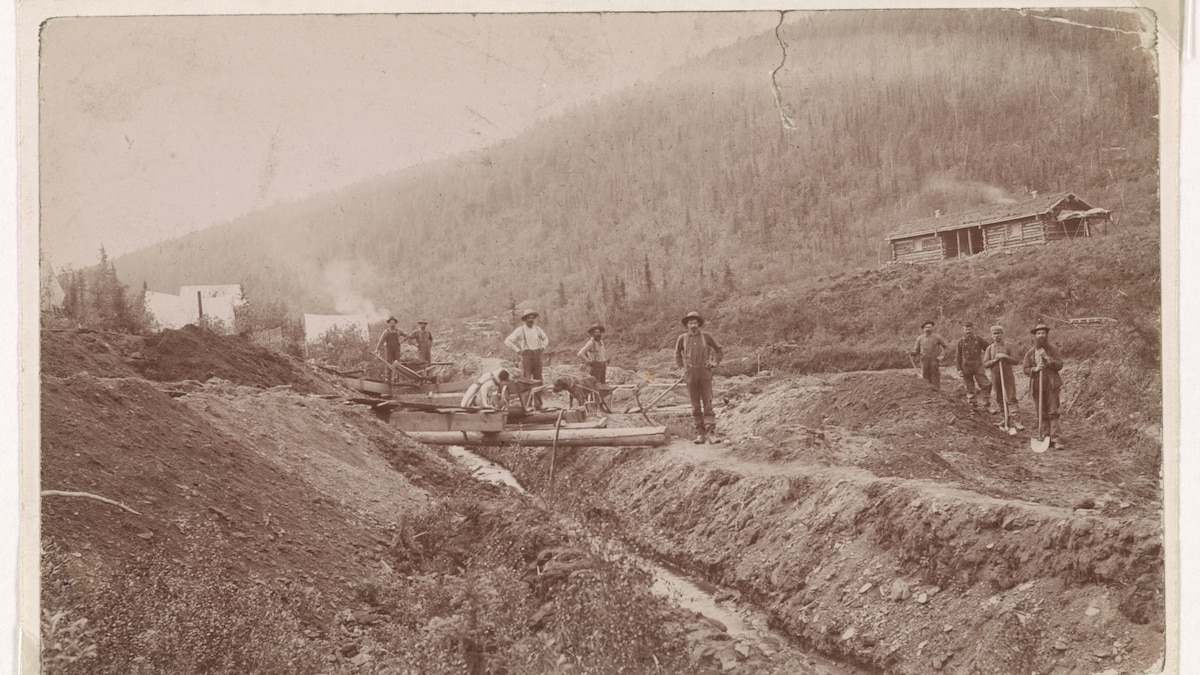
Nathaniel Philbrick: Absolutely. I was born in Boston and have spent 40 years on Nantucket Island. And, as a coastal person, I grew up sort of thinking of the gold rush as its own compartmentalized thing. It was this instance where all these people went out there, then it stopped, and then we now have California, but it was its own thing. Working on this book, it became clear to me that, oh no, for one thing, just about every town in New England or throughout America sent people to California. I think we’ve lost a sense of how almost universal the gold rush was at its time and the excitement it created. It created a model that we’ve been reliving over and over again.
The big revelation was how intimate the relationship between the California gold rush was and the Civil War. The whole concept, the realization that when this happened, there were an even number of slave and free states. And California comes galloping in. The miners want to make their state free, not because they have any abolitionist leanings, quite the opposite. They don’t want to share the gold mines with Black people. And so California becomes a free state. For the South, it’s a pretext for getting all sorts of concessions from the North, particularly the Fugitive Slave Act, and the fuse is lit. In 10 years’ time, we’re going to see how slavery is sending the nation into civil war.
And then to realize that California was a battlefield unto itself between slavery and freedom, that it was a free state in name only, that it was dominated by pro-slavery Southerners who really saw this as, “Hey, it may be a free state, but we’re going to control this and roll back every freedom the state constitution guarantees. And if this growing divide over slavery comes to war, we’re going to bring all this gold in with us to the Confederacy.” And it almost happened. And so for me, it was like, wow, it wasn’t just this adventurous cul-de-sac in American history. It was kind of a place of origination of what America would become with all the divisions, with all of the violence and, basically, creating what we’re living in a very different modern form today.
(How One Shipwreck and a Cargo of Lost Gold Sparked a U.S. Financial Panic)
There’s a great quote in there where somebody says that what the North won was the treasury. Everybody talks about, well, [the North’s advantage over the South] was manpower or it was Northern industrialism. And one of the neat things in the book is—there was this font of gold literally coming out of San Francisco that in many ways shaped things probably as much as anything else.