
The Aquarium of the Pacific had a busy Monday.
Alongside announcing the arrival of its new president and CEO, Jeffrey Flocken, the Long Beach aquarium also unveiled two new additions to its programming and conservation efforts on Monday, Nov. 10.
The first will see the creation of a new sea turtle rehabilitation area next to the aquarium’s Molina Animal Care Center, which will play a crucial role in supporting existing turtle rescue and rehabilitation efforts that have been ongoing there since 2000.
The facility — funded by a grant from the National Fish and Wildlife Foundation, support from the National Oceanic and Atmospheric Administration, and a donation from the KM Shimano Family Foundation –will feature a 4,000-gallon enclosure and be stocked with specialty equipment and supplies to care for sick and injured turtles.
Though plans for the facility were originally announced in October 2024, aquarium officials said on Monday that it should be completed in 2026. It won’t be a traditional exhibit, but aquarium attendees will be able to get a peek at the rehab center’s future residents through a viewing window.
“This new, upcoming sea turtle rehabilitation area, which is slated to open next year,” Flocken said during a Monday press conference announcing his new position, “will increase our capacity for helping these rescued animals with the goal of releasing them back into the wild.”
The Aquarium of the Pacific has worked to rescue, rehabilitate and release sea turtles back into the wild for more than two decades — and a major part of that effort is the institution’s Southern California Sea Turtle Monitoring Project. That effort brings together both professional and citizen scientists to monitor the creatures, who have taken up residence in the San Gabriel River.
Every week, a group of dedicated volunteers from all walks of life make the 1.5-mile trek down the San Gabriel River bike path to participate in the program, which gathers crucial data that’s used to build out scientist’s understanding of the species’ behavior, the health of the larger ecosystem they occupy and more.
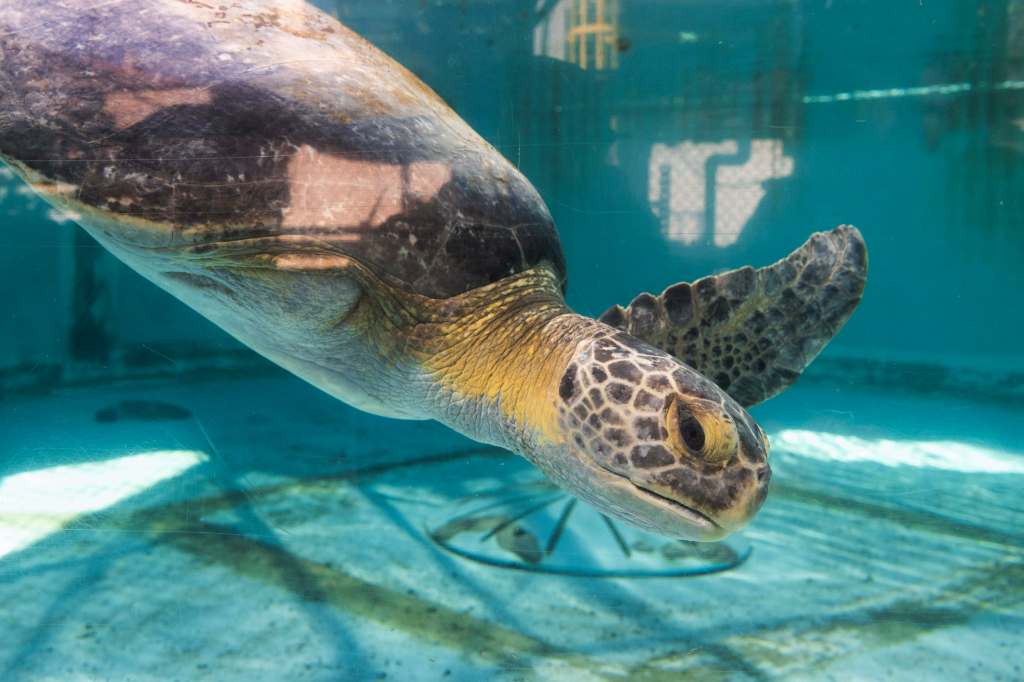
On one of those trips in March, volunteers spotted a badly injured green sea turtle that was stuck in the river — because one of its flippers had been tangled in fishing line and debris so badly that it couldn’t swim away.
Aquarium staffers were later able to rescue the sea turtle. They brought it back to the aquarium for care — where they discovered that 90% of the turtle’s front flipper was dead from a lack of blood circulation caused by the fishing line tangle — and that it had a fishing hook lodged in the back of its mouth.
Veterinary staffers were able to remove the hook from the turtle’s mouth, but the flipper was already dead and couldn’t be saved. It was removed at the ball-and-socket joint by veterinary staff, and now, months later, has completely healed over.
“Sea turtles, we’ve found over the years, can adapt quite well to being re-released missing one to two flippers — depending on the orientation of where they’re missing,” Nate Jaros, the aquarium’s vice president of animal care, said in front of the turtle’s existing behind-the-scenes quarantine enclosure. “They’re very adaptive animals. So as you can see, (the turtle) only has three flippers, but is very charismatic, very energetic and exhibits all normal sea turtle behaviors.”
A rescued green sea turtle is cared for by staff at the Aquarium of The Pacific in Long Beach on Monday, Nov. 10, 2025. (Photo by Drew A. Kelley, Press-Telegram/SCNG)
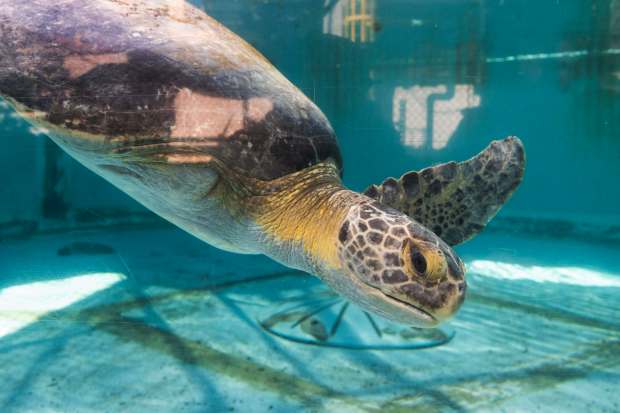
A rescued green sea turtle is cared for by staff at the Aquarium of The Pacific in Long Beach on Monday, Nov. 10, 2025. (Photo by Drew A. Kelley, Press-Telegram/SCNG)
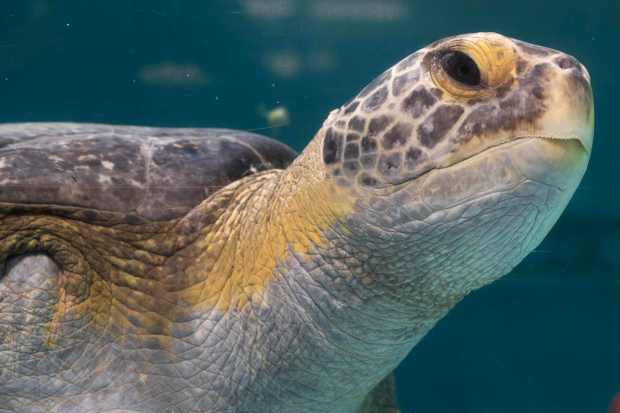
A rescued green sea turtle is cared for by staff at the Aquarium of The Pacific in Long Beach on Monday, Nov. 10, 2025. (Photo by Drew A. Kelley, Press-Telegram/SCNG)
Show Caption
1 of 3
A rescued green sea turtle is cared for by staff at the Aquarium of The Pacific in Long Beach on Monday, Nov. 10, 2025. (Photo by Drew A. Kelley, Press-Telegram/SCNG)
The turtle, whose sex and exact age is unknown, has almost fully recovered from its life-threatening injuries. Though still healing from some minor wounds, if all goes well, the turtle is set to be released back into the wild as early as next month, Jaros said.
The new rehabilitation facility, Jaros said, will play a crucial role in helping the aquarium continue and expand this kind of rescue work — especially when the aquarium is caring for multiple rescued sea turtles at once, like they were over the course of this year.
“Sometimes they’re not compatible,” Jaros said of having multiple sea turtles. “In other cases, they bother each other, and especially if they have wounds, that becomes a challenge.”
The area where the three-flippered turtle was being housed on Monday, Jaros said, currently serves many purposes: it’s used to house all kinds of animals if they get sick or have an injury, but it also serves as a temporary shelter for animals that have been rescued, donated or need to be moved for other reasons.
“We want to have multiple enclosures to be able to shift these animals into,” Jaros said, “(so) that we have a place to quarantine those animals so that they don’t introduce any sickness or disease into our grand collection.”
Besides the news that the new sea turtle rehabilitation facility is set to open next year, the Aquarium of the Pacific also announced on Monday that it has officially signed on to a partnership aimed at helping the population of zebra sharks, an endangered species, rebound in areas where their numbers have declined or disappeared entirely.
The aquarium is working with a coalition — called the ReShark — on its StAR (short for Stegostoma tigrinum Augmentation and Recovery) Project, which will use fertilized eggs from the aquarium’s resident zebra sharks to repopulate the protected area of Raja Ampat in Indonesia.
“There (are) a few different populations (of zebra sharks). They’re all from the South Pacific area, but in some regions, especially within Indonesia and around Thailand, there was some overfishing over the last few decades,” Jaros said, which drove zebra sharks’ population below sustainable levels. “So this is all part of rebuilding that population.”
The Aquarium of the Pacific is no stranger to developing new ways to rebuild the population of zebra sharks. The aquarium, in fact, is home to years of groundbreaking research in that field — and its scientists were the first in the world to successfully reproduce zebra sharks through artificial insemination all the way back in 2013.
Assistant Curator Alyssa Tillman feeds an adult zebra shark at the Aquarium of The Pacific in Long Beach on Monday, Nov. 10, 2025. (Photo by Drew A. Kelley, Press-Telegram/SCNG)
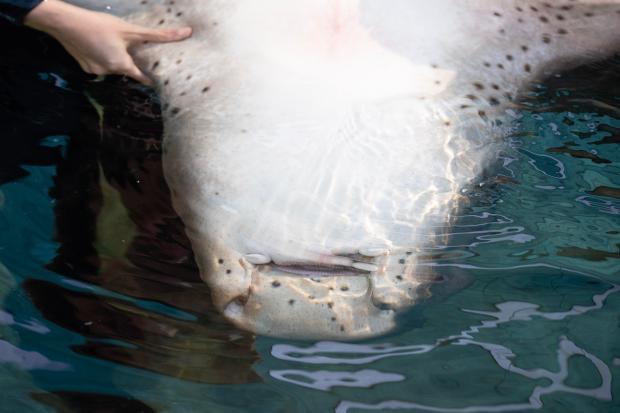
Assistant Curator Alyssa Tillman feeds an adult zebra shark at the Aquarium of The Pacific in Long Beach on Monday, Nov. 10, 2025. (Photo by Drew A. Kelley, Press-Telegram/SCNG)
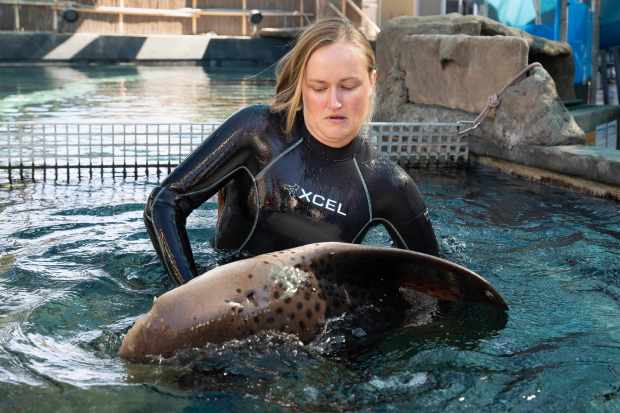
Assistant Curator Alyssa Tillman feeds an adult zebra shark at the Aquarium of The Pacific in Long Beach on Monday, Nov. 10, 2025. (Photo by Drew A. Kelley, Press-Telegram/SCNG)
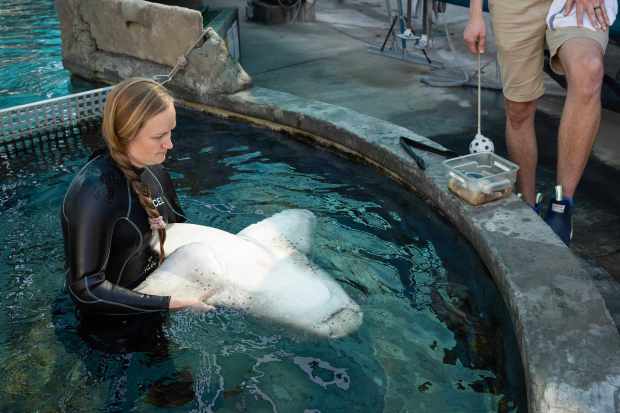
Assistant Curator Alyssa Tillman feeds an adult zebra shark at the Aquarium of The Pacific in Long Beach on Monday, Nov. 10, 2025. (Photo by Drew A. Kelley, Press-Telegram/SCNG)
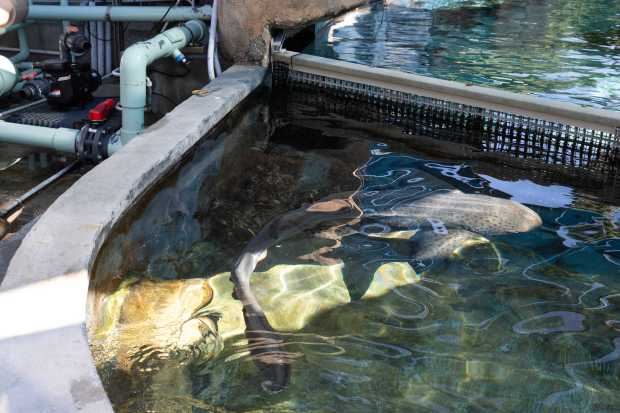
An adult zebra shark swims in an enclosure at the Aquarium of The Pacific in Long Beach on Monday, Nov. 10, 2025. (Photo by Drew A. Kelley, Press-Telegram/SCNG)
Show Caption
1 of 5
Assistant Curator Alyssa Tillman feeds an adult zebra shark at the Aquarium of The Pacific in Long Beach on Monday, Nov. 10, 2025. (Photo by Drew A. Kelley, Press-Telegram/SCNG)
Now, that breakthrough is being put to use as part of the StAR Project. When the aquarium’s resident zebra sharks lay their eggs, veterinary staffers collect and closely monitor the eggs via ultrasound every week to ensure they’re developing properly.
If and when the eggs reach the right level of maturity and are deemed safe to travel, they’re then sent off to the Seattle Aquarium — a founding partner of ReShark — where they are held until there are enough healthy eggs to be sent in bulk to a nursery in Indonesia. The deliveries, the Aquarium of the Pacific said, are timed so the eggs are ready to hatch about a month after they arrive in Raja Ampat.
Veterinarians and scientists have worked out the very specific conditions needed to successfully ship a tiger shark egg across the world, Jaros said, while the aquarium’s staff veterinarian, Brittany Stevens, performed ultrasounds on various zebra shark eggs that they had recently collected.
Veterinarian Dr. Brittany Stevens uses an ultrasound to monitor a developing embryo inside a zebra shark egg at the Aquarium of The Pacific in Long Beach on Monday, Nov. 10, 2025. (Photo by Drew A. Kelley, Press-Telegram/SCNG)
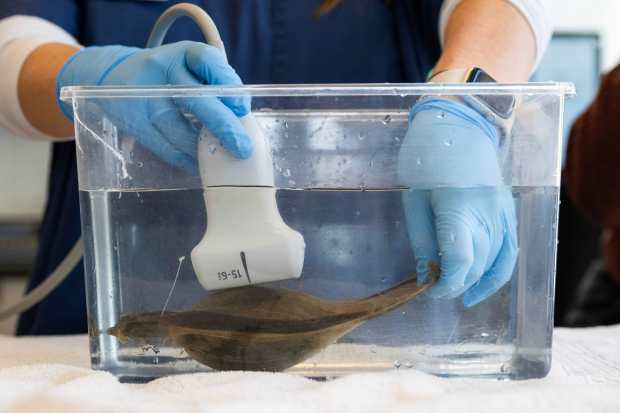
Veterinarian Dr. Brittany Stevens uses an ultrasound to monitor a developing embryo inside a zebra shark egg at the Aquarium of The Pacific in Long Beach on Monday, Nov. 10, 2025. (Photo by Drew A. Kelley, Press-Telegram/SCNG)
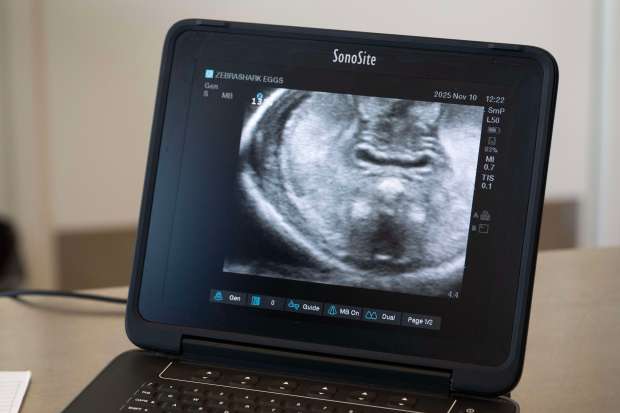
Veterinarian Dr. Brittany Stevens uses an ultrasound to monitor a developing embryo inside a zebra shark egg at the Aquarium of The Pacific in Long Beach on Monday, Nov. 10, 2025. (Photo by Drew A. Kelley, Press-Telegram/SCNG)
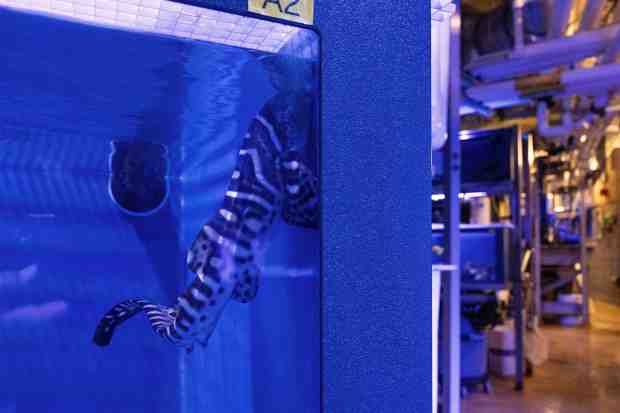
A juvenile zebra shark is cared for by staff at the Aquarium of The Pacific in Long Beach on Monday, Nov. 10, 2025. (Photo by Drew A. Kelley, Press-Telegram/SCNG)
Show Caption
1 of 4
Veterinarian Dr. Brittany Stevens uses an ultrasound to monitor a developing embryo inside a zebra shark egg at the Aquarium of The Pacific in Long Beach on Monday, Nov. 10, 2025. (Photo by Drew A. Kelley, Press-Telegram/SCNG)
“When the eggs are first laid, they’re sealed — and over a period of (time) they open up, so there’s actually water exchange with the surrounding environment, unlike a bird egg,” Jaros said. “So we need to make sure that the water environment in the shipping container is stable and oxygen rich to ensure that the embryo has the highest likelihood of survival.”
The process has been refined, Jaros said, and although there’s always some risk when it comes to shipping animals — the fact that these have yet to be born helps decrease the chance of failure.
One of the aquarium’s residents, a 28-year-old zebra shark named Fern, is among the sharks whose eggs will be used as part of the program.
Fern, aquarium staffers said, has lived in Long Beach since the 1990s — and was actually the one whose egg bore the first artificially inseminated zebra shark pup in 2013. She’s one of the oldest — if not the oldest — zebra shark in an Association of Zoos and Aquariums-accredited facility.
Sharks selected for the program undergo rigorous genetic screening, the aquarium said, to ensure their offspring will be viable and won’t harm the long-term health of the populations the ReShark program is working to rebuild.
Fern happens to have the exact genetic makeup needed to help repopulate Indonesia’s waters with its native zebra sharks — since she originally came from that same area in the 1990s.
“She was collected for the aquarium back in the late 1990s,” Jaros said. “Since there has been such a well managed breeding program across AZA-institutions, it’s relatively rare that animals would be collected from the wild.
But, Jaros added, it does sometimes happen if an animal with a very specific genetic makeup is needed to help rebuild their populations.
Once eggs from the Aquarium of the Pacific are successfully matured, sent to Indonesia and eventually hatched — they’ll be released in the Raja Ampat archipelago and monitored by scientists there to ensure the sharks adapt well to the environment.
And for those of us back in Long Beach, Fern and many other sharks and ocean creatures of all varieties will remain in the Aquarium of the Pacific’s exhibits to help educate the public about their plight — and all the ways everyday people can help protect the natural world.