
Marine Mammal Care Center launches capital campaign for new world-class marine mammal hospital on Redondo Beach Waterfront
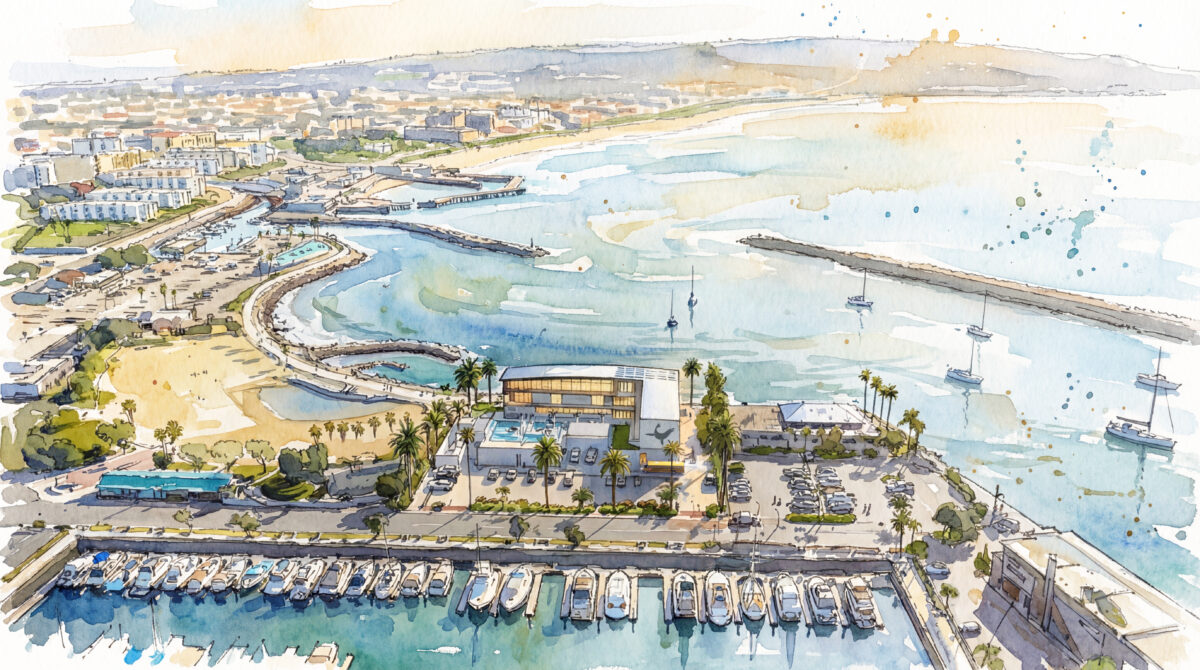
The Marine Mammal Care Center (MMCC) is launching a $65 million capital campaign to build a world-class marine mammal hospital, research center, and public education center campus on the Redondo Beach waterfront at King’s Harbor. The campaign already has $30 million in committed support, which includes $15 million from philanthropic matches from two local donors and another $15 million from Proposition 4 funding by state senators Laura Richardson and Ben Allen.
“This project provides measurable public benefit and is the type of forward-looking environmental investment voters envisioned when they approved Proposition 4,” said Richardson at the press conference announcing the funding for the Redondo facility. “The new Marine Mammal Care Center will strengthen wildlife protection, expand public education, and create lasting benefits for coastal communities throughout Los Angeles County and for all Californians to enjoy.”
Since the proposition was approved by California voters in 2024, the state is authorized to issue $10 billion in general obligation bonds through legislative action to fund environmental projects. Investments go toward coastal resilience, protection of natural resources, parks and coastal access, among other climate-related priorities.
“MMCC has demonstrated its critical role in safeguarding marine mammal health and public safety, and this investment will ensure LA County has the facilities and expertise needed to meet future environmental challenges,” said Allen at the press conference.
The expansion of the center has become increasingly urgent as climate-driven marine wildlife emergencies have grown over time. Right now, California is already feeling the effects of this season’s El Niño, and this winter could bring a wave of malnourished sea lion pups to Southern California beaches.
At the end of June last year, hundreds of animals were reported stranded or sickened along Central Coast beaches. More than two-thirds of them passed, most likely due to a Leptospirosis outbreak: a bacterial infection spread through the urine of infected animals. Marine animals are susceptible to Leptospirosis when contaminated material makes its way into waterways through runoff.
Scroll to continue reading
During that year, there was also a severe stranding event after a domoic acid bloom, which causes seizures, brain damage, and death in marine animals. In the first five months of that year, the center responded to over 550 sea lions and dolphins. The influx of animals in need of care quickly exceeded the 300-animal capacity for the current campus’s design and the center’s annual budget.
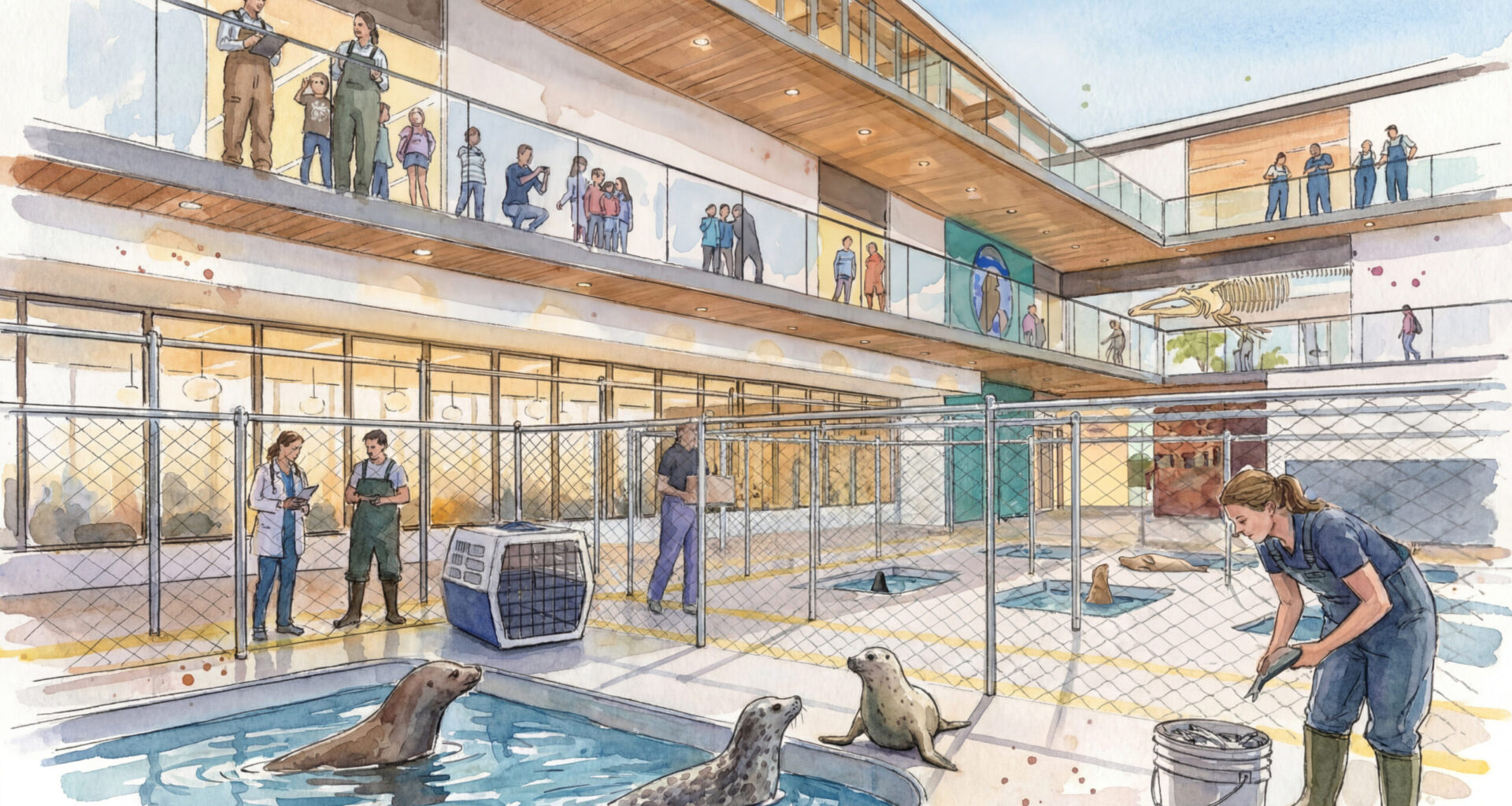
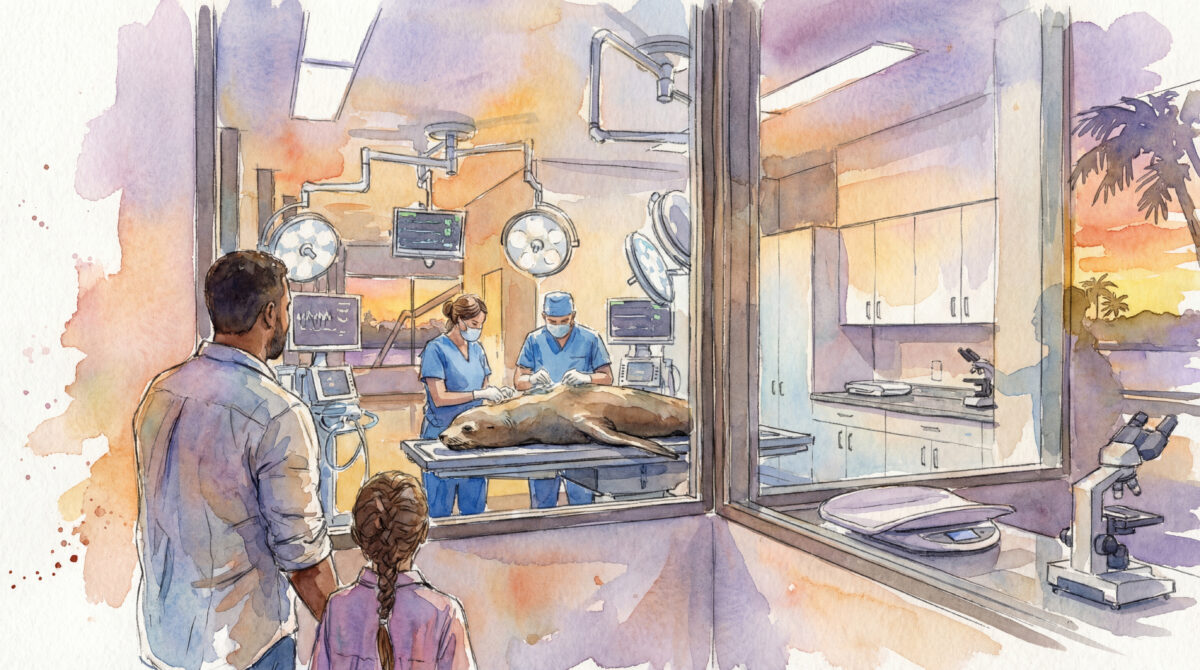
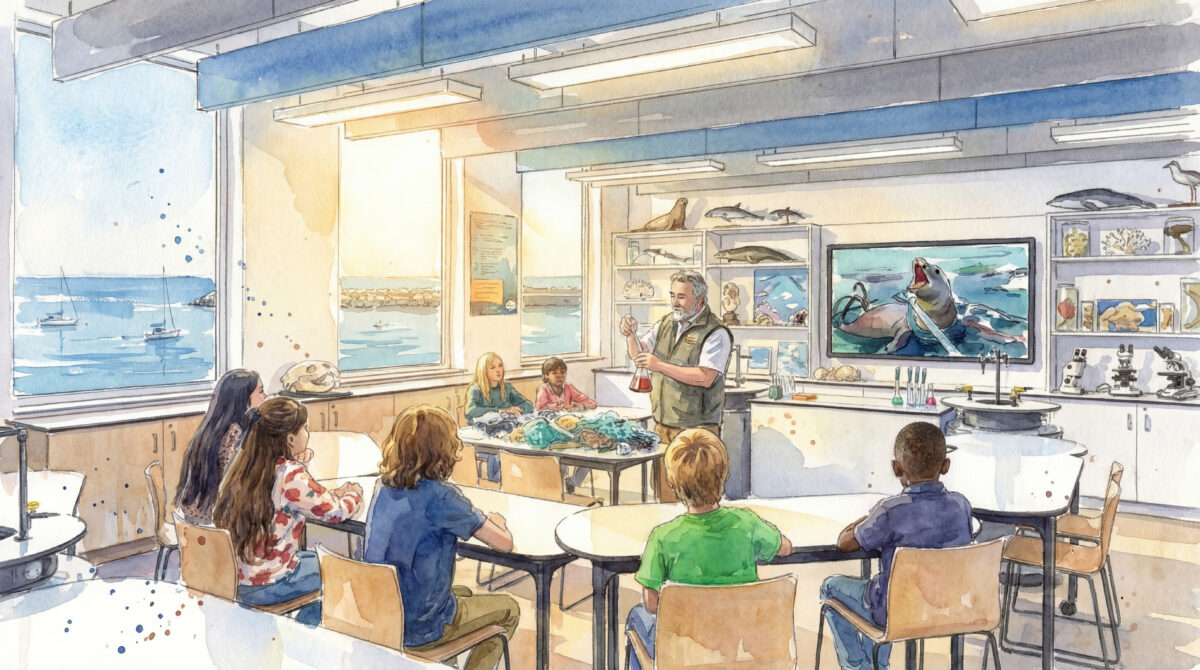
The three-story facility will more than double the center’s rehabilitation capacity, with patient care pools, a state-of-the-art surgical suite, diagnostic and research laboratories, classrooms, meeting spaces, and interactive exhibits that will be open to the public. The new center also has the opportunity to apply for a permit to rehabilitate endangered and threatened species, which the facility couldn’t accommodate before.
 Credit: Courtesy of Marine Mammal Care Center
Since 1992, MMCC has rescued and rehabilitated more than 11,000 marine animals and has been the only year-round marine mammal rehabilitation center authorized by the National Oceanic and Atmospheric Administration (NOAA) that operates across the entire L.A. County coastline. The center is currently operating out of its main facility in San Pedro, as planning goes into its future expansion in Redondo Beach.
“The scale and complexity of marine mammal emergencies in Southern California have changed dramatically over the last decade,” said John Warner, the Chief Executive Officer of MMCC.
 Credit: Courtesy of Marine Mammal Care Center
“Through this public-private partnership, we can rescue more animals, improve rehabilitation outcomes, educate future ocean stewards, inspire people to take action that ensures a healthy ocean for generations to come, and strengthen our region’s preparedness for future environmental crises.”
The new facility will help connect thousands of students with opportunities in marine science, veterinary medicine, environmental communications, and conservation. Visitors will be able to observe the marine mammals throughout their rehabilitation and recovery.
Though the expansion will need various approvals and permits before construction begins, it is predicted that the project will begin construction in 2029, and the center could be open as early as 2030.
 Credit: Courtesy of Marine Mammal Care Center