
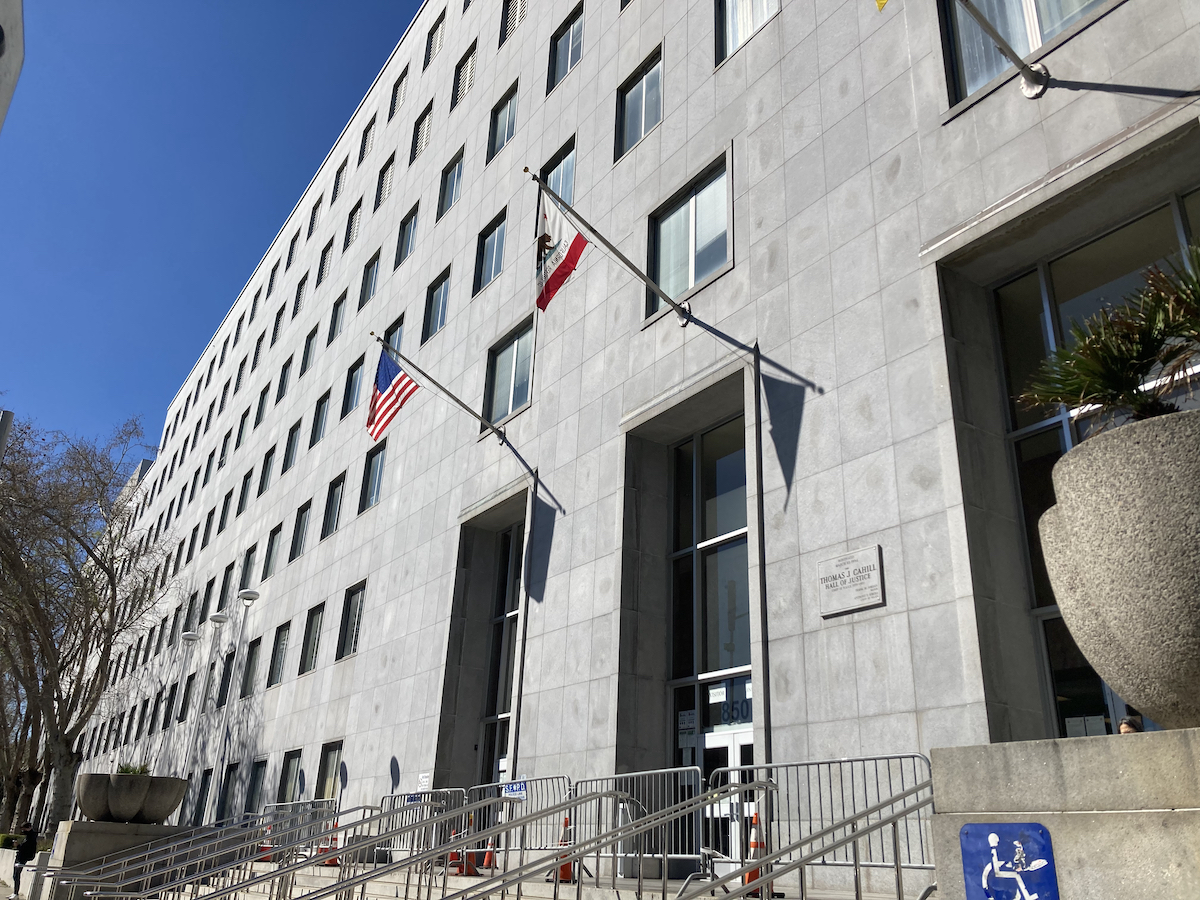
For the second time in two years, the San Francisco district attorney’s office is refusing to try cases before Judge Michelle Tong, a former public defender, alleging that she is biased against the DA.
If the court allows it to continue doing so, the DA’s office will de-facto oust Tong from the Hall of Justice — again.
Rochelle East, San Francisco Superior Court’s presiding judge, ruled Tuesday morning that Jenkins’ office could blanket refuse to present cases before Tong. Ana Gonzalez, chief assistant to the DA, argued Tong “has been abusive in treatment of police and prosecutors.”
“All attorneys in California have the right to exercise a challenge,” wrote the district attorney’s office to Mission Local, to ensure they “can have confidence their cases will be heard by a fair and unbiased judicial officer.”
Rose Mishaan, a private defense attorney who filed an objection in 2025 when District Attorney Brooke Jenkins first tried — and subsequently succeeded — in ousting Tong, said the office’s action sets a precedent where attorneys can “judge-shop” and search for courts where they’ll receive favorable outcomes.
“Effectively, Judge Tong will be driven away from the criminal court” if this continues, she said. “If we allow the DA to do this, we are giving them the authority to decide who does and who does not get to sit at the Hall of Justice.”
Jenkins’ prosecutors first launched a blanket challenge against Tong in 2025, when they accused the former public defender of bias. That challenge led to at least 340 cases not being heard, before Tong was relocated to the city’s civil courts.
Tong returned to criminal court Tuesday morning, tasked with preliminary hearing and arraignments in felony cases.
But by the end of Tuesday morning, not a single legal issue in those cases had been heard. Instead, in every case, DA prosecutors lodged what is called a “170.6,” a civil procedure that lets attorneys request their case be reassigned once-per-case, without offering a reason why.
That procedure exists so attorneys can avoid courtrooms where they believe they or their client will be personally targeted or face prejudice. In practice, however, the filings are used often by attorneys on both sides who dislike the presiding judge they’re facing.
A 2026 California Supreme Court decision, J.O. v Super Ct., found that “bad faith” en-masse objections to appearing before a particular judge violate the separation of powers. Attorneys must now prove genuine “prejudice.”
Gonzalez, the DA chief assistant, said her office’s motions passed muster under the case and listed a series of examples she said showed Tong’s prejudice, like an instance when Tong called a police officer “shady” after his testimony in civil court.
The public defender’s office argued the objections were unconstitutional, but East ultimately decided in the DA’s favor based on a single instance: In 2019, Gonzalez told the court, Tong allegedly said to Aaron Laycook of the DA’s office that she would “get even” with him after a contentious hearing, when she was still a public defender.
Aleem Raja, felony director of the public defender’s office, said he was concerned East made her ruling based on the belief that Tong had been a judge at the time.
“We are concerned that the judge made a ruling based on a mishearing of the DA’s statement,” Raja said.
Tuesday afternoon, a visiting judge replaced Tong in Department 9 of the Hall of Justice, attorneys at the court confirmed. Tong is expected to return tomorrow. If she does, the DA appears ready to continue refusing hearings.