
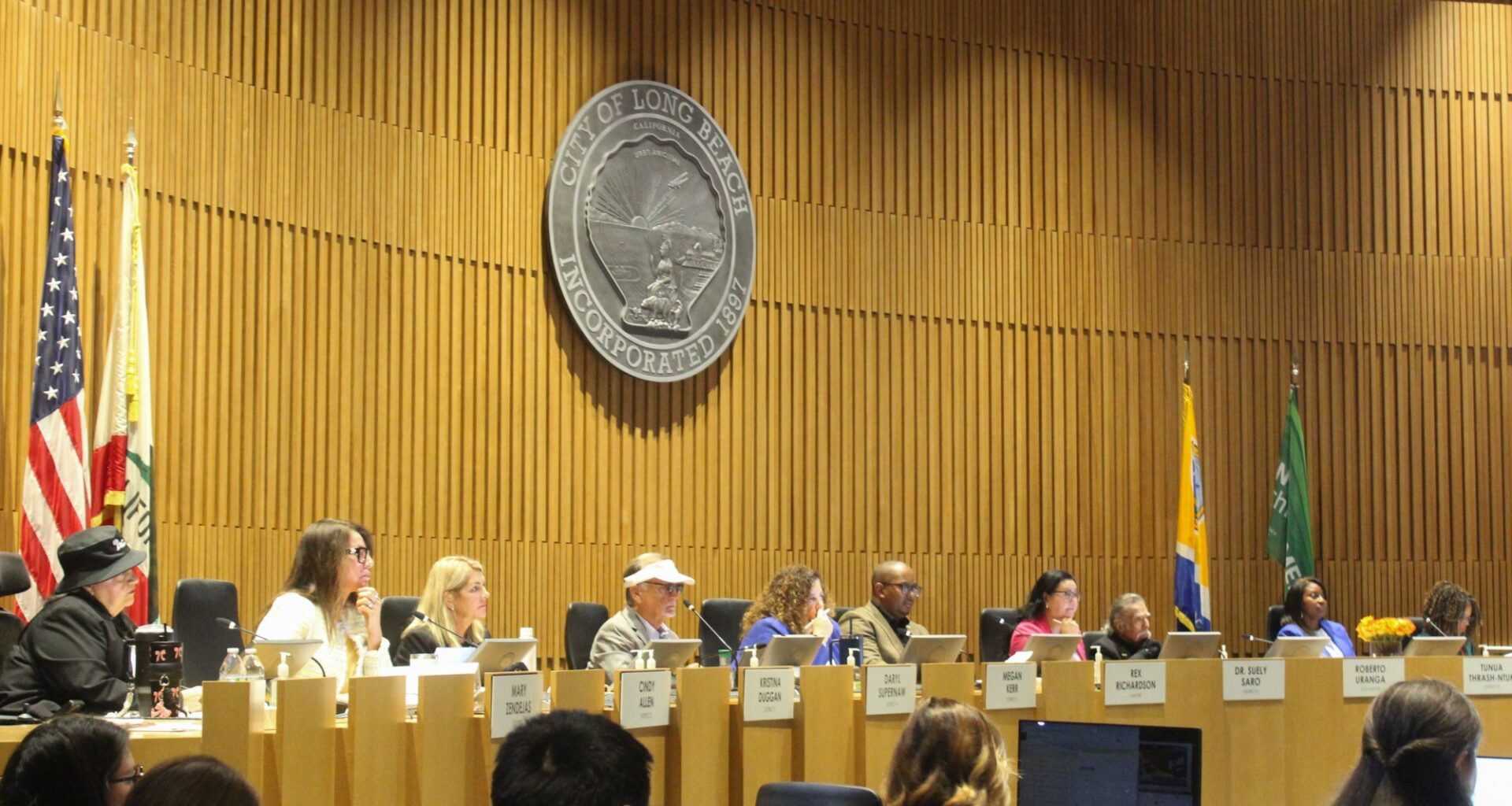
The way Long Beach runs its public comment period during City Council meetings is about to change.
After much opposition and deliberation, the City Council approved a new ordinance on Tuesday, Oct. 6, that will give Long Beach residents one public comment period to speak to their elected officials on agenda and non-agenda items at the beginning of each meeting. The final reading of the ordinance will happen at the next regular council meeting on Tuesday, Oct. 13, according to the staff report.
In the past year, the City Council has had several discussions about reorganizing meetings to make them more accessible to the public and accommodate state Senate Bill 707, which went into effect on July 1 and expands requirements for public participation in local government meetings by providing virtual options.
A proposed ordinance was shot down in June, which was met with strong opposition from residents. But last month, council members brought the discussion back to the dais and Long Beach residents. That resulted in a majority of city leaders moving forward with the new ordinance.
With the City Council’s decision this week, and ultimately final approval next week, public comments on agenda and non-agenda items will be consolidated into 90 minutes at the beginning of the meeting after ceremonials and presentations. The public comment list would close once the last speaker is in the queue, though the mayor would have the discretion to extend the period by 30-minute increments if more speakers are still waiting at the end of the 90 minutes, according to the staff report.
The new public comment process will not apply to hearing items that would still have their own dedicated public comment period, officials said. Hearing items will be taken immediately following the public comment period.
The council voted 6-3 to approve the proposal, with Councilmembers Cindy Allen, Kristina Duggan and Megan Kerr voting against it.
“I understand our meetings run long; part of our meetings is deliberation and discussion. I understand public comment can sometimes be difficult,” Duggan said during the Tuesday meeting. “I don’t accept it being disrespectful, but sitting here and listening to the public is one of the most basic responsibilities we have as council members. I’m going to be registering my opposition tonight, as I have on previous votes. I do think we need to make our meetings more efficient, and I think we can start by looking at our processes that we do not follow.”
Ultimately, the majority of council members backed the ordinance, saying that change is necessary to accommodate the new state law, maintain city services and continue being a “progressive city.” Sixth District Councilmember Suely Saro, for example, once again shared the importance of representing her constituents’ need for a predictable public comment time for families and working residents.
“I’ve been consistently voting for this because I have been listening to my residents,” she said. “I have diverse community residents who’ve called in because they have various circumstances on why they couldn’t attend the meeting, but why they also have challenges calling in.
“I also respect that you would like to make sure you have your comments,” Saro added, “but it’s changing the way we’re doing commenting, not taking it away.”
During public comment period on Tuesday, the majority of speakers opposed the ordinance but there were some residents who said they supported being able to speak early on during council meetings.
“Residents should have meaningful and accessible opportunities to share their concerns, ideas and perspectives with the City Council,” said Sithea San, chair of Cambodia Town Inc. “I especially support making participation more accessible by allowing residents to speak in person, online or by phone, while continuing to accept written and online comments.
“This is especially important for seniors, people with disabilities, working families, caregivers and residents who cannot easily attend City Hall,” San added. “I also support combining regular agenda and non-agenda items in one speaking turn, making the process more predictable and respectful of residents’ time.”
A handful of local university students also made comments supporting the ordinance, saying that it allows students and residents to have a set time for when public comment will occur so they can get back to studying or other responsibilities.
“Like many college students, I balance classes, homework, work and other responsibilities, and finding time to attend council meetings already requires planning and having to wait several hours before being able to speak, which can make getting my opinions out more difficult,” said Cal State Long Beach student Joseph Bass. “Moving public comment earlier would help us participate while keeping up with our responsibilities, and in a time where civic participation seems frowned upon, I appreciate that you’re considering the needs of working students, and I ask you to support this proposal.”
Residents in opposition pointed out that moving all public comments to the beginning of the council meeting wouldn’t let people be truly informed and engaged when commenting on agenda items if they haven’t heard staff presentations. Others doubted that council members could recall someone’s comment when an item decision may happen hours later.
“Separating our voice from the topic will disjoint and diminish us by corralling every public comment on every subject to the same time slot,” Long Beach resident Laura Selmer said. “Our voices are more like a mosh pit, unconnected to the business at hand. Disengagement by you, the listener, is certain.”
Others said that it was a violation of their First Amendment rights and disrupted the democratic process that should occur at City Council meetings.
“Democracy is threatened when public comment is limited so much that the public can barely be heard,” said Anthony Holmes, community organizer and Long Beach resident. “You cannot call it public participation if you control how and how much the public is allowed to participate.”