
Many authoritative sources predict that the coming El Niño year will be the most powerful since the winter of 1982-83. That’s beyond the memory of some and beyond the lifetime of most. So, what was it like? I served as an ocean lifeguard for the city of San Diego that year and I recall some extraordinary things.
The summer surf we experience in San Diego comes from the south, generated thousands of miles away in the Southern Hemisphere in its winter, predominately impacting our south-facing beaches. In the winter, the surf comes from the Gulf of Alaska and hits our north-facing beaches most directly. We’ve already experienced plenty of examples this year of elevated summer swells, but if El Niño predictions materialize, there could be much bigger swells to come.
In the winter of 1982-83, the north-facing La Jolla Cove saw very clean 20-foot ocean swells that had surfers congregating outside Alligator Head (Point La Jolla) and surfing across the mouth of La Jolla Cove, toward the cliffs along Coast Boulevard. For decades after, George’s at the Cove restaurant in La Jolla featured stunning photos of those waves.
Many lifeguards, including me, ended up rescuing surfers who lost their boards and were being carried perilously towards the La Jolla cliffs, but there were loads of rescues of intrepid surfers from Sunset Cliffs to Black’s Beach. Thankfully, few swimmers ventured out.
At Mission Beach, the sand level presently sits just a bit below or at the same level as the boardwalk, with the seawall between. There are numerous accessways with a few steps down to the beach. But in the winter of 1983, we learned that in some places there are actually 13 steps. That’s how much sand loss there was. The surf would sometimes hit the seawall and explode dozens of feet in the air, covering the boardwalk in water and sand.
At La Jolla Shores, we came to work one day to find the beach a bright red color, blanketed with pelagic crabs (tuna crabs). That winter I was also working as a ski patroller, sometimes shoveling snow off the decks, but I also found myself shoveling wet sand off the Shores boardwalk for hours. Wet sand is much heavier.
The rain, at times, seemed torrential. According to the National Weather Service, a total of 18.8 inches fell in 1983, but as is usual here, it was concentrated in a few winter months, inundating the San Diego River and many low-lying areas, particularly when the rain fell in succeeding days, since the first day or so saturated the soil and in the subsequent days the saturated soil rejected it.
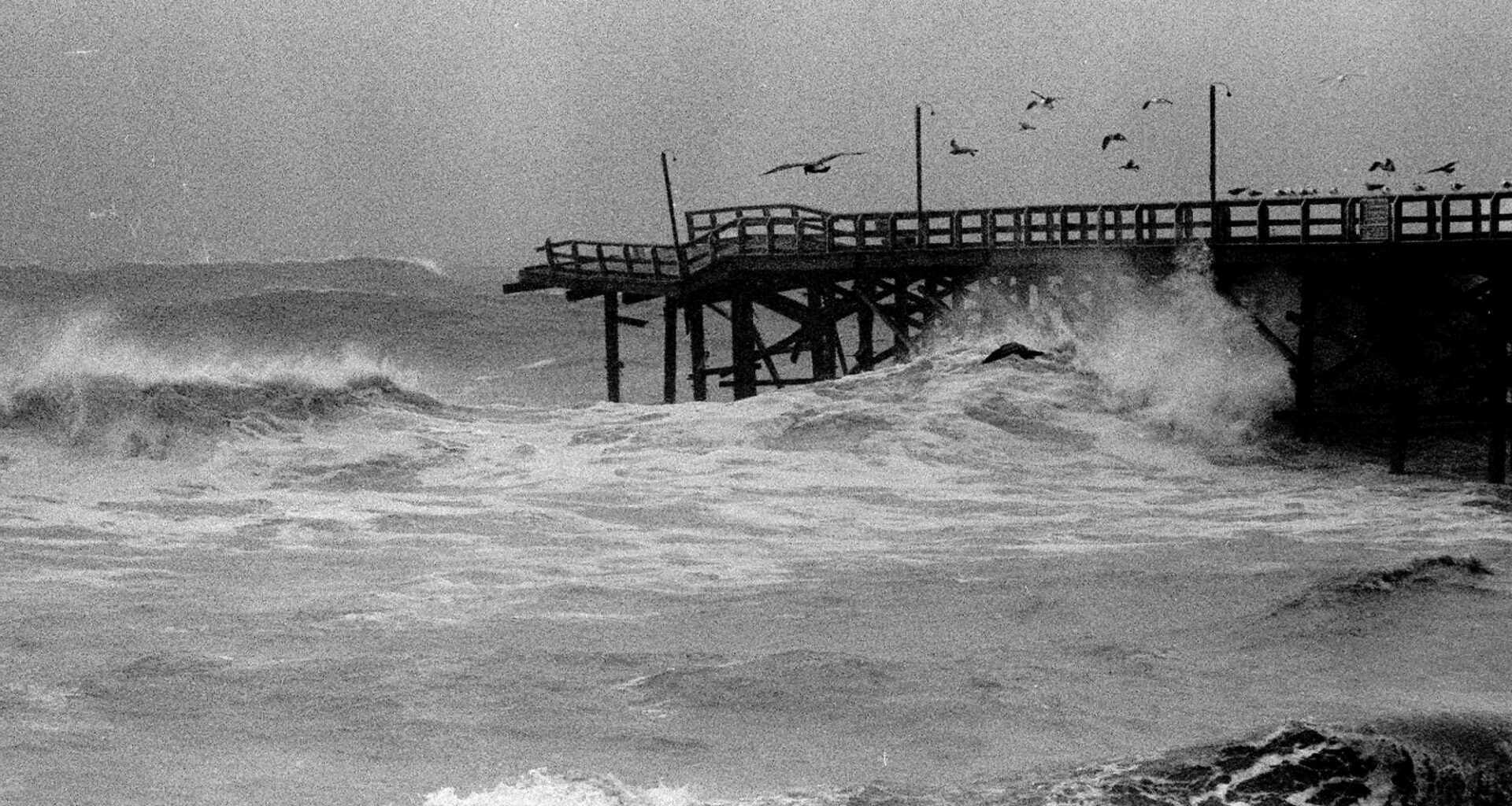
There was plenty of destruction of property caused by the surf. About 150 feet of Crystal Pier was washed away. The ocean facing windows at La Jolla’s iconic Marine Room restaurant were all blown out, leaving it exposed and unusable for months. But it was reparable. It was the loss of sand that seemed irreplaceable. Toward the end of that winter season, La Jolla Shores was largely cobblestones. The sand was mostly gone.
It’s important to remember that the cliffs that buffer much of our coastline don’t grow. They only erode. So there is much less protection now and the impacts of a similar El Niño could be even greater. There’s only so much that can be done to protect seaside homes and the train tracks that connect commerce and people to our north.
It took years and extensive sand replenishment to get many of the beaches back to where they are today. We’ve had El Niño years since then, with a variety of impacts, but nothing like 1982-83. No one knows for sure if we will see a repeat in the coming winter season, but it will be fascinating to see what nature brings us.
Brewster is a retired San Diego lifeguard chief. He lives in Pacific Beach.