
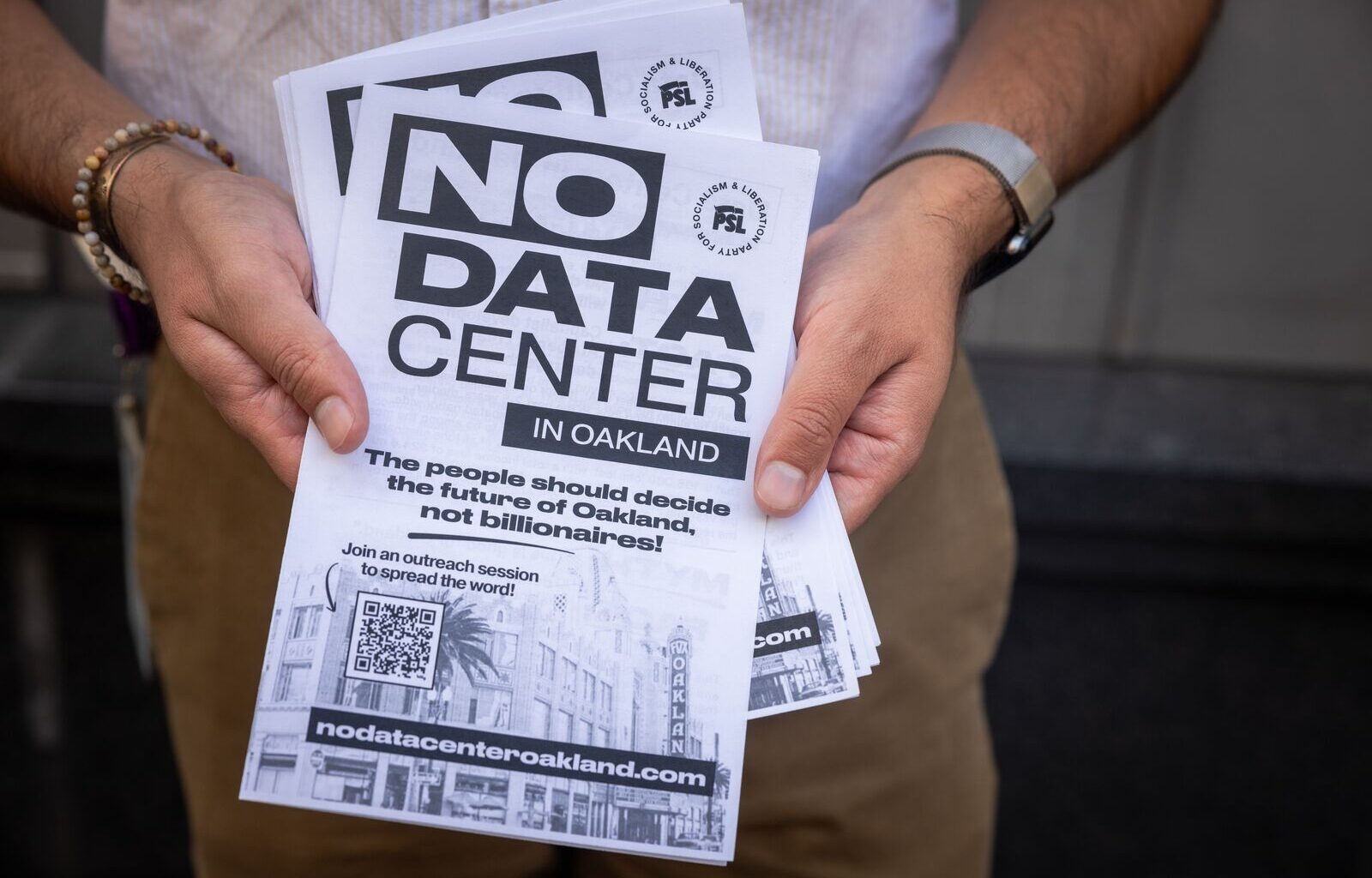
Oakland has joined several other Bay Area cities in hitting pause on data centers. The City Council on Tuesday unanimously approved a 45-day moratorium on approvals for new data centers. The moratorium can be extended by the council.
Councilmember Carroll Fife, who authored the moratorium, has said the goal is to give Oakland time to study the impacts of data centers and make any needed changes to the city’s planning and building codes to protect residents’ health, safety and welfare.
People across the country have become skeptical of data centers as tech companies, especially those developing artificial intelligence, have moved fast in recent years to build massive computing warehouses in cities and rural areas. Because data centers consume large amounts of water and electricity, generate noise and take up huge swaths of land, many communities have opposed their construction.
Oakland hasn’t seen a boom in data center construction, likely because land and electricity prices are high here. However, a developer has proposed building a data center in a downtown building that used to house a supercomputer.
Many of the people who showed up to Tuesday’s council meeting said they’re not just worried about the potential effects on their utility bills or the neighborhood’s quality of life, but they have broader concerns about the AI industry’s vision for the future.
“The luddites were onto something,” a District 2 resident named Charlotte told the council. “They understood that what matters about a technology is not just what it does but who controls it and what kind of power it has to concentrate power. We do not control this technology. I think it is a big mistake for us to gamble with the future of our city and trust that the oligarchs have a place for us in their vision at all.”
Dohee Kim, an organizer with the Local Clean Energy Alliance, said Oakland’s moratorium is part of a nationwide pushback. “Moratoriums are temporary solutions, but our communities deserve the right tools and the proper avenues to determine meaningful accountability and oversight when AI Data Centers directly impact our energy, water and land usage during a worsening climate crisis,” Kim said in a statement released after the council meeting.
According to the Stop AI Data Centers in Alameda County coalition, at least 26 cities in California are considering or have passed similar moratoriums. San Francisco also approved a 45-day moratorium on data center approvals at the Board of Supervisors’ meeting yesterday. Richmond approved a moratorium in September.
Some Oakland residents are opposed to the moratorium. Mindy Pechenuk, who is running for mayor, showed up to Tuesday’s council meeting to urge city leaders to reject any pause on data center development.
Pechenuk, who uses AI to generate campaign ads, likened the AI boom to the American space program of the early 1960s, which she said united the nation and led to significant scientific advances. “I oppose wasting taxpayers’ money on a moratorium,” Pechenuk said.
Sharon Taylor, who described herself as a lifelong Oakland resident, said her family was able to flourish in the city decades ago because there was ready work. “Data centers will bring jobs, they will not take jobs away,” she told the council.
Andrea Ingram said Oakland needs tech industry investment. “Oakland is good at driving those things out of the city, and then we turn around and say, ‘Why don’t we have enough money to give city workers?’”
Moratorium supporters see the economic implications of the AI boom very differently.
Arbaz, a District 2 resident who spoke at the council meeting, said many Oaklanders are worried about rising rents, food prices and utility bills. “We shouldn’t be siphoning off our resources and mortgaging our people’s future on an AI bubble that will likely be leaving us holding the bag at the end.”
Fears that the hundreds of billions of dollars major corporations have poured into AI might lead to an economic crash are shared by some high-profile investors and top economists.
Rene Coe, another moratorium supporter, said Oaklanders should be wary of the promises of the AI industry and data center developers. “The best-case scenario: AI will replace people,” Coe said. “If it doesn’t, the bubble will burst and cause a recession worse than 2008. Oaklanders know what happens when billionaires make bets on our homes and jobs.”
“*” indicates required fields